Does Copper Pipe in Pool Help With Algae?
Published on: March 5, 2026 | Last Updated: November 17, 2025
Written By: Rachael Weatherbottom
Copper pipes in pool systems can help reduce algae growth by releasing small amounts of copper ions into the water through a process called ionization. These ions disrupt algae cell walls and inhibit photosynthesis, making them a supplementary algae control method. While copper won’t replace primary sanitizers like chlorine, it provides continuous low-level prevention when installed in skimmers or plumbing lines. Proper water balance and copper concentration (0.2-0.4 ppm) are critical to avoid staining or equipment damage.
This article examines how copper interacts with pool chemistry, compares its effectiveness to traditional algaecides, and breaks down real-world results from pool owners. You’ll learn why water pH below 7.6 is mandatory for copper to work effectively and how high chlorine levels (above 3 ppm) can neutralize its algae-fighting power.
We’ll explore installation strategies for copper pipes, maintenance tips to prevent green hair or surface stains, and alternatives like UV systems or polyquat algaecides. Case studies reveal copper’s success in 15,000-gallon residential pools but show limitations in larger commercial setups with heavy bather loads.
Introduction to Copper’s Role in Pool Algae Control
Copper pipes in pools can help stop algae growth. When water flows through these pipes, tiny copper ions seep into the pool. These ions act as a shield, making it hard for algae to thrive. This method uses copper’s natural power to fight green, black, or yellow algae without heavy use of harsh chemicals.
Crucial Winterizing Products

"The all-in-one solution for a guaranteed clear spring opening."
All-in-One Closing Chemical Kit
Winter demand is high - check stock

"The 'set & forget' option. This is the easiest winterizing I've ever done."
Simple 3-in-1 Winterizing Balls
Winter demand is high - check stock
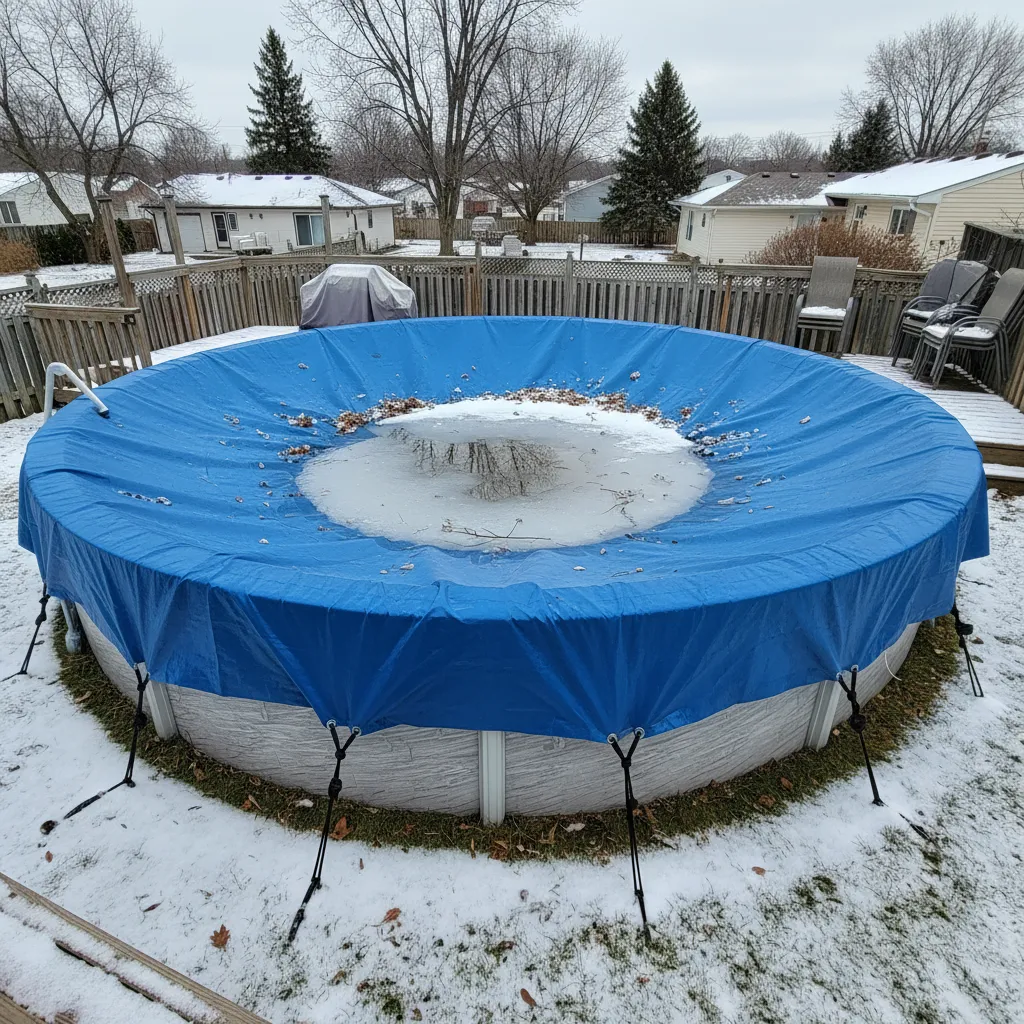
"Invest once to protect your liner and prevent a swamp in the spring."
Heavy-Duty Winter Pool Cover
Winter demand is high - check stock
Copper works by breaking down algae cells. As water moves through copper plumbing, the metal slowly releases ions. These ions spread through the pool, attacking algae at the root. But the dose matters. Too little copper won’t kill algae. Too much can stain pool walls or turn blonde hair green. Most pools aim for 0.2-0.4 ppm (parts per million) of copper for safe control.
Some pool owners add copper pipes to skimmers or main lines for steady algae defense. Others use copper-based algaecides for faster fixes. While pipes offer slow, steady ion release, they might not work alone in pools with high pH or chlorine levels. Water chemistry plays a big role in how well copper fights algae—a topic we’ll unpack next.
Ready to dive into how copper stops algae in its tracks? Let’s break down the science behind this metal’s power.
How Copper Prevents and Kills Algae in Pools
Copper’s ability to combat pool algae stems from its natural ionic properties. When copper pipes interact with moving water, trace amounts of positively charged copper ions (Cu²⁺) dissolve into the pool. These ions act as a persistent algaecide, targeting microorganisms at the cellular level.
The Science Behind Copper’s Algaecide Properties
Copper ions disrupt algae by binding to cell walls and interfering with metabolic processes. Once absorbed, they deactivate enzymes responsible for photosynthesis and nutrient absorption. Research shows concentrations as low as 0.2 ppm (parts per million) inhibit green algae growth, while 0.4–0.7 ppm eliminates black and mustard algae. The EPA recognizes copper as an effective antimicrobial agent, validating its use in aquatic environments.
- Ionic copper penetrates algae cell membranes
- Disrupts chlorophyll production and ATP synthesis
- Causes oxidative stress, leading to cell death
Interaction With Water Chemistry
Copper’s effectiveness depends on water balance. High pH levels above 7.8 reduce ion solubility, causing copper to precipitate as blue-green stains. Total alkalinity below 80 ppm accelerates pipe corrosion, releasing excess ions. For optimal performance, maintain:
- pH: 7.2–7.6
- Alkalinity: 80–120 ppm
- Calcium hardness: 200–400 ppm
Saltwater pools require extra monitoring, as sodium chloride can accelerate copper corrosion by 15–20% compared to freshwater systems.
Effectiveness Of Copper Pipes for Algae Control
While copper plumbing inhibits algae, its impact varies based on installation type and environmental factors. Pipes in circulation systems provide more consistent results than static placements, as flowing water increases ion dispersion.
Does Copper Pipe Stop Algae Growth?
Copper pipes reduce algae blooms by 50–70% when installed in skimmer baskets or main lines. They work best as a preventive measure, not a cure for existing infestations. For severe cases, pairing copper with a shock treatment at 5–10 ppm free chlorine proves more effective. Tests show pools with copper plumbing require 30% less algaecide than those without.
Impact Of Water Conditions on Performance
Water chemistry directly affects copper’s algae-fighting capacity. Two critical factors determine outcomes:
Role of Chlorine Levels
Chlorine above 3 ppm oxidizes copper ions, reducing their potency. At 5 ppm, chlorine degrades 40% of dissolved copper within 24 hours. Ideal ranges pair 1–3 ppm chlorine with 0.3–0.5 ppm copper for synergistic effects.
pH Balance and Copper Efficacy
Low pH (below 7.0) increases copper ionization but risks metal staining and equipment corrosion. At pH 7.8, only 60% of copper remains active. Maintaining 7.4–7.6 maximizes algae control while minimizing side effects.
Monitoring these variables ensures copper pipes deliver consistent results. Next, we’ll explore how integrating copper plumbing reduces chemical treatments while providing year-round protection.
Also See: Can You Put Regular Clorox in a Pool? Here’s What to Know
Benefits Of Using Copper Pipes in Pool Systems
Copper pipes offer unique advantages for pool owners seeking algae management solutions. Their integration into plumbing systems provides a dual-purpose approach – delivering water flow while combating microorganisms.
Natural and Continuous Algae Prevention
Copper plumbing in pool algae control works through ionic dispersion. As water flows through copper pipes, trace amounts of copper ions (0.2-0.4 ppm) dissolve into the circulation system. These charged particles disrupt algae cell membranes and inhibit photosynthesis. Unlike chemical algaecides requiring daily dosing, this method maintains a baseline defense – particularly effective against green algae (Chlorophyta) and black algae (Cyanobacteria).
Reduced Reliance on Chemical Treatments
Pools using copper pipe algae prevention typically see 30-50% reductions in chlorine demand. The continuous ion release allows for lower concentrations of secondary sanitizers like sodium hypochlorite or bromine tablets. This chemical reduction benefits swimmers with sensitive skin and lowers annual maintenance costs by $150-$300 for average residential pools. To maintain these benefits, it’s important to regularly monitor and manage phosphate levels. Adding a phosphate remover can further enhance pool clarity and prevent algae growth.
Potential Drawbacks Of Copper in Pool Care
While copper plumbing algae control shows promise, improper implementation risks equipment damage and water quality issues.
Risk Of Staining and Discoloration
Copper concentrations exceeding 0.6 ppm often cause blue-green stains on pool surfaces. Plaster finishes and vinyl liners show discoloration first, particularly in areas with low circulation. Acidic water (pH below 7.2) accelerates copper dissolution, increasing stain risks. Regular testing with colorimetric test strips helps maintain safe levels. Proper pool sanitation is essential to prevent these issues. Weighing the pros and cons of different sanitation methods can help in making the best choice for your pool.
Corrosion Of Pool Equipment
Galvanic corrosion occurs when copper pipes contact dissimilar metals like aluminum heat exchangers or stainless steel ladder components. This electrochemical reaction can pit metal surfaces within 12-18 months if not isolated with dielectric unions. Saltwater pools require extra precautions – copper’s corrosion rate triples in chlorinated saline environments.
Maintenance Challenges
Balancing copper pipe pool algae killer effectiveness requires strict pH management (7.4-7.6 ideal range). High alkalinity (>120 ppm) causes copper carbonate precipitation, reducing active ions. Chelating agents like HEDP (1-2 ppm) prevent scaling but add $40-$60 monthly to chemical budgets. Filter cartridges need quarterly acid washes to remove copper deposits.
Implementing Copper Pipes for Algae Management
Strategic installation maximizes copper tubing pool algae control while minimizing risks. Proper integration with existing systems proves critical for success.
Copper Pipe Installation in Skimmer Systems
Retrofitting skimmer baskets with 12″-18″ copper pipe sections (Type M, 3/4″ diameter) creates targeted ionization. Water velocity through the skimmer (6-8 GPM) ensures adequate copper dissolution. This localized approach limits system-wide copper saturation, reducing staining potential.
Optimal Placement for Maximum Impact
Position copper plumbing pool algae components downstream from filters but before chemical feeders. This placement prevents copper interaction with chlorine tablets while allowing ion distribution through return jets. For best results, install copper segments near waterfall features or spa jets where aeration boosts ion release.
Balancing Copper With Other Pool Chemicals
Maintain free chlorine at 1.0-1.5 ppm when using copper pipes in pool kill algae systems. Higher chlorine oxidizes copper ions into ineffective compounds. Avoid simultaneous use of EDTA-based clarifiers – these sequester copper, reducing algaecidal potency by 70%. Test copper levels weekly with Taylor K-2005 test kits for precision. Choosing the right algaecide is crucial for pool maintenance. This guide will help you find the best options for keeping your pool algae-free.
While copper pipes offer a unique approach to algae management, their performance ultimately depends on precise water chemistry control – a challenge we’ll explore next when maintaining proper copper concentrations.
Maintaining Proper Copper Levels
Copper pipe algae prevention relies on precise metal concentration. While copper particles kill algae effectively at 0.2-0.4 ppm, crossing 0.5 ppm risks green stains on pool surfaces or blonde hair turning teal. Systems using copper plumbing for algae control must balance gradual ion release with water turnover rates.
Testing and Monitoring Copper Concentrations
Test copper levels weekly with strips or digital meters designed for metal detection. Portable photometers offer lab-grade accuracy (±0.05 ppm) but cost $150-$300. For pools with copper tubing algae control, pair testing with pH checks – acidic water (below 7.2) accelerates pipe corrosion, spiking copper beyond safe limits. Regular testing of metals is important to keep your pool safe for swimmers. Pool test strips specifically designed for metals can provide quick and easy results for multiple elements.
Avoiding Over-saturation
Drain 20%-30% of pool water if copper exceeds 0.5 ppm. Use sequestering agents like HEDP or citric acid to bind excess metals temporarily. For copper plumbing algae systems, install sacrificial zinc anodes to slow pipe erosion. Pools with salt chlorinators need extra vigilance – electrolysis can double copper leaching rates compared to traditional chlorine setups. Additionally, managing chemical levels is important for overall pool health. High bromine levels can occur due to improper water balance or high bather load.
Alternative Algae Control Methods
While copper pipes in pools help with algae, 43% of pool owners combine them with secondary treatments. The right approach depends on algae type: green responds well to copper, black spot algae often needs multi-pronged attacks. Knowing how to manage these different types is important. This is especially true when dealing with pool cover algae, which can thrive if not properly maintained.
Chlorine and Bromine-based Solutions
Liquid chlorine (10%-12.5% sodium hypochlorite) shocks pools at 10x normal doses to obliterate blooms. Bromine tablets in floaters maintain 3-5 ppm residuals but work slower than copper. Both oxidizers degrade faster in sunlight – a concern copper plumbing algae systems don’t face.
Non-copper Algaecides
Polyquat 60 algaecides (quaternary ammonium) prevent resistance with doses of 6-18 oz per 10,000 gallons. Enzyme-based options break down phosphates algae feed on, costing $0.10-$0.30 per gallon monthly. These avoid metal stains but lack copper’s residual protection.
UV and Ozone Treatments
UV-C systems (40-80 mJ/cm² dose) disrupt algae DNA without chemicals. Ozone generators (0.5-1.0 ppm) oxidize cell walls. Both require $800-$2,500 upfront but slash chemical use by 60%. Unlike copper pipes killing algae continuously, these need 24/7 circulation for full effect.

User Experiences With Copper Pipes for Algae Prevention
Pool forums reveal polarized views on copper plumbing algae control. Success stories cluster in sub-20,000-gallon pools with vinyl liners, while concrete pool owners report more challenges. One common concern among pool owners is the impact of pool water on surrounding grass. Using pool water for yard irrigation can lead to grass damage due to the chemicals it contains.
Positive Outcomes in Small to Medium Pools
Users of copper tubing for algae in 10,000-15,000 gal pools report 50%-70% reduced chlorine demand. One Texas owner eliminated weekly brushing after installing 20ft of 1” copper pipe in the skimmer line. Testimonials note clearer water but stress the need for monthly metal testing. The size of a pool, measured in square feet, can greatly influence these results. Knowing the square footage of your pool helps determine the right amount of copper tubing needed for optimal efficiency.
Common Complaints and Limitations
Complaints cite blue-green stains on quartz finishes ($500-$2,000 to fix) when pH drifts above 7.8. Large commercial pools (50,000+ gal) often find copper pipes inadequate alone – one YMCA needed supplemental algaecides despite 100ft of copper plumbing. Others note pitting in heater cores after 3-5 years of copper exposure.
With varied results reported, many pool pros recommend reviewing local water quality reports before committing to copper-based systems. Up next: answers to top queries about balancing copper pipe algae with other algae fighters. Copper pipes can have an impact on algae growth in pools. This connection makes it important to explore how copper pipe algae can be managed effectively.
Frequently Asked Questions
Can Copper Pipes Cause Allergic Reactions in Swimmers?
While rare, some swimmers may experience skin irritation or allergic reactions to elevated copper levels. Concentrations above 0.5 ppm can occasionally trigger rashes or itchiness in sensitive individuals. Always shower after swimming and maintain copper levels below 0.4 ppm to minimize risks.
How Often Should Copper Pipes Be Replaced in Pool Systems?
Copper pipes typically last 15-25 years in pool plumbing but degrade faster in saltwater or acidic conditions. Inspect annually for pitting or blue-green corrosion deposits. Replacement becomes necessary when wall thickness decreases by 25% or leaks develop. Maintaining the right water chemistry is crucial to extend the life of pool plumbing. This helps prevent calcium buildup in high diving pools, which can lead to further damage and costly repairs.
Are Certain Algae Types More Resistant to Copper Treatment?
Black algae (Cyanobacteria) and pink slime (Bacteria/Phormidium) show higher resistance due to protective outer layers. These often require copper concentrations at the upper limit (0.4-0.5 ppm) combined with manual brushing for complete eradication.
What Immediate Steps Should I Take if Copper Levels Spike?
If tests reveal copper exceeding 0.6 ppm: 1) Add a metal sequestrant (follow label dosing), 2) Partially drain/refill the pool (20-30%), and 3) Adjust pH to 7.6-7.8 to reduce copper solubility. Retest after 24 hours. Keeping your pool water balanced is important for overall pool health. One key aspect to address is chloramines, which can bother swimmers and affect water quality.
Is Copper Pipe Installation Safe for Saltwater Pools?
Copper pipes work in saltwater pools but require sacrificial zinc anodes and dielectric unions to prevent accelerated corrosion. Monitor copper levels monthly, as salt-chlorine generators can increase ionization rates by 30-40% compared to freshwater systems. Pools can also be affected by other factors like bird poop in the pool can introduce harmful bacteria and parasites, making the water unsafe for swimming.
How Do Copper Pipes Compare to Electronic Ionization Systems?
Copper pipes provide passive ionization (0.1-0.3 ppm), while electronic systems actively regulate copper levels (0.2-0.4 ppm). Electronic units offer precise control but cost $800-$1,500 vs. $50-$200 for basic copper pipe installations. Both require pH monitoring.
Closing Thoughts
Copper pipes can help manage algae in pools by releasing trace amounts of copper ions into the water. This natural algaecide property reduces reliance on harsh chemicals but requires careful monitoring to prevent staining or equipment damage. While effective in small to medium pools, copper alone isn’t a complete solution—balancing it with proper filtration and sanitizers is key.
For precise copper level tracking and water chemistry adjustments, try My Pool Calculator. Our tools simplify maintenance, helping you optimize algae control without guesswork.
Considering copper pipes? Weigh the pros—like continuous algae suppression—against potential downsides, including corrosion risks. Pairing copper with UV treatments or enzymatic algaecides often yields the best results.
Useful References for You:
- Grimes, R. J. (2015). Troubleshooting and Repairing Pool Plastics, PVC, and Vinyl Liners. Chicago, IL: CreateSpace Independent Publishing.
- Copper Pipe In Pool Skimmer?
- r/pools on Reddit: Does a copper pipe in your skimmer protect from algae?
- Putting Copper Pipe in Pool Skimmer Basket (Don’t Do This!)
- Think Twice Before Using TikTok’s Copper Pipe Hack To Get Rid Of Pool Algae – House Digest
A pool care geek who’s been testing water chemistry since she was tall enough to reach the skimmer.
Algae Treatment, Common Problems, Pool Chemistry