
Pool Depth Calculator: Find Your Pool’s Volume
Published on: May 14, 2026 | Last Updated: April 13, 2025
Written By: Rachael Weatherbottom
Want to know how much water your pool holds? A pool depth calculator helps you figure this out quickly. You just need three measurements: pool length, width, and average depth. This tool is perfect for planning water treatment, heating costs, or safety guidelines. Let’s get started!
Pool Depth Calculator
- Measure your pool’s length and width.
- Check the depth at both shallow and deep ends.
- Enter all numbers in meters.
- Click “Calculate” to see results.
Factors Influencing Pool Depth Design
Pool depth impacts safety, functionality, and long-term maintenance. Whether installing a new pool or renovating an existing one, these variables shape your depth profile.
Pool Usage and Activity Requirements
Different activities demand specific depth ranges. Lap pools require uniform depths of 4-6 feet for uninterrupted swimming. Dive pools need minimum depths of 9 feet (per ANSI/APSP standards) to prevent head injuries. Family pools often use graduated designs: 3-foot shallow ends for children and 5-6 foot deep ends for adults. Sports pools (volleyball/basketball) function best at 4-4.5 feet. Spa-adjacent zones may integrate 2.5-foot ledges for seating.
Crucial Winterizing Products

"The all-in-one solution for a guaranteed clear spring opening."
All-in-One Closing Chemical Kit
Winter demand is high - check stock

"The 'set & forget' option. This is the easiest winterizing I've ever done."
Simple 3-in-1 Winterizing Balls
Winter demand is high - check stock
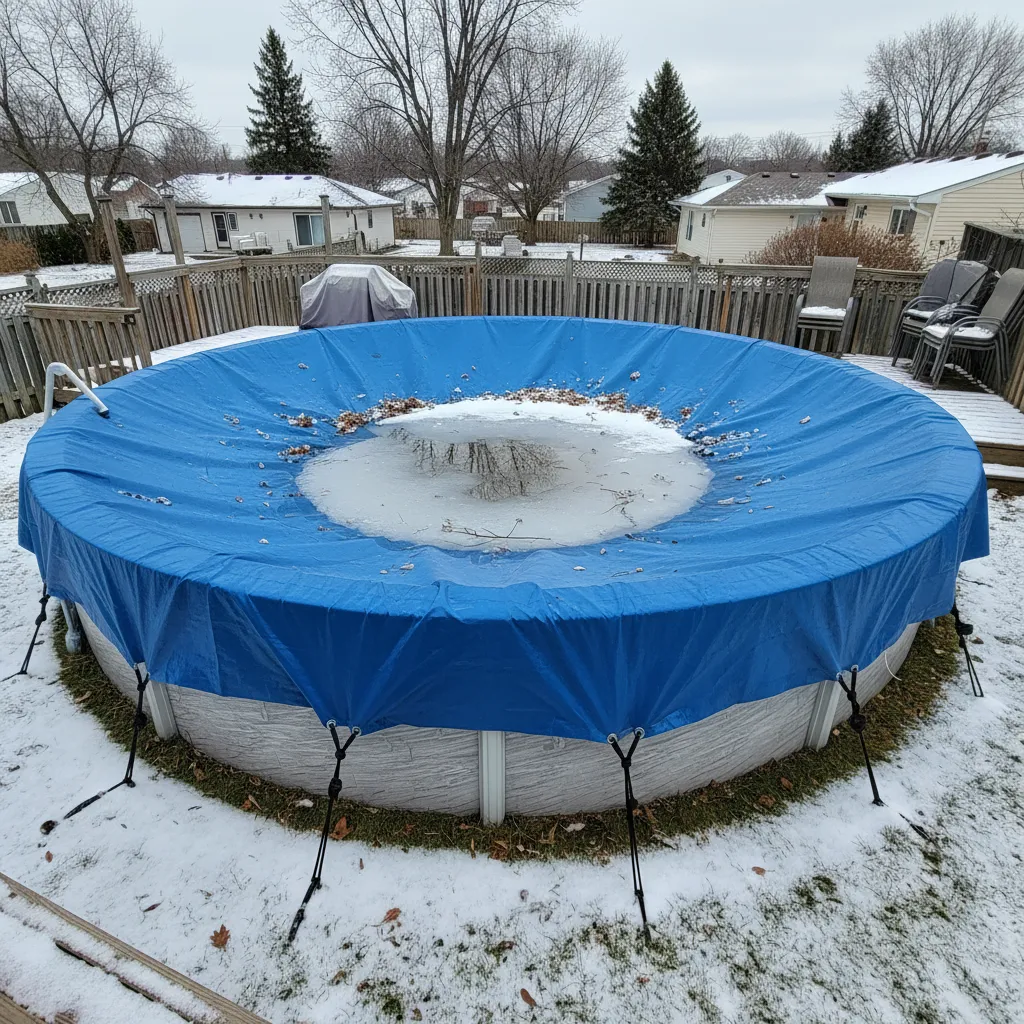
"Invest once to protect your liner and prevent a swamp in the spring."
Heavy-Duty Winter Pool Cover
Winter demand is high - check stock
Local Building Codes and Safety Standards
Municipalities enforce strict depth regulations. Residential pools in Florida require fencing for depths exceeding 18 inches. California’s Title 24 mandates anti-entrapment drains for pools deeper than 24 inches. Commercial pools under IBC guidelines need 3-foot markers every 25 feet. Diving boards require 7.5-9 foot depths depending on board height. Check My Pool Calculator for localized code references.
Construction Material Limitations
| Material | Typical Depth Range | Cost Per Linear Foot |
|---|---|---|
| Vinyl | 3-8 ft | $25-$50 |
| Fiberglass | 3.5-6.5 ft | $150-$200 |
| Gunite | Custom (up to 12 ft) | $90-$150 |
Vinyl liners cannot support abrupt depth changes beyond 1:3 slope ratios. Gunite allows infinity edges but requires reinforced steel for depths over 8 feet.
Water Table and Soil Composition
High water tables (>5 feet below surface) necessitate hydrostatic pressure relief valves. Clay-heavy soils may require pilings for pools deeper than 6 feet. In coastal regions, depth modifications often involve dewatering systems costing $1,500-$5,000.
Techniques for Measuring Existing Pool Depth
Accurate measurements prevent overfilling and inform renovation budgets. Use these methods for precision.
Manual Measurement Tools
- Weighted Tape Measures: 300-foot tapes with brass plumb bobs (accuracy: ±0.25 inches)
- Depth Poles: Fiberglass rods with inch markings for slope analysis
- Sonar Profilers: Handheld units mapping bottom contours (e.g., HawkEye DepthSounder X4)
Digital Mapping Systems
Robotic pool cleaners like Dolphin Nautilus CC Plus generate 3D depth models. Professional services use LiDAR scanners detecting 1/8-inch variances. For irregular shapes, divide the pool into 5x5 foot grids and average readings. These technologies help ensure a thorough clean. Robotic pool cleaners are designed to efficiently navigate and clean every corner of your pool.
Calculating Average Depth
Formula: (Shallow End Depth + Deep End Depth) ÷ 2. For multi-break pools: (Area1×Depth1 + Area2×Depth2) ÷ Total Area. A 16x32 foot pool with 3-foot shallow end (512 sq ft) and 8-foot deep end (512 sq ft) averages 5.5 feet. The depth of a semi inground pool plays a critical role in its overall design. Choosing the right depth can enhance the pool's function and enjoyment.
Also See: Pool Maintenance Cost Calculator: Estimate Expenses

Pool Volume Calculations by Depth Profile
Water volume determines chemical dosing, heating costs, and pump sizing. Standard formulas apply:
Rectangular Pools
Length × Width × Average Depth × 7.48 = Gallons. Example: 20x40 foot pool at 6-foot depth holds 20×40×6×7.48 = 35,904 gallons.
Freeform Pools
Break into circular/rectangular segments. A kidney-shaped pool might combine a 15-foot circle (πr²h) and 10x20 rectangle. Use My Pool Calculator’s composite shape tool.
Negative Edge and Infinity Pools
Account for catch basin volume. If the main pool is 30x15x5 feet (16,830 gallons) and basin is 8x4x3 feet (718 gallons), total volume is 17,548 gallons.
Regulatory Depth Requirements by Pool Type
Residential Pool Standards
- Shallow end minimum: 3 feet (most states)
- Diving board clearance: 10-foot depth for 1-meter boards
- Stair risers: 6-8 inch height differentials
Commercial/public Pool Codes
ADA mandates 3-foot entry points with sloped transitions. Health department codes require depth markers every 25 feet. Competitive pools need 7-foot minimum depths for racing lanes. Different activities in a pool can require varying depths. For example, diving pools should have a minimum depth of 10 feet to ensure safety while diving.
Depth-related Maintenance Factors
Chemical Stratification
Deeper pools (>8 feet) develop chlorine layers. Use submersible dispensers or robotic circulators. Target turnover rates: 6 hours for residential, 4 hours for commercial. Proper chlorine levels are crucial for maintaining water quality. Knowing how to manage chlorine work time in pools helps ensure a safe and enjoyable swimming experience.
Heating Efficiency
Each additional foot in depth raises gas heating costs by 15-20%. Heat pumps lose 3% efficiency per foot beyond 6 feet. Solar covers for 8-foot pools should be 16 mil thick. When considering these costs, it's helpful to have a tool that can calculate your expenses. A solar pool heater cost calculator can provide you with an estimate tailored to your needs.
Cleaning System Design
Pressure-side cleaners need 20 GPM flow for depths over 7 feet. Suction-side models require 2.5 HP pumps. For slopes steeper than 1:3, install dual main drains.

FAQs – Pool Depth Considerations
What’s the Ideal Depth for a Family Pool?
Graduated designs from 3.5 feet (shallow) to 5.5 feet (deep) accommodate diverse users. Incorporate a 10-foot safety ledge around edges.
How Much Does Adding Depth Cost?
Excavating an existing pool costs $150-$500 per linear foot. Gunite additions run $90-$120 per square foot. Permits add $200-$1,000 depending on municipality.
Can I Install a Slide in a 6-foot Pool?
Only zero-entry slides rated for 6-foot depths. Most slides require 7-8 foot clearance. Consult ASTM F2376 standards for slide/pool compatibility.
Advanced Depth Engineering Concepts
Hydrostatic Pressure Management
Pools deeper than 10 feet need relief valves every 12 feet. Calculate pressure (PSI) as Depth (ft) × 0.433. An 8-foot pool exerts 3.464 PSI on walls.
Wave Pool Dynamics
Wave machines require minimum 7-foot depths. Wave height shouldn’t exceed 30% of depth (2.1-foot waves in 7-foot pools).
Competitive Swimming Adjustments
FINA mandates 2-meter (6.56-foot) minimum depths for Olympic lanes. Vortex shedding from swimmers is reduced at 8-foot depths versus 6-foot.
For specialized scenarios like vanishing edge pools or aquatic therapy designs, visit My Pool Calculator to model depth-related variables.
Additional Resources for You:
- Tamminen, T. (2019). The Complete Pool Manual for Homeowners: A Step-by-Step Maintenance Guide. New York, NY: Skyhorse Publishing.
- Pool Volume Calculator - Pentair
- Pool Calculator – The Pool Factory
- Pool Calculator - How Many Gallons Is My Pool?
- Pool Volume Calculator | Pool Water Calculator | Pentair
A pool care geek who’s been testing water chemistry since she was tall enough to reach the skimmer.
Pool Calculators, Pool Volume