
Using Sodium Hypochlorite in Pools
Published on: April 8, 2025 | Last Updated: April 13, 2025
Written By: Lila Fairholme
Sodium hypochlorite is a common chemical for keeping pool water clean and safe. Often called “liquid chlorine,” it kills bacteria and algae. It’s easy to use but requires careful dosing. Too little won’t sanitize properly. Too much can irritate skin or damage pool equipment. Always test your water before adding chemicals. This guide will help you calculate the right amount for your pool.
Sodium Hypochlorite Calculator
- Test your pool water first
- Enter your pool’s volume and chlorine levels
- Input your sodium hypochlorite strength (usually 10-12%)
- Click “Calculate”
- Add chemical slowly near return jets
Sodium Hypochlorite in Pool Sanitation: Key Factors Influencing Effectiveness
Sodium hypochlorite (NaOCl) remains a dominant choice for pool disinfection due to its rapid oxidation and microbial kill rates. Its efficacy depends on four primary variables: water chemistry, environmental factors, dosage accuracy, and stabilizer levels. In addition to traditional disinfection methods, an algaecide can be used to prevent and control algae growth. This is particularly useful in saltwater pools, where maintaining a healthy balance is key to a clean and inviting swimming environment.
Crucial Winterizing Products
"The all-in-one solution for a guaranteed clear spring opening."
All-in-One Closing Chemical Kit
Winter demand is high - check stock

"The 'set & forget' option. This is the easiest winterizing I've ever done."
Simple 3-in-1 Winterizing Balls
Winter demand is high - check stock
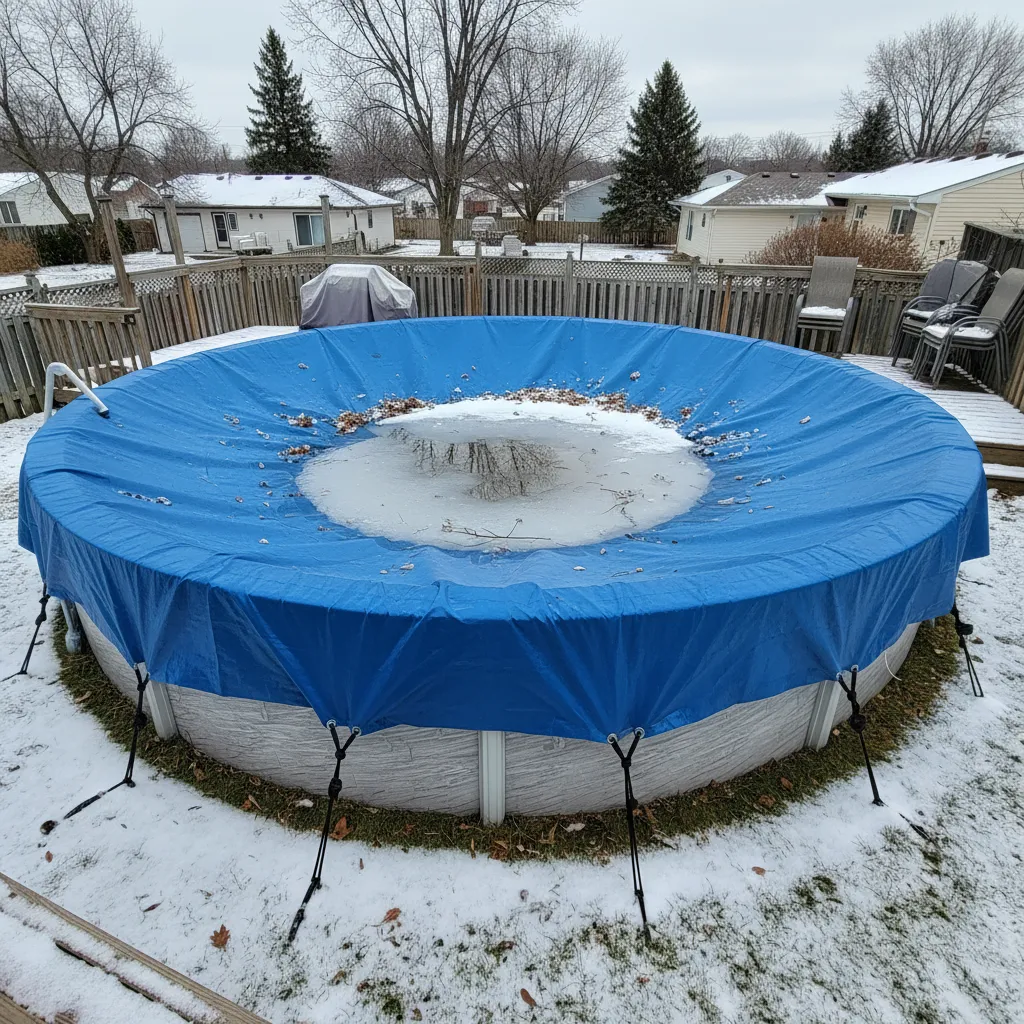
"Invest once to protect your liner and prevent a swamp in the spring."
Heavy-Duty Winter Pool Cover
Winter demand is high - check stock
Pool Volume and Chlorine Demand
Every 10,000 gallons of water requires 10-12 ounces of 12.5% sodium hypochlorite to raise free chlorine (FC) by 1 ppm. Chlorine demand fluctuates with swimmer load, organic debris, and algae spores. Heavy rainfall or pool parties often necessitate a 20-30% dosage increase. To maintain a safe swimming environment, it is important to monitor chlorine levels closely. Dilute pool chlorine provides an effective way to keep water clean and safe for swimmers.
Ph Balance and Efficacy
Sodium hypochlorite performs optimally when pool water pH stays between 7.4-7.6. At pH 8.0, chlorine’s sanitizing power drops by 50%. Use sodium bisulfate or carbon dioxide systems to counteract the high pH (up to 13.0) that liquid chlorine introduces.
Cyanuric Acid Levels
Stabilizer (cyanuric acid) concentrations above 50 ppm reduce sodium hypochlorite’s oxidation speed. Unstabilized pools lose 90% of FC within two hours under UV exposure. Maintain 30-50 ppm cyanuric acid for outdoor pools to balance protection and reactivity.
Water Temperature and Sunlight Exposure
Warm water (>85°F) accelerates chlorine depletion by 65% compared to 70°F. Pair sodium hypochlorite with UV-resistant additives in outdoor pools, or switch to evening dosing to minimize photodegradation.
Application Methods for Sodium Hypochlorite in Swimming Pools
Proper application ensures even distribution and prevents localized pH spikes or liner damage.
Liquid Chlorine Addition
- Pre-dilute 10-12.5% sodium hypochlorite with pool water at a 1:10 ratio
- Pour slowly near return jets with the pump running
- Brush walls to eliminate dead zones with low circulation
Automated Feed Systems
Peristaltic pumps inject 0.5-3.0 gallons daily based on ORP (oxidation-reduction potential) sensors. These systems maintain 1-3 ppm FC automatically but require weekly calibration. Ideal for commercial pools with 50,000+ gallon capacities. For proper pool maintenance, it's important to choose the right equipment. The Pentair pool pump offers reliable programming options to suit your specific needs.
Shock Treatments
For algae blooms or combined chlorine above 0.5 ppm, apply 2.5 gallons of 12.5% sodium hypochlorite per 10,000 gallons to reach 10 ppm FC. Circulate continuously for 8 hours before testing. If you're treating a 10,000 gallon pool, using an effective algaecide can help prevent future issues. An effective algaecide is essential for maintaining a clean and clear swimming environment.
Also See: Above Ground Pump Run Time: What You Need to Know
Optimal Dosage Guidelines for Sodium Hypochlorite Pool Treatment
| Pool Volume (Gallons) | Maintenance Dose (12.5% NaOCl) | Shock Dose (12.5% NaOCl) |
|---|---|---|
| 10,000 | 10-12 oz daily | 2.5 gallons |
| 20,000 | 20-24 oz daily | 5 gallons |
| 30,000 | 30-36 oz daily | 7.5 gallons |
For precise adjustments, verify your pool’s current FC using a DPD test kit. Multiply the required ppm increase by your pool’s volume in gallons, then divide by 10,000. Example: Raising FC by 2 ppm in a 15,000-gallon pool requires (2 x 15,000)/10,000 = 3 ounces of 12.5% sodium hypochlorite. Knowing how much chlorine to add is very important for pool care. A chlorine dose pool calculator can help simplify these calculations and ensure your pool is always safe and clean.
Safety Protocols for Handling Sodium Hypochlorite in Pool Water
Concentrated sodium hypochlorite (10-12.5%) has a pH of 13.0 and decomposes into chlorate ions if stored above 77°F. Follow these protocols:
- Wear nitrile gloves and ANSI-approved goggles during handling
- Store in HDPE containers away from acids or UV light
- Neutralize spills with sodium sulfite (1 lb per gallon of NaOCl)
Never mix sodium hypochlorite with trichlor tablets—this releases toxic chlorine gas. Use separate feeders and allow 4-hour intervals between applications.
Common Issues With Sodium Hypochlorite Pool Water Treatment
Chlorine Lock
Excess cyanuric acid (>100 ppm) binds free chlorine, rendering it inactive. Drain 30% of pool water or use a bio-available cyanuric acid reducer.
Algae Resistance
Green algae strains like Chlorella vulgaris develop biofilms resistant to standard chlorine levels. Apply a polyquat 60 algaecide before shocking to 20 ppm FC.
Ph Drift
Each gallon of 12.5% NaOCl raises pH by 0.8 in 10,000 gallons. Counteract with 12 oz muriatic acid per gallon of chlorine added.
Comparing Sodium Hypochlorite to Other Pool Disinfectants
| Sanitizer | FC Contribution | pH Impact | Cost per lb of FC |
|---|---|---|---|
| Sodium Hypochlorite (12.5%) | 1 ppm per 10 oz/10k gal | +0.8 | $0.18 |
| Trichlor (90%) | 1 ppm per 1.3 oz/10k gal | -0.5 | $0.22 |
| Salt Chlorine Generator | Variable | +0.1 | $0.15* |
*Assumes $0.12/kWh and 5,000-hour cell lifespan. Sodium hypochlorite provides faster oxidation but requires more pH management than stabilized chlorine.
FAQs on Sodium Hypochlorite Pool Maintenance
Why Do Chlorine Levels Drop Rapidly After Adding Sodium Hypochlorite?
UV degradation consumes 2-4 ppm FC daily in unstabilized pools. Test cyanuric acid monthly and maintain 30-50 ppm. High phosphate levels (>500 ppb) also accelerate chlorine loss—use lanthanum-based removers.
Can Sodium Hypochlorite Damage Pool Liners?
Undiluted NaOCl poured directly onto vinyl liners causes bleaching. Always pre-mix and apply near return jets. For fiberglass pools, avoid sodium hypochlorite concentrations above 15% to prevent gel coat oxidation.
How Often Should I Test Sodium Hypochlorite Levels?
Use FAS-DPD kits twice weekly for residential pools. Commercial pools require hourly automated testing. Free chlorine should stay between 1-3 ppm, with combined chlorine under 0.2 ppm.
Is Sodium Hypochlorite Compatible With Saltwater Pools?
Yes, but monitor sodium chloride levels. Each gallon of 12.5% NaOCl adds 1.2 lbs salt per 10k gallons. At 4,000 ppm salt, switch to non-chlorine shock to avoid over-salting. Diluting water can help bring down the salt concentration. By adding more water, the salt becomes less concentrated and easier to manage.
What’s the Shelf Life Of Sodium Hypochlorite?
Stored at 50-70°F in opaque containers, it retains 80% strength for 3 months. Degrades to 50% at 6 months. Buy fresh stock monthly and avoid summer heat exposure.
For customized sodium hypochlorite dosing based on real-time water conditions, explore the tools at My Pool Calculator. Input your pool’s volume, current FC, and target ppm for instant treatment guidelines.