
Bleach Dosage Pool Calculator: Keep Your Water Safe
Published on: April 29, 2025 | Last Updated: April 13, 2025
Written By: Marcus Thornfield
Adding bleach to your pool helps maintain proper chlorine levels. But how much bleach should you use? This depends on your pool size, current chlorine levels, and bleach strength. Our calculator makes this easy. No complex math needed – just enter your numbers for instant results!
Pool Bleach Calculator
How to Use
- Measure your pool’s current chlorine levels
- Find your pool volume in gallons
- Choose target chlorine level (1-3 ppm is ideal)
- Enter your bleach’s percentage strength
Always add bleach slowly near return jets. Wait 4 hours before retesting. Never mix chemicals!
Crucial Winterizing Products
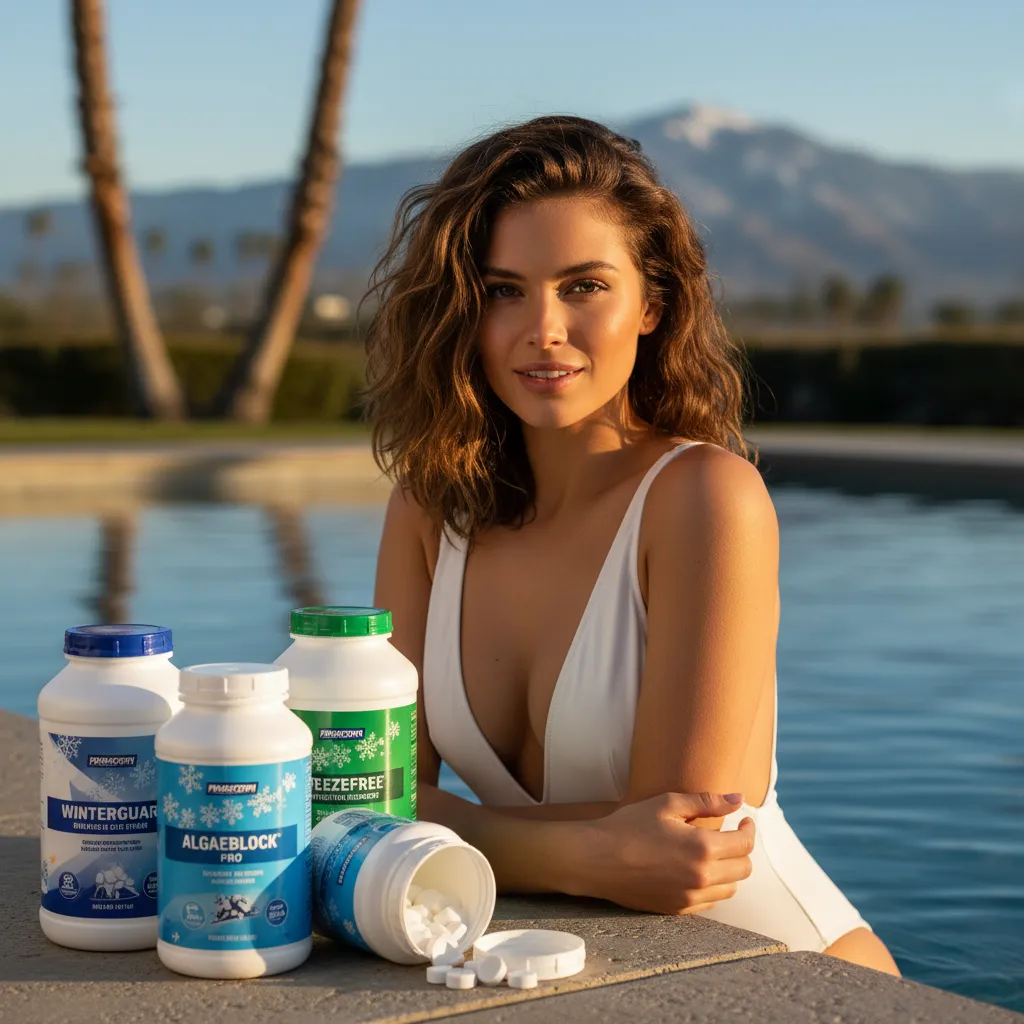
"The all-in-one solution for a guaranteed clear spring opening."
All-in-One Closing Chemical Kit
Winter demand is high - check stock

"The 'set & forget' option. This is the easiest winterizing I've ever done."
Simple 3-in-1 Winterizing Balls
Winter demand is high - check stock
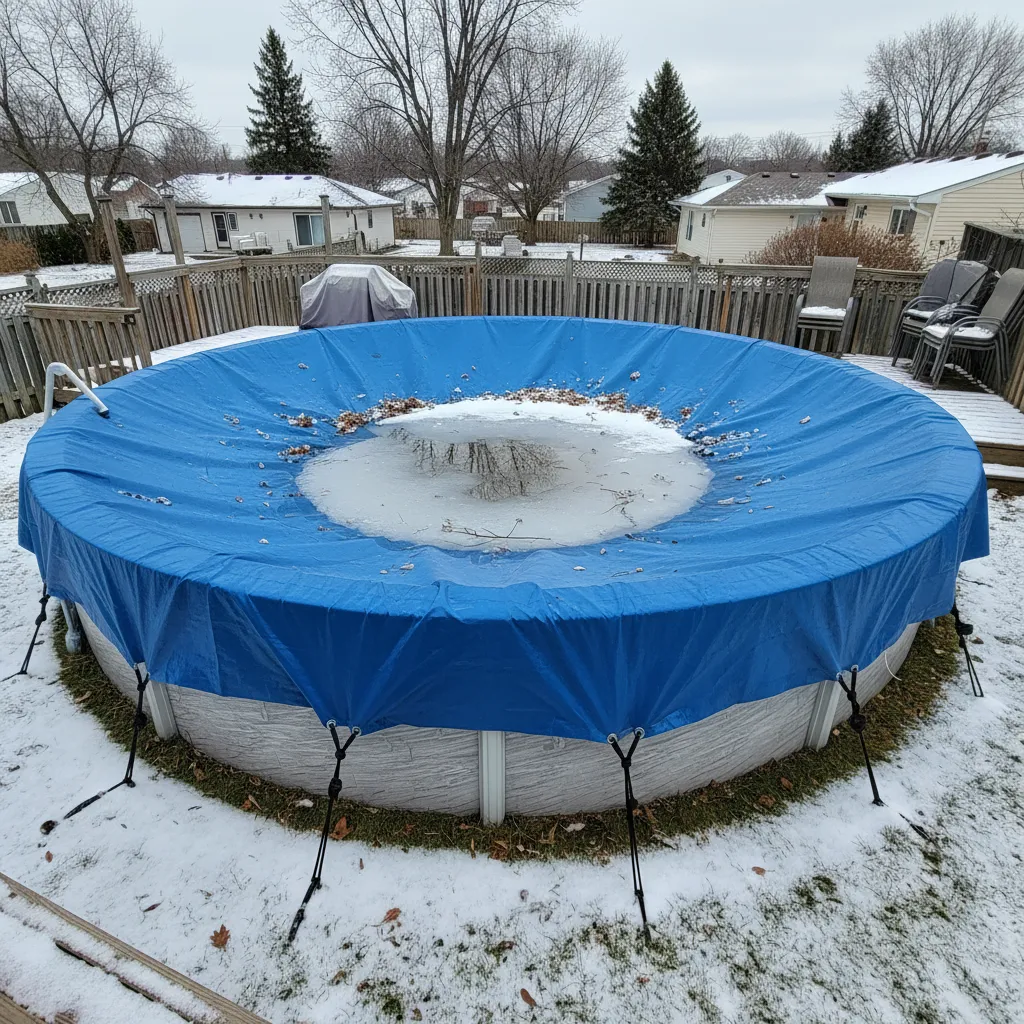
"Invest once to protect your liner and prevent a swamp in the spring."
Heavy-Duty Winter Pool Cover
Winter demand is high - check stock
Factors Influencing Bleach Dosage Requirements
Properly chlorinating a pool with liquid bleach requires analyzing multiple variables. Each factor impacts the chemical equilibrium of your water, dictating precise adjustments. Choosing the right type of chlorine is important for maintaining pool hygiene. It’s essential to compare the benefits and drawbacks of pool chlorine versus bleach.
Pool Volume and Surface Area
Water volume directly determines bleach quantities. A 15,000-gallon pool needs 150 oz of 6% sodium hypochlorite to raise free chlorine by 1 ppm. Irregular shapes or expansive shallow shelves increase surface area, accelerating chlorine dissipation through UV exposure. When considering a 10,000-gallon pool, you’ll need to adjust the bleach amount accordingly. Properly managing bleach levels is essential for keeping the pool water clean and safe.
Current Chlorine Levels and Demand
Test kits measuring free chlorine (FC) and combined chlorine (CC) reveal immediate needs. If FC is 0.5 ppm and CC is 1.2 ppm, shock treatment requires elevating FC to 5-10 ppm. Heavy bather loads or organic debris create “chlorine demand,” consuming 2-4x standard doses. This is where knowing the difference between pool shock and chlorine becomes important. Using the right product can help you maintain proper chemical levels in your pool.
Stabilizer (Cyanuric Acid) Concentration
CYA levels above 80 ppm reduce chlorine efficacy by 50%. For every 10 ppm CYA increase, extend shock treatment duration by 15%. Ideal CYA ranges: 30-50 ppm for outdoor pools, 0-20 ppm for indoor. High CYA levels can lead to challenges in maintaining proper chlorine levels. It’s important to monitor and adjust CYA to ensure effective pool sanitation.
Ph and Alkalinity Balance
Bleach raises pH temporarily; optimal disinfection occurs at 7.2-7.6. If pH is 8.0, chlorine effectiveness drops to 20%. Pre-adjust alkalinity to 80-120 ppm using sodium bisulfate or muriatic acid before adding bleach.
Environmental Factors
Full sun degrades 90% of free chlorine within 2 hours without stabilizers. Water temperatures above 86°F increase chlorine consumption by 30-50%. Windborne contaminants like pollen may necessitate 12-18 oz extra bleach per 10,000 gallons.
The Science Behind Chlorine Breakpoint Calculations
Breakpoint chlorination eliminates chloramines by achieving a 10:1 FC-to-CC ratio. For example:
- Test result: FC = 1 ppm, CC = 2 ppm
- Required FC = 2 ppm (CC) × 10 = 20 ppm
- Dosage = (20 ppm – 1 ppm) × Pool Volume ÷ 10,000 × 128 oz
| Pool Size | Current FC | Target FC | 6% Bleach Needed |
|---|---|---|---|
| 10,000 gal | 0.5 ppm | 5 ppm | 96 oz |
| 20,000 gal | 1.0 ppm | 10 ppm | 384 oz |
| 30,000 gal | 2.0 ppm | 20 ppm | 1,152 oz |
Also See: Excavation Cost Pool: Factors That Influence It
Shocking Vs. Routine Maintenance: Dosage Differences
Standard Sanitization
Daily maintenance requires 3 oz of 6% bleach per 1,000 gallons to maintain 1-3 ppm FC. After heavy rain, increase to 5 oz/1,000 gallons.
Superchlorination (Shocking)
To eliminate algae or contaminants:
- Light green algae: 20-30 ppm FC
- Black algae: 30-60 ppm FC
- Mustard algae: 60-100 ppm FC
Maintain elevated levels for 4-8 hours. For a 15,000-gallon pool with 5 ppm FC targeting 30 ppm, add 600 oz of 6% bleach.
Post-backwashing Adjustments
Sand filter backwashing removes 50-100 gallons of water. After backwashing a 25,000-gallon pool, add 12-24 oz bleach to compensate for diluted chemicals.
Bleach Treatment for Specialized Pool Types
Saltwater Systems
Supplemental bleach dosing helps salt cells during high demand. Add 16 oz of 6% bleach per 10,000 gallons when salt cell output can’t maintain FC above 1 ppm.
Vinyl-liner Pools
Avoid exceeding 5 ppm FC in soft-sided pools. Bleach concentrations above 8% may cause liner brittleness. Dilute 12.5% pool chlorine to 6% before application.
Plaster and Concrete Pools
New plaster (<6 months) requires lower pH (7.0-7.2) before bleaching. Use 32 oz of 6% bleach per 10,000 gallons daily to prevent calcium scaling.
Seasonal Bleach Dosage Variations
Summer Peak Usage
90°F water degrades chlorine 3x faster than 70°F. Increase standard doses by 40% and test every 4 hours during heat waves.
Winterizing With Bleach
Close pools at 5-7 ppm FC with 50 ppm CYA. Use 12% liquid chlorine instead of standard bleach for slower dissipation. Add 1 gallon per 20,000 gallons monthly during winter.
Bleach Safety and Handling Protocols
- Wear ANSI-approved goggles and nitrile gloves
- Never mix bleach with acid (produces toxic chlorine gas)
- Pour slowly near return jets; avoid splashing
- Store at 50-70°F; 12% bleach loses 50% potency after 6 months
FAQs: Bleach Dosage in Pool Maintenance
Why Does My Pool Need More Bleach After Rain?
Rainwater introduces nitrates and phosphates – 1″ of rainfall in a 400 sq ft pool adds 250 gallons containing 0.3 ppm contaminants, requiring 8 oz extra bleach.
Can I Use Household Bleach Vs. Pool-grade?
Regular 6% bleach works if unscented and non-Cloromax. Pool-grade 10-12% sodium hypochlorite has stabilizers preventing pH spikes.
How Soon Can We Swim After Bleach Treatment?
Wait until FC drops below 5 ppm. At 10 ppm FC, neutralization takes 4-6 hours with UV exposure. Use sodium thiosulfate to accelerate safe levels.
Does Bleach Affect Other Chemical Levels?
Each gallon of 6% bleach raises pH by 0.3 and increases salt (NaCl) by 7 ppm per 10,000 gallons. Monitor total dissolved solids annually.
Advanced Bleach Application Techniques
Slurry Method for Algae Blooms
Mix 1 part bleach with 2 parts water in a sprayer. Apply directly to visible algae, scrubbing after 15 minutes. Follow with full-pool shock treatment.
Nighttime Chlorine Boosting
Add 50% of calculated bleach dose after sunset. UV protection from CYA allows 80% chlorine retention versus 40% daytime application.
Bleach/cya Synergy Optimization
For every 10 ppm CYA, maintain minimum FC of 1 ppm. Use the My Pool Calculator to balance these ratios without over-stabilization.
Cost Analysis: Bleach Vs. Other Sanitizers
| Method | Cost per 10,000 gal/day | FC Maintenance |
|---|---|---|
| 6% Liquid Bleach | $0.85 | 3 ppm |
| Trichlor Tablets | $1.20 | 2.8 ppm |
| Salt Chlorination | $0.40 | 2.5 ppm |
Bleach remains cost-effective for precise, short-term adjustments despite daily price variations.
Troubleshooting Common Bleach Dosage Issues
Rapid Chlorine Loss
If FC drops >2 ppm overnight:
- Test CYA – may need 10 ppm increase
- Check phosphates >500 ppb
- Inspect for biofilm in plumbing
Persistent Cloudiness
Combine bleach with clarifiers:
- Raise FC to 10 ppm
- Add 4 oz polymeric clarifier
- Run filter 24 hours
For personalized bleach dosage calculations tailored to your pool’s unique chemistry, visit My Pool Calculator. Our algorithms account for 27 variables to optimize your sanitation routine.