
Soda Ash Pool Calculator: Quickly Balance Your Pool’s Ph
Published on: May 9, 2026 | Last Updated: April 13, 2025
Written By: Rachael Weatherbottom
Is your pool water too acidic? Soda ash (sodium carbonate) helps raise pH levels safely. This calculator tells you exactly how much soda ash to add. No chemistry degree needed! We’ll guide you through simple measurements and math. Protect your pool equipment and swim comfortably.
Soda Ash Calculator
How to Use
- Test your pool water with strips or a digital tester
- Enter your current pH reading above
- Choose your target pH (we suggest 7.4)
- Input your pool’s total volume
⚠️ Always add soda ash slowly – you can’t remove it once dissolved! Wait 4 hours between treatments.
Crucial Winterizing Products
"The all-in-one solution for a guaranteed clear spring opening."
All-in-One Closing Chemical Kit
Winter demand is high - check stock

"The 'set & forget' option. This is the easiest winterizing I've ever done."
Simple 3-in-1 Winterizing Balls
Winter demand is high - check stock
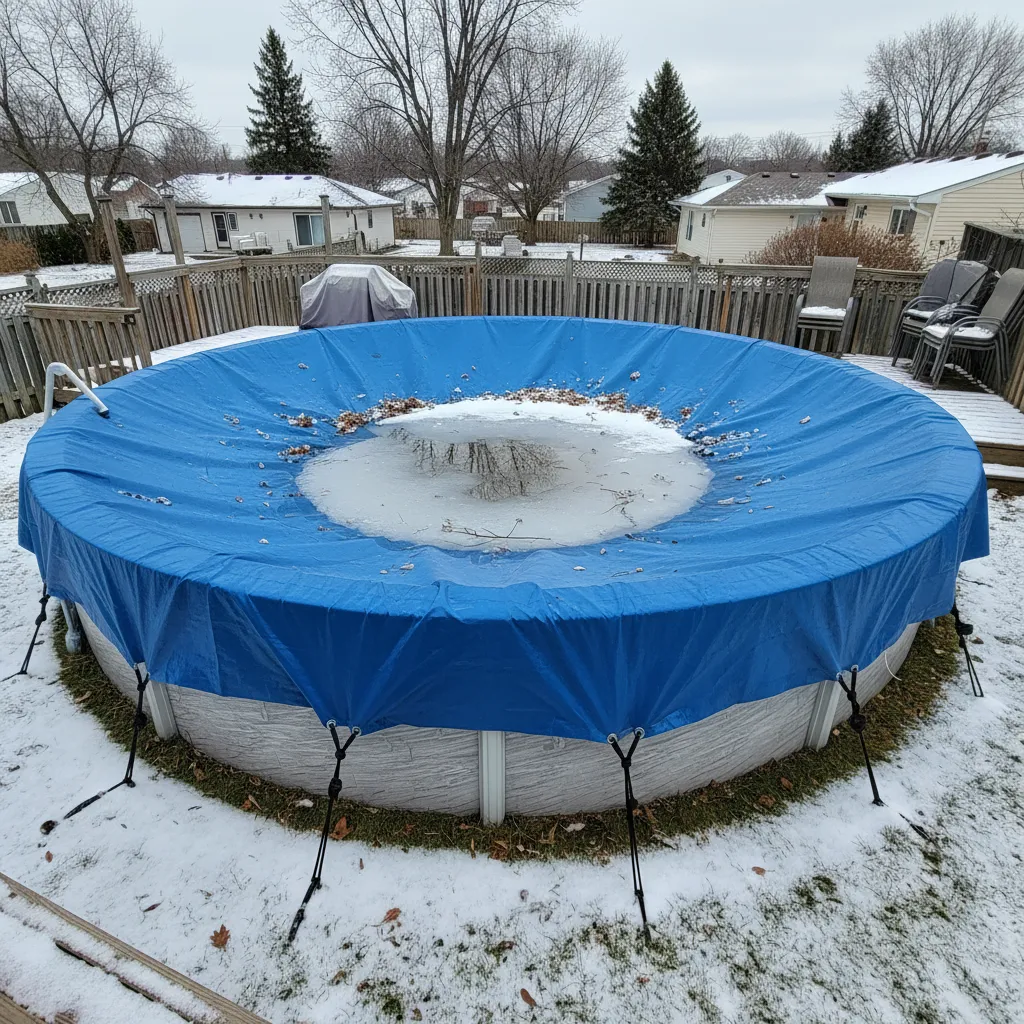
"Invest once to protect your liner and prevent a swamp in the spring."
Heavy-Duty Winter Pool Cover
Winter demand is high - check stock
Factors Influencing Soda Ash Requirements
Proper pH management requires analyzing multiple variables. Sodium carbonate (soda ash) demand varies based on water chemistry and environmental conditions.
Pool Volume and Current Ph Level
Water volume directly determines dosage. A 20,000-gallon pool needs double the soda ash of a 10,000-gallon pool to achieve the same pH shift. Starting pH also matters: raising from 7.0 to 7.4 requires 6 oz per 10k gallons, while 7.2 to 7.6 needs 4 oz. Pools with low pH levels can lead to problems like skin irritation and corrosion. It’s important to monitor pH regularly to keep the pool safe and comfortable.
Total Alkalinity (TA) Impact
TA acts as a pH buffer. Pools with TA below 80 ppm experience rapid pH fluctuations, demanding more frequent soda ash applications. High TA (above 120 ppm) resists pH changes, requiring larger doses. Always test TA before adjusting pH.
| TA Level (ppm) | Soda Ash Efficiency |
|---|---|
| 60-80 | High sensitivity: 25% more soda ash needed |
| 80-120 | Standard dosage applies |
| 120-150 | 20% reduction in effectiveness |
Water Temperature and Dissolution Rates
Cold water (below 65°F) slows soda ash dissolution, potentially causing cloudy water. Pre-dissolve in a bucket of warm water when temperatures drop. Ideal application occurs at 68-90°F for optimal dispersion.
Interaction With Other Pool Chemicals
- Chlorine: High chlorine (>5 ppm) accelerates pH drift. Wait 4 hours after shocking before adding soda ash
- Calcium Hardness: Water with CH >400 ppm may experience clouding when pH exceeds 7.8
- Stabilizer: Cyanuric acid levels >80 ppm reduce soda ash effectiveness by 15-30%
The Science Behind Ph Adjustment With Sodium Carbonate
Soda ash (Na₂CO₃) undergoes specific reactions when introduced to pool water. These processes dictate its effectiveness and limitations.
Chemical Reactions in Water
Na₂CO₃ dissociates into 2Na⁺ + CO₃²⁻. The carbonate ions react with hydrogen ions (H⁺): CO₃²⁻ + 2H⁺ → H₂O + CO₂↑. This removes acidity, raising pH. Each pound of soda ash increases pH by approximately 0.2 in 10k gallons with TA 100 ppm. Many people use soda ash for swimming pools to maintain a balanced pH. By raising the pH, it helps to keep the water safe and comfortable for swimmers.
Alkalinity’s Role in Ph Stability
Total alkalinity measures water’s resistance to pH changes. While soda ash primarily targets pH, it slightly raises TA (1 ppm TA per 1.2 ppm pH increase). For TA adjustments, sodium bicarbonate is more effective but less pH-reactive. pH and alkalinity work together to maintain stable water conditions. A balanced relationship between these two factors is crucial for optimal water quality.
Langelier Saturation Index Considerations
The LSI measures water balance (pH + TA + CH + TDS – Temperature). Soda ash adjustments alter three LSI components:
- Direct pH increase (+0.3 LSI per 0.2 pH rise)
- TA increase (+5 ppm TA adds +0.1 LSI)
- Indirect calcium solubility effects
Maintain LSI between -0.3 and +0.3 to prevent scaling or corrosion.
Also See: Pool Build Cost Calculator for Easy Estimates

Soda Ash Dosage Guidelines by Pool Volume
Standard dosing assumes 100 ppm TA and 80°F water. Adjust quantities using My Pool Calculator for precise measurements.
10,000-gallon Pools
| Current pH | Target pH | Soda Ash Needed |
|---|---|---|
| 7.0 | 7.4 | 6 oz |
| 7.2 | 7.6 | 4 oz |
| 7.4 | 7.8 | 3 oz |
20,000-gallon Pools
| Current pH | Target pH | Soda Ash Needed |
|---|---|---|
| 7.0 | 7.4 | 12 oz |
| 7.2 | 7.6 | 8 oz |
| 7.4 | 7.8 | 6 oz |
30,000-gallon Pools and Larger
- pH 7.0 → 7.4: 1.5 lbs
- pH 7.2 → 7.6: 1 lb
- pH 7.4 → 7.8: 0.75 lbs
Common Mistakes When Adding Soda Ash to Pools
Overcorrection and Ph Swings
Adding more than 1 lb per 10k gallons often overshoots targets. pH rises continue for 6-8 hours post-application. Test 4 hours after treatment before redosing.
Neglecting Alkalinity Testing
Low TA (<60 ppm) causes rapid pH drops post-treatment. High TA (>140 ppm) creates resistance, wasting chemicals. Always measure TA first.
Improper Dissolution Techniques
Undissolved soda ash settles on pool floors, creating white spots. Pre-mix in a 5-gallon bucket of warm water. Broadcast solution across the deep end with pump running.
Adding Soda Ash During High Chlorine Activity
Chlorine levels above 5 ppm accelerate pH fluctuations. Wait 4 hours after shocking or salt cell cleaning cycles. Test chlorine before application.
Special Considerations for Different Pool Types
Fiberglass and Vinyl-lined Pools
Maintain pH 7.4-7.6 to prevent liner wrinkling or gelcoat degradation. Avoid exceeding 8 oz per 10k gallons in a single dose.
Saltwater Pool Systems
Salt chlorination naturally raises pH. Use soda ash sparingly – typically 25% less than traditional pools. Monitor pH weekly due to salt cell electrolysis.
Concrete and Plaster Finishes
New plaster (<30 days) requires pH 7.2-7.4 to prevent calcium leaching. Use 50% standard soda ash doses during curing.

Advanced Ph Management Scenarios
Addressing Ph Drift in High-bather Load Pools
Public pools or swim schools often need daily adjustments. For 100+ daily users:
- Increase TA to 110-120 ppm
- Use 20% smaller soda ash doses every 4 hours
- Install automated pH controllers