
Pool Electricity Cost Calculator
Published on: May 1, 2025 | Last Updated: February 1, 2026
Written By: Lila Fairholme
Want to know how much your pool adds to your electricity bill? This calculator helps estimate costs. Pools use power for pumps, heaters, and cleaning systems. We’ll focus on the main factors: pump runtime, wattage, and your local electricity rate. No complex math needed – just enter your numbers!
Calculate Your Pool’s Energy Use
Key Factors Influencing Pool Electricity Costs
Pool Pump Runtime and Efficiency
Pool pumps account for 50–70% of a pool’s total energy consumption. Runtime directly impacts costs: an 8-hour daily cycle costs twice as much as a 4-hour cycle. Variable-speed pumps use 30–70% less energy than single-speed models. For example, a 1.5 HP single-speed pump consumes 1,500–2,500 watts, while a variable-speed equivalent operates at 150–700 watts. Always match pump size to pool volume to avoid overworking the system. Managing pool pump usage can lead to significant savings on electricity bills. Being mindful of how long and how efficiently the pump runs is crucial for reducing overall energy costs.
| Pump Type | Wattage Range | Annual Cost* |
|---|---|---|
| Single-Speed | 1,500–2,500W | $600–$1,000 |
| Dual-Speed | 800–1,400W | $320–$560 |
| Variable-Speed | 150–700W | $60–$280 |
*Based on 8-hour daily runtime and $0.18/kWh.
Crucial Winterizing Products

"The all-in-one solution for a guaranteed clear spring opening."
All-in-One Closing Chemical Kit
Winter demand is high - check stock

"The 'set & forget' option. This is the easiest winterizing I've ever done."
Simple 3-in-1 Winterizing Balls
Winter demand is high - check stock
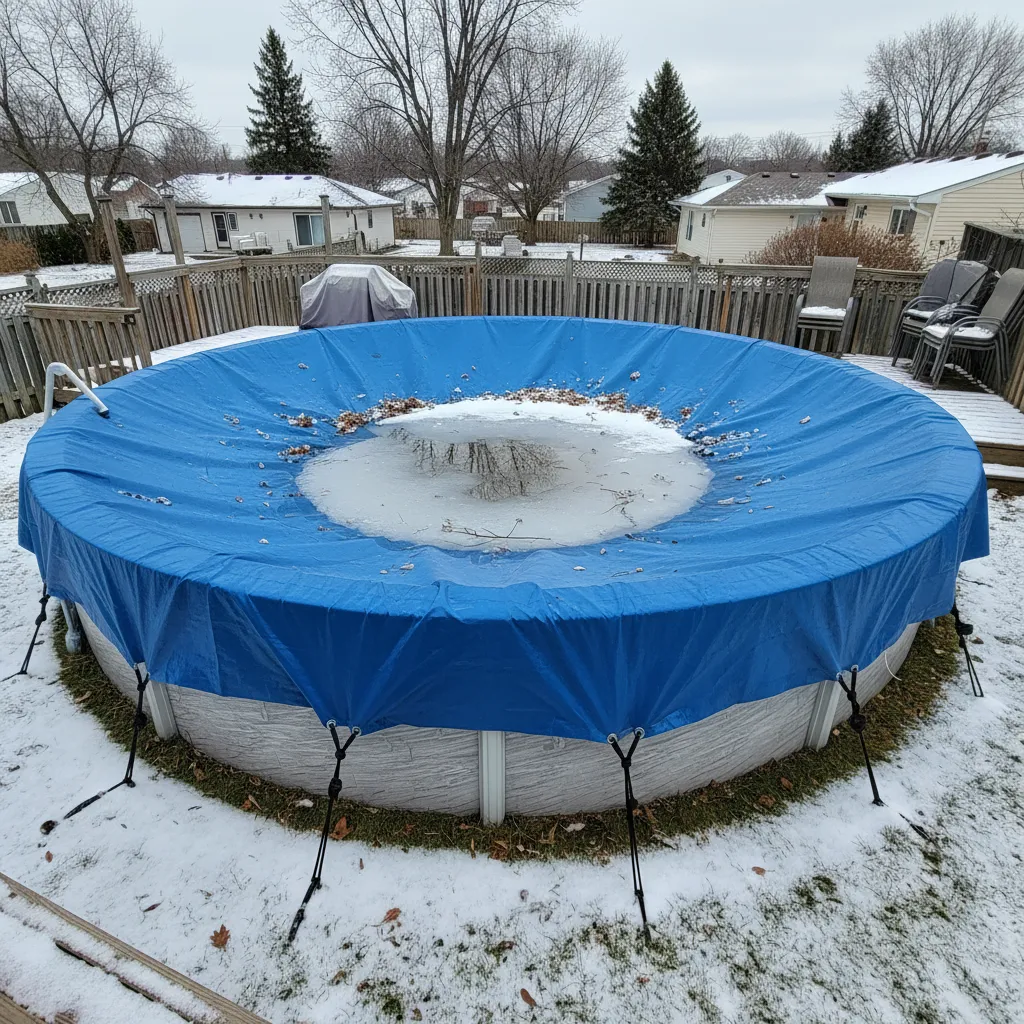
"Invest once to protect your liner and prevent a swamp in the spring."
Heavy-Duty Winter Pool Cover
Winter demand is high - check stock
Heater Type and Usage
Heaters amplify energy demands, especially in cooler climates. Electric resistance heaters draw 4.5–6.0 kW per hour, while heat pumps operate at 5–6 COP (Coefficient of Performance), yielding 5–6 units of heat per unit of electricity. Gas heaters, though cheaper per BTU, rely on fluctuating fuel prices. A 100,000 BTU gas heater costs $3–$5 per hour versus $4–$6 for electric models. Heating a pool can significantly affect your monthly expenses. It’s important to calculate these costs to find the most budget-friendly heating option.
- Electric Resistance: 4.5–6.0 kW/hour | $0.81–$1.08/hour
- Heat Pump: 1.5–2.5 kW/hour | $0.27–$0.45/hour
- Gas Heater: 100,000 BTU/hour | $3–$5/hour
Pool Size and Volume
A 20,000-gallon pool requires 40–60% more energy than a 10,000-gallon pool. Larger volumes extend pump runtimes to achieve the recommended 1–2 turnovers daily. For example, a 15,000-gallon pool needs 6–12 hours of pump operation, while a 30,000-gallon pool may need 8–16 hours.
Climate and Seasonal Demands
Pools in Arizona face 30% higher evaporation rates than those in Michigan, increasing heater and refill costs. Winter heating in temperate zones can spike bills by $100–$300 monthly. Solar covers reduce heat loss by 50–70%, cutting heating demands significantly.
Local Electricity Rates
Rates vary from $0.10/kWh in Washington to $0.33/kWh in California. Time-of-use plans charge up to $0.45/kWh during peak hours (4–9 p.m.). Always verify rates with your utility provider.
| State | Average Rate/kWh |
|---|---|
| California | $0.33 |
| Texas | $0.14 |
| Florida | $0.12 |
Breaking Down the Numbers: Estimating Your Pool’s Energy Consumption
The Basic Formula for Calculating Electricity Costs
Use this equation to estimate daily costs:
(Device Wattage × Hours Used × Electricity Rate) ÷ 1,000 = Daily Cost
Example: A 2,000W pump running 8 hours at $0.18/kWh costs (2,000 × 8 × 0.18) ÷ 1,000 = $2.88 daily.
Real-world Examples Of Pool Energy Calculations
| Component | Wattage | Daily Hours | Monthly Cost |
|---|---|---|---|
| Variable-Speed Pump | 500W | 10 | $27.00 |
| Heat Pump Heater | 2,000W | 4 | $43.20 |
| LED Lighting | 100W | 6 | $3.24 |
Also See: Pool Painting Cost Calculator: Estimate Your Costs
Energy-saving Strategies to Reduce Pool Electricity Costs
Upgrading to Variable-speed Pumps
Variable-speed pumps cut energy use by 30–70% compared to single-speed models. They operate at 50–80% motor capacity for routine filtration, saving $300–$500 annually.
Optimizing Heater Settings
Lower the thermostat by 2–3°F to reduce heating costs by 10–15%. Pair with a solar cover to maintain temperature without constant reheating.
Using Pool Covers and Timers
Covers reduce evaporation by 95%, decreasing refill and heating needs. Timers automate pump cycles to avoid off-peak rate overlaps.
Cost Comparison: In-ground Vs. Above-ground Pools
In-ground Pool Energy Profiles
Larger volumes (15,000–30,000 gallons) and built-in features like waterfalls or spas raise costs. Average monthly energy bills range from $150–$400.
Above-ground Pool Energy Profiles
Smaller sizes (5,000–15,000 gallons) and simpler setups lower demands. Monthly costs average $80–$200.
| Pool Type | Average Monthly Cost |
|---|---|
| In-Ground | $150–$400 |
| Above-Ground | $80–$200 |
Seasonal Variations in Pool Electricity Costs
Summer Vs. Winter Energy Demands
Summer costs rise due to extended pump cycles and frequent cleaning. Winter heating in mild climates can add $50–$150 monthly. In freezing regions, winterizing the pool cuts costs to near zero. With these changes in expenses, many wonder about pool costs during the winter. Overall, maintaining a pool in winter can often lead to significant savings compared to summer months.
Regional Climate Impact on Annual Costs
Pools in Florida use 20% more energy annually for cooling and filtration than those in Oregon. Desert regions face higher evaporation, increasing water pumping costs by 15–25%. To keep costs in check, it’s important to consider all factors affecting pool maintenance. A pool painting cost calculator can help homeowners estimate necessary expenses accurately.

Common Mistakes That Inflate Pool Electricity Bills
Oversized Pumps and Heaters
A 3 HP pump for a 10,000-gallon pool wastes $200–$400 yearly. Match equipment to pool size using My Pool Calculator for precise recommendations.
Poor Maintenance Practices
Clogged filters force pumps to work 25% harder, raising costs. Clean cartridges monthly and backwash sand filters every 2 weeks.
FAQs – Addressing Pool Electricity Cost Questions
How Much Does It Cost to Run a Pool Pump Monthly?
A 1.5 HP pump running 8 hours daily at $0.18/kWh costs approximately $64.80 monthly. Variable-speed models drop this to $21.60–$50.40.
Is It Cheaper to Run a Pool Pump at Night?
Yes, if your utility offers time-of-use rates. Off-peak rates (8 p.m.–6 a.m.) can be 30–50% lower than peak daytime rates.
Do Solar Heaters Reduce Electricity Costs?
Solar heaters eliminate 60–80% of conventional heating costs. Initial installation ranges from $3,000–$4,000, with payback in 2–4 years.
What’s the Average Cost to Heat a Pool?
Heating a 20,000-gallon pool from 60°F to 85°F costs $80–$150 with a heat pump or $200–$400 with electric resistance.
How Do I Identify Energy Inefficiencies in My Pool System?
Check for air leaks in pumps, irregular water flow, or frequent heater cycling. Use My Pool Calculator to benchmark your system against regional averages.
Useful References for You:
- American National Standards Institute (ANSI). (2020). ANSI/PHTA Standards for Residential Swimming Pools. New York, NY: ANSI.
- Cut Electric Bill With Variable Speed Pool Pump
- 2025 Electricity Cost to Run Pool Pump | Angi
- r/pools on Reddit: Cost to run pool?
- How Much Does a Pool Cost Per Month in Electricity?