
Lifeguard Ratio Pool Calculator: Why It Matters
Published on: April 24, 2025 | Last Updated: April 13, 2025
Written By: Lila Fairholme
Keeping swimmers safe requires enough lifeguards. But how many do you need? We’ll explain pool safety ratios and give you a simple calculator. Learn how pool size, swimmer count, and activity levels change staffing needs. This tool helps pool managers follow safety guidelines and protect guests.
Lifeguard Calculator
How to Use
- Measure your pool’s total surface area
- Estimate maximum swimmers at peak time
- Select the busiest activity level
- Click calculate
Factors Influencing Lifeguard-to-swimmer Ratios
Lifeguard staffing requirements depend on variables that impact surveillance effectiveness. These factors determine how many swimmers one lifeguard can monitor safely. Failing to account for them increases drowning risks and liability exposure. Similarly, when managing a bailment pool, it’s essential to recognize the responsibilities tied to protecting and supervising the items involved. Each member of the bailment pool must ensure that all items are treated with care to avoid loss or damage.
Crucial Winterizing Products
"The all-in-one solution for a guaranteed clear spring opening."
All-in-One Closing Chemical Kit
Winter demand is high - check stock

"The 'set & forget' option. This is the easiest winterizing I've ever done."
Simple 3-in-1 Winterizing Balls
Winter demand is high - check stock
"Invest once to protect your liner and prevent a swamp in the spring."
Heavy-Duty Winter Pool Cover
Winter demand is high - check stock
Pool Size and Shape
Larger pools require more guards. The Red Cross recommends one guard per 2,500 sq ft of water surface area. Irregular shapes with blind spots may need 20% more staff. Olympic-sized pools (50m x 25m) typically require 4-5 guards versus 2-3 for residential-sized pools (40ft x 20ft). When considering pool safety, it’s essential to note that the size of the pool plays a significant role. Standard pool sizes, such as the commonly used residential dimensions, are designed with safety and convenience in mind.
Bather Load Capacity
The maximum number of swimmers directly affects ratios. Commercial pools use this formula:
- Bather load = (Pool surface area in sq ft) ÷ 15
- Example: 1,800 sq ft pool ÷ 15 = 120 maximum swimmers
Guards must be added as bather load increases. High-density periods may require 1:25 ratios instead of standard 1:50.
Water Depth Variations
Deeper areas need tighter supervision. Pools with diving wells over 12ft require:
- 1 guard per 75 sq ft in deep zones
- 1 guard per 150 sq ft in shallow zones
Visibility Conditions
Murky water or glare reduces effective coverage. Pools with turbidity above 0.5 NTU need 15% more guards. Facilities using dark-bottom finishes often increase staffing by 10-20%.
Lifeguard Ratio Standards and Regulations
ANSI/APSP-11 Compliance
The American National Standards Institute mandates:
| Pool Type | Minimum Ratio |
|---|---|
| Recreational | 1:25 |
| Competition | 1:50 |
| Waterparks | 1:100 |
Local Health Department Codes
Many jurisdictions impose stricter rules. California requires:
- 1 guard per 50 swimmers in pools under 3,000 sq ft
- 1 guard per 75 swimmers in pools over 3,000 sq ft
Also See: Water Replacement Cost Pool: Why It Matters
Calculating Staffing Needs for Different Pool Types
Residential Pools
Home pools rarely require professional guards. For parties exceeding 15 guests:
- Hire 1 guard for every 10 non-swimmers
- Add backup coverage if using inflatables
Municipal Recreation Pools
Public facilities use this matrix:
| Attendance | Guards Needed |
|---|---|
| 0-75 | 2 |
| 76-150 | 3 |
| 151-225 | 4 |
Waterpark Facilities
High-risk attractions require specialized staffing:
- Wave pools: 1 guard per 50 riders
- Speed slides: 1 guard per launch platform
- Lazy rivers: 1 guard every 100 linear feet
Adjusting Ratios for Special Circumstances
Aquatic Programs
Guarded swim lessons need modified coverage:
- Parent-tot classes: 1:8 ratio
- Adult lap swim: 1:30 ratio
- Competitive training: 1:25 ratio
Weather Impacts
Reduce ratios during adverse conditions:
- Rain: 20% more guards
- Extreme heat: 15% more guards
- Low-light: 25% more guards
Training Requirements Impacting Ratios
Certification Levels
Higher-trained guards can monitor more swimmers:
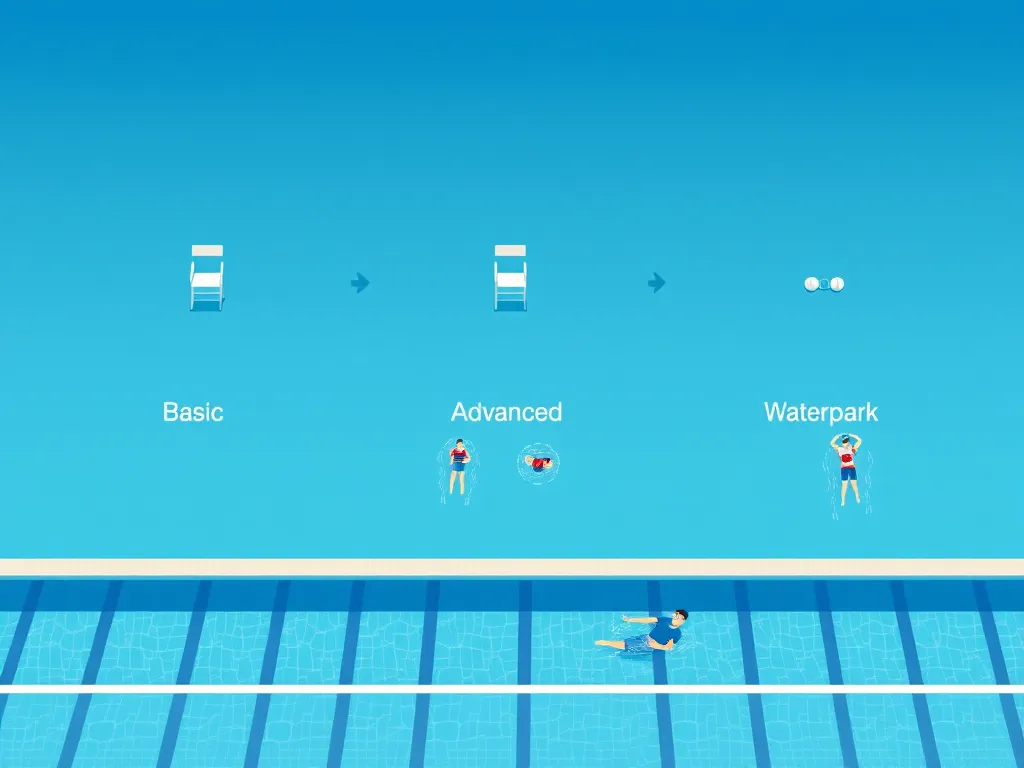
| Certification | Max Ratio |
|---|---|
| Basic | 1:25 |
| Advanced | 1:40 |
| Waterpark | 1:75 |
CPR Readiness
Facilities without on-site EMS must staff:
- 1 CPR-certified guard per 50 swimmers
- Backup responders every 200 swimmers
Legal Implications Of Improper Ratios
Insurance Requirements
Most policies mandate:
- Minimum 1:25 ratio for general admission
- $2 million liability coverage per guard
OSHA Violation Penalties
Fines for non-compliance:
| Violation | Fine |
|---|---|
| First offense | $13,653 per guard |
| Repeat offense | $136,532 per guard |
Seasonal Staffing Considerations
Peak Vs Off-peak Hours
Adjust ratios based on attendance patterns:
- Summer weekends: 1:20 ratio
- School-year weekdays: 1:40 ratio
Staff Rotation Schedules
Prevent fatigue with:
- 20-minute scanning rotations
- 15-minute breaks every 2 hours
Frequently Asked Questions
What’s the Penalty for Understaffing?
Facilities may face $500-$10,000 daily fines plus potential criminal charges if injuries occur.
Do Baby Pools Need Lifeguards?
Wading pools under 18″ deep don’t require guards but need 1:10 adult supervision ratios.
How Does Pool Chemistry Affect Ratios?
Improper chlorine levels (below 1ppm or above 5ppm) require 50% more guards due to irritation risks.
Are Ratios Different for Saltwater Pools?
No, but guards need extra training for electrolyte imbalance emergencies.
What About UV Protection Needs?
Guards working over 2 hours need shaded stations without compromising sightlines.
Optimizing Pool Safety Operations
Regularly review local codes and incident reports. Conduct monthly emergency drills. Use zone-based coverage systems with overlapping sectors. Rotate guard positions to maintain vigilance. Document all staffing decisions and ratio adjustments.
For precise calculations tailored to your pool’s specifications, visit My Pool Calculator. The tool factors in all regulatory requirements and environmental variables to generate compliant staffing plans.