How to Protect Pool Equipment From Freezing & Prevent Pool Freeze-ups
Published on: November 29, 2025 | Last Updated: November 17, 2025
Written By: Lila Fairholme
Keeping your pool equipment from freezing and stopping your pool water from turning to ice requires a mix of winterizing techniques, insulation strategies, and smart pump settings. Proper freeze prevention protects pipes, pumps, and filters from costly cracks while maintaining your pool’s structural integrity through winter. The process differs slightly between in-ground and above-ground pools, with temperature thresholds and equipment types determining your action plan.
This guide breaks down exactly how cold temperatures damage pool systems and walks through step-by-step solutions. You’ll learn when to drain plumbing lines versus using antifreeze, how to insulate pump housings with foam sleeves, and why heat tape works best on above-ground pipes. We’ll also cover brand-specific freeze protection modes for Hayward, Pentair, and Jandy pumps – including the ideal thermostat settings to prevent ice formation.
For those in colder climates, we’ll explore emergency tactics like manual water circulation during power outages and safe use of portable heaters. You’ll find specialized tips for above-ground pools, including air pillow placement under covers and partial drainage methods. By the end, you’ll have a complete cold-weather defense plan combining proactive prep with real-time monitoring strategies.
Understanding Pool Freeze Risks
Water expands by 9% when frozen, creatng enough force to crack PVC pipes, split pump housings, or rupture filter tanks. Even a sngle night below freezng can lead to costly repairs. Let’s break down the scence behnd ths threat.
Crucial Winterizing Products
"The all-in-one solution for a guaranteed clear spring opening."
All-in-One Closing Chemical Kit
Winter demand is high - check stock

"The 'set & forget' option. This is the easiest winterizing I've ever done."
Simple 3-in-1 Winterizing Balls
Winter demand is high - check stock
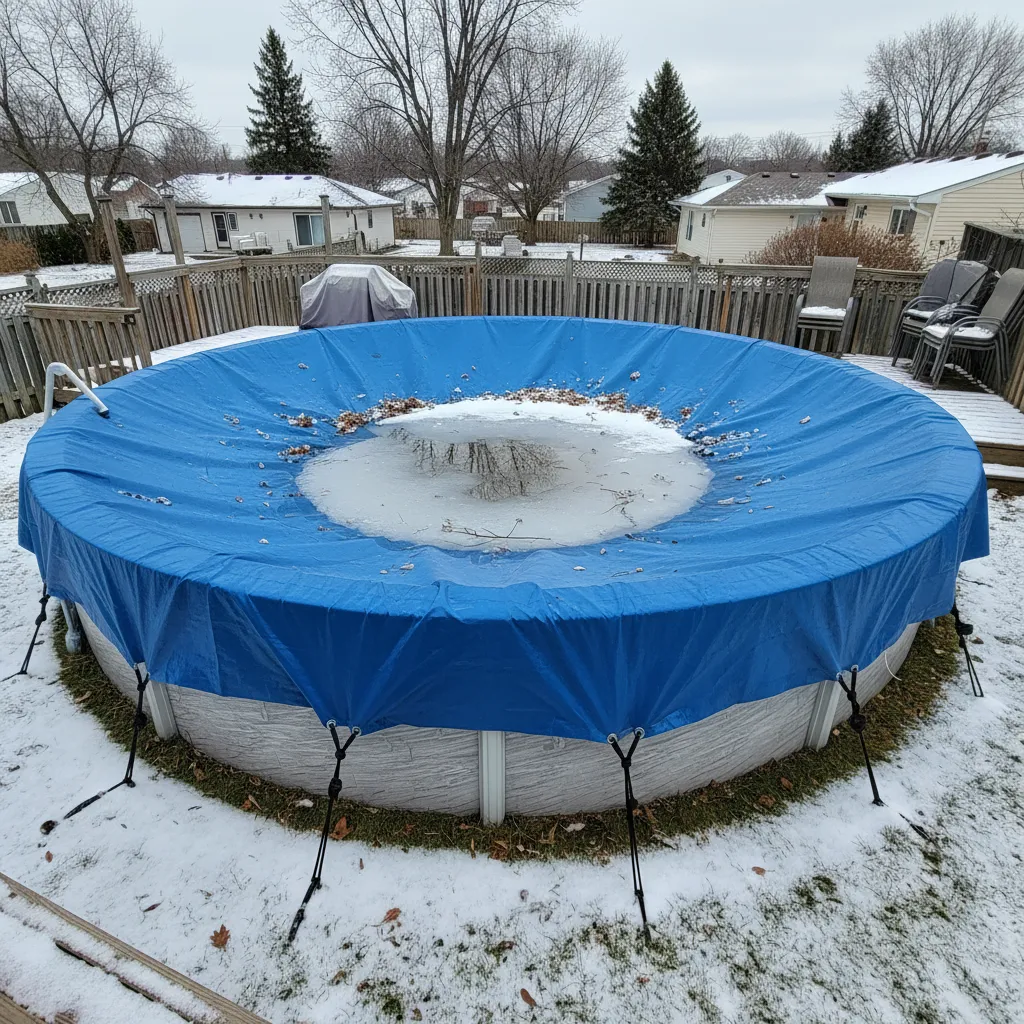
"Invest once to protect your liner and prevent a swamp in the spring."
Heavy-Duty Winter Pool Cover
Winter demand is high - check stock
Why Freezing Damages Pool Equipment
Ice formation creates pressure up to 30,000 PSI—enough to fracture concrete. Pool components aren’t built to withstand this force. Pump seals leak when ice crystals shred rubber gaskets. Filter multiport valves jam when water trapped inside freezes. Metal heat exchangers in gas heaters split open if condensate freezes inside coils. To prevent these issues, people often look for ways to melt ice effectively. Pool salt can be a useful solution, as it helps lower the freezing point of water, making it easier to clear ice from pool areas.
Critical Components at Risk: Pipes, Pumps, and Filters
Three systems face the hghest risk:
- PVC Pipes: 1.5” to 2” schedule 40 PVC cracks at 1,200 PSI—far below ice’s 30,000 PSI force. Underground lines aren’t safe; frost penetrates 6-12” deep n most climates.
- Circulation Pumps: Wet-end housngs (thermoplastic or stainless steel) crack when residual water freezes. Motor windngs short f moisture enters through damaged seals.
- Sand/DE Filters: Tank pressures reach 30 PSI normally. Ice expands ths to 300+ PSI, bursting seams. Lateral assemblies bend under stress.
How Cold is Too Cold? Freeze Threshold Temperatures
Pool water freezes at 32°F, but equipment becomes vulnerable earlier. Pipes start riskng damage at 20°F due to wind chill on exposed lines. Use ths guide:
| Condition | Risk Level | Action Required |
|---|---|---|
| 36°F + | Low | Monitor forecasts |
| 32°F – 35°F | Moderate | Activate freeze protection mode |
| 28°F – 31°F | High | Run pumps continuously |
| Below 28°F | Critical | Employ backup heat sources |
Note: Saltwater pools freeze at 28.4°F due to lower freeze pont. Wind speeds above 10 mph accelerate coolng by 300% on exposed equipment.
With freeze risks mapped, let’s explore hands-on wnteerzng steps to safeguard your setup before temps plummet.
Winterizing Your Pool &Amp; Equipment
Proper winterization shields plumbing, pumps, and filters from freeze-related stress. Follow these steps before temperatures drop below 40°F to minimize ice formation risks. Clear water is essential for maintaining a pool’s health during winter months. This clarity allows for better visibility and helps spot any potential issues early on.
Step 1: Drain Water From Plumbing Lines
Use compressed air or a pool-grade blower to push standing water out of suction lines, return jets, and skimmer pipes. Focus on removing moisture from low spots where ice tends to form. For underground plumbing, blow lines at 15-20 PSI until no water exits the ports. Leave drain valves open after purging to prevent residual buildup. Preparing your pool lines for winter is essential. Properly blowing out the pool lines can help prevent costly damages caused by freezing temperatures.
Step 2: Add Pool Antifreeze to Pipes
Pour non-toxic propylene glycol antifreeze rated for potable water systems into skimmer baskets and exposed pipes. Use 1 gallon per 10 linear feet of plumbing. This lowers the freezing point to -50°F while protecting rubber seals and PVC joints from brittleness. Never use automotive antifreeze—it’s toxic and damages pool components. Keeping your pool antifreeze solution ready can help protect your RV antifreeze solution too. RV antifreeze is essential for preventing damage during colder months when your vehicle is not in use.
Step 3: Remove Drain Plugs From Equipment
Locate drain plugs on pump housings, filter tanks, heater manifolds, and chlorinators. Store plugs in labeled bags near equipment for spring reopening. Tilting pumps sideways helps residual water escape. For multi-port valves, set to “winterize” or “closed” positions to relieve pressure on internal gaskets. When preparing for pool maintenance, check the open pool filter lid as well. An open pool filter lid can indicate a need for cleaning or repairs to ensure proper filtration.
Step 4: Shut Down and Disconnect Heaters
Turn off gas lines or electrical breakers feeding pool heaters. Drain heat exchangers using built-in purge valves to prevent mineral scaling during dormancy. Cover combustion chambers with vinyl caps to block rodents. Gas models require vent inspections—nesting pests love warm exhaust tubes. If you’re getting ready for the season, it’s important to hook up the pool heater correctly. A well-installed heater ensures a comfortable swimming experience all season long.
Protecting Equipment During Active Use
For pools operating in freezing conditions, proactive insulation maintains component functionality. These methods work with freeze protection systems to defend against sudden temperature drops. Taking these precautions ensures that pools remain in good condition for use. A well-maintained pool can greatly enhance a pick up pools business, attracting more customers looking for a reliable service.
Insulating Pipes and Pump Housings
Wrap exposed PVC with foam sleeves or fiberglass pipe wrap. Focus on joints, elbows, and sections above ground. Pump motors benefit from neoprene covers retaining operational heat. Insulation slows heat loss, buying time during overnight chills before freeze guards activate. Creating a proper pool cove is also essential for protecting the pool’s structure. A well-designed pool cove can greatly enhance the lifespan and efficiency of your pool system.
Best Materials for Insulation
Closed-cell foam tubes (1” wall thickness) offer R-6 thermal resistance. For curved plumbing, use flexible rubber insulation with adhesive seams. In extreme climates, double-layer wraps with foil vapor barriers reduce condensation buildup. Budget option: slit pool noodles secured with zip ties. To keep your pool water at the desired temperature, it’s also important to insulate the pipes. Insulating pool pipes helps maintain heat and reduces energy costs.
Using Heat Tape on Vulnerable Lines
Install self-regulating heat cables along pipes near equipment pads. Models like Frostex TX-360 adjust wattage based on ambient temps, drawing 5-7 watts per foot at 32°F. Secure with foil tape—never let cables overlap. Pair with GFCI outlets to prevent electrical hazards. Test tapes annually; UV exposure degrades plastic coatings.
Covering Equipment With Weatherproof Tarps
Drape heavy-duty 18oz vinyl tarps over pumps, filters, and controllers. Use bungee cords or ratchet straps to create tight seals without crushing components. Elevate covers with PVC frames to allow airflow—trapped moisture accelerates corrosion. Choose silver-coated tarps for UV reflection in sunny winter climates. Properly covering your pool equipment is essential for maintaining its longevity. Selecting the right cover pool equipment ensures protection from the elements and prevents damage throughout the year.
Next, fine-tune freeze protection settings to match your pump’s operating specs…
Also See: How to Prepare Above Ground Pool for Winter: A Quick Guide
Freeze Protection Settings for Pool Pumps
Pool pumps need smart temp controls to fight freeze risks. Set freeze guards to kick in before ice forms, keeping water flowing through pipes and gear.
Ideal Temperature Ranges for Activation
Most pumps start freeze mode at 34-38°F. This range stops ice while saving energy. Check your model’s manual – brands vary.
Hayward Freeze Protection Temperature
Hayward systems trigger at 34°F. Their pumps run full speed until temps rise above 38°F. Test sensors yearly – faulty readings cause late starts.
Pentair Freeze Protection Settings
Pentair lets you pick between 34°F and 38°F. Use 34°F in windy areas or 36°F for mild zones. Their VS pumps use 50% speed to save power.
Jandy Pump Thermostat Guidelines
Jandy pumps start at 36°F and cycle every 15 mins. Watch for error codes like “FAL” – this means the sensor needs cleaning or replacing.
Emergency Measures During Power Outages
When storms knock out power, act fast. Still water freezes in under 4 hours at 28°F, cracking pipes and filters.
Keeping Water Moving Manually
Stir water with a pool brush every 2 hours. Move it in wide circles to stop ice layers forming. For skimmers, pour warm (not hot) water to melt blockages.
Using Portable Heat Sources Safely
Place propane heaters 3+ feet from gear. Aim heat at pumps, not plastic parts. Never leave flames unattended – use timers for 30-min bursts.
Preventing Ice Expansion in Above-ground Pools
Float a pool pillow in the center. Leave 1/4 of the cover loose so ice can push up, not out. Check walls for bulges every 6 hours.
Special Considerations for Above-ground Pools
Above-ground pools face unique risks. Thin walls and exposed lines need extra care in cold snaps.
Partial Drainage Techniques
Lower water 6 inches below the skimmer. Use a sub pump to avoid over-draining – going too far can collapse walls in windy weather.
Using Air Pillows Under Pool Covers
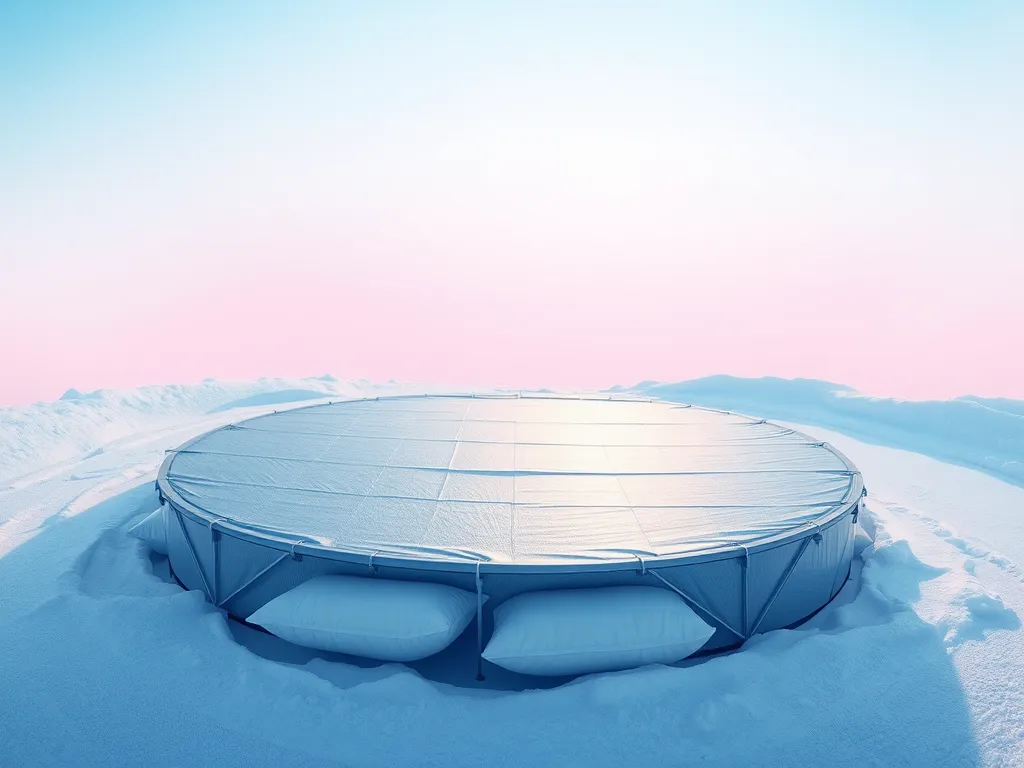
Install 2-3 air pillows under the cover. Secure with nylon straps – duct tape cracks in cold. Pillows shift ice pressure away from walls.
Monitoring Ice Formation Patterns
Check for uneven ice daily. Thick edges with thin centers mean trouble. Break surface ice gently with a broom handle if it spans 50% of the pool.
With these steps in place, you’re ready to tackle common questions about freeze-proofing your pool year-round.
FAQs: Freeze Protection Solutions
How Long Can Pool Equipment Survive Freezing Temps?
Most pool components sustain irreversible damage within 4-6 hours of continuous freezing temperatures. Pumps and filters with residual water may crack in as little as 2 hours during rapid temperature drops below 28°F. Always activate protection measures before temperatures reach 32°F.
Does a Tarp Provide Sufficient Insulation?
While weatherproof tarps help shield equipment from wind and snow, they don’t provide adequate thermal insulation alone. Combine tarps with foam pipe wraps or heat tape for effective freeze protection. Silver-reflective tarps add marginal insulation by retaining ground heat. Keeping this in mind, tarps can also play a significant role when placing a tarp under a pool. Using a tarp under a pool can add an extra layer of protection and insulation.
Can Saltwater Pools Freeze?
Yes, but at 28.4°F instead of 32°F due to salt content. While slightly more freeze-resistant, saltwater pools still require winterization. Note: salt cells and corrosion-resistant components remain vulnerable to ice damage at extended sub-30°F temperatures. It’s important to prepare your pool for winter to avoid damage. Many pool owners wonder if their pools will freeze during the colder months.
How to Check for Hidden Freeze Damage?
After thawing, inspect systems using these methods: 1) Pressure-test pipes at 20 PSI for drops indicating cracks. 2) Check pump seals for ice crystal patterns. 3) Examine filter tank seams with a flashlight for hairline fractures. 4) Listen for unusual motor hums indicating waterlogged bearings.
Closing Thoughts
Protecting your pool and equipment from freezing temperatures requires proactive steps. From winterizing plumbing lines to setting proper freeze protection on pumps, each measure helps prevent costly damage. Remember that even during active winter use, insulation and heat tape can safeguard vulnerable components.
For above-ground pools, partial drainage and air pillows reduce ice pressure. Always monitor weather forecasts and be ready with emergency measures if power outages occur. Small precautions now save thousands in repairs later.
Need help calculating exact drainage volumes or freeze protection settings? Visit My Pool Calculator for precise tools tailored to your pool’s specifications. Stay ahead of winter’s challenges with data-driven pool care.
Additional Resources for You:
- National Swimming Pool Foundation (NSPF) – Certification & Resources
- How to Respond to Freezing Weather Conditions in Your Pool
- 9 Ways To Prevent Swimming Pool Freeze Damage | Medallion Energy
- 8 Tips to Prepare Your Pool for Freezing Weather
- r/pools on Reddit: What to do to protect my pool from Freezing overnight???