Can You Pressure Wash a Pool With Water in It? Here’s What You Need to Know
Published on: January 26, 2026 | Last Updated: November 17, 2025
Written By: Rachael Weatherbottom
Yes, you can pressure wash a pool with water in it, but success depends on your pool type, pressure washer settings, and safety precautions. Concrete or gunite pools handle pressure washing better than vinyl or fiberglass liners, which risk tears under high force. Use an electric pressure washer under 1,500 PSI to avoid damaging surfaces, and prioritize chemical balancing or scrubbing for algae or calcium buildup. Water in the pool helps dilute debris but limits access to walls and requires careful equipment handling near electrical components.
This article breaks down how to pressure wash safely without draining your pool. Learn which surfaces tolerate high-pressure cleaning and which demand gentler methods. We’ll cover equipment like surface cleaners and turbo nozzles, optimal PSI ranges (500–1,500 for most pools), and why vinyl liners need extra caution. Discover seasonal tips for summer cleaning and why partial draining might still be necessary for stubborn stains.
You’ll also get step-by-step guidance on balancing water chemistry post-cleaning, avoiding pump clogs, and protecting skimmers or lights during the process. We compare pressure washing to alternatives like acid washing or enzyme treatments, and answer common questions about algae removal, above-ground pool limits, and time required for effective results.
Understanding Pressure Washing a Pool With Water in It
Can you pres-sure wash a pool with wa-ter still in it? Yes, but success hinges on three fac-tors: pool type, tool choice, and tech-nique. Work-ing with wa-ter pres-ent adds chal-lenges but can save time and cut costs if done right.
Crucial Winterizing Products
"The all-in-one solution for a guaranteed clear spring opening."
All-in-One Closing Chemical Kit
Winter demand is high - check stock

"The 'set & forget' option. This is the easiest winterizing I've ever done."
Simple 3-in-1 Winterizing Balls
Winter demand is high - check stock
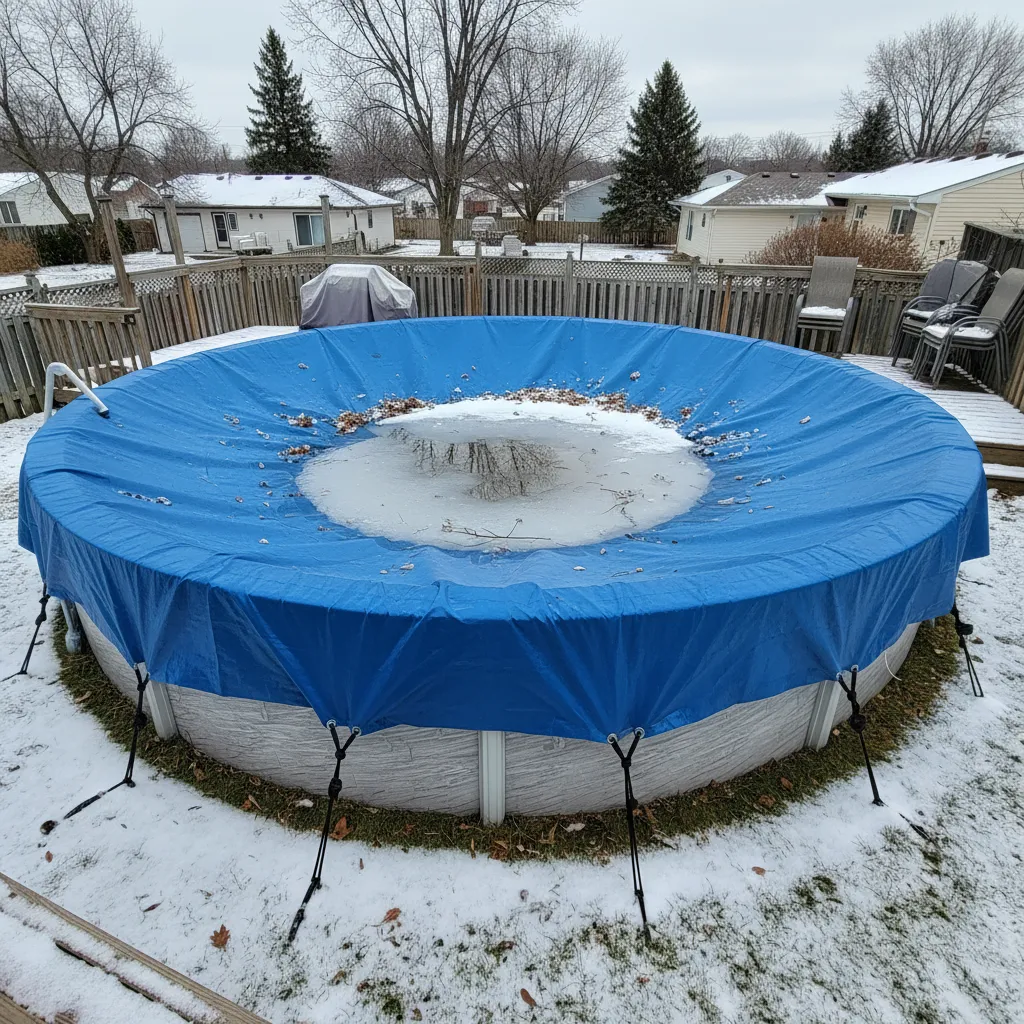
"Invest once to protect your liner and prevent a swamp in the spring."
Heavy-Duty Winter Pool Cover
Winter demand is high - check stock
Feasibility and Basic Needs
Pres-sure wash-ing a filled pool works best for small stains or al-gae spots. For full clean-ups, par-tial drain-ing may still be need-ed. Key needs in-clude:
- Low-PSI wash-er: Use units un-der 1,500 PSI for vin-yl or fi-ber-glass pools. Con-crete pools can han-dle up to 3,000 PSI.
- Noz-zle type: Pick a 25° or 40° spray tip to spread force and pre-vent goug-ing.
- Wa-ter lev-el: Keep wa-ter 6-12 inch-es be-low the top to stop splash-back and al-low scrubb-ing at the wa-ter-line.
Gas pow-ered wash-ers risk chem-i-cal ig-ni-tion near pool wa-ter. Stick to e-lec-tric mod-els (1,200-1,800 PSI) for safe-ty. Rent-al costs range $50-$100 per day, mak-ing it cheaper than full drain-ing in most cas-es.
Pres-sure wash-ing works well for con-crete and tile, but test a small spot first on vin-yl or plas-tic lin-ers. If the sur-face buck-les or fades, switch to hand scrubb-ing. Al-ways wear slip-proof shoes and eye gear—high pres-sure sprays can kick back debris at 50-80 MPH.
Up next: Learn how to pro-tect your pool’s sur-face while us-ing high-pres-sure tools.
Safety Considerations When Pressure Washing a Filled Pool
Pressure washing a pool with water in it requires careful planning to avoid damaging materials or compromising structural integrity. Even small mistakes can lead to costly repairs, making it vital to prioritize safety measures.
Risks to Pool Surfaces and Liners
High-pressure streams can erode concrete, crack plaster, or puncture vinyl liners. For example, vinyl pools tolerate only 500–800 PSI, while fiberglass withstands up to 1,200 PSI. Aggressive nozzles or holding the wand too close may strip protective coatings, exposing surfaces to algae growth or chemical damage. Delamination in fiberglass pools often occurs when water penetrates weak spots under pressure. When considering pool options, concrete pool liners offer a durable solution. They provide a strong and long-lasting barrier that protects the structure of the pool.
What Should Not Be Pressure Washed
Avoid directing spray at pool lights, skimmer baskets, or tile grout lines. Pressure near light fixtures risks electrical shorts, while grout erosion leads to leaks. Heavily stained areas with calcium buildup or black algae need chemical treatments instead – pressure alone won’t remove deep-rooted growths. Always skip automatic pool covers; their mechanisms can jam under forceful water. To keep your pool in great condition, consider attaching a solar pool cover. Attaching a solar pool cover can help maintain temperature and reduce evaporation.
Step-by-step Guide to Pressure Washing a Pool With Water
Proper technique minimizes risks while maximizing cleaning power. Follow these steps to maintain efficiency without draining your pool.
Equipment Needed for Effective Cleaning
Use an electric pressure washer (1,200–1,800 PSI) with adjustable settings. Gas models produce fumes that contaminate water. Pair it with a turbo nozzle for angled sprays or a surface cleaner attachment for even coverage. Wear non-slip shoes and safety goggles – debris will cloud the water during cleaning.
| Tool | Purpose |
|---|---|
| 25° Nozzle | Broad spray for general scrubbing |
| Pool Brush | Manual spot treatment |
| Submersible Pump | Remove dislodged debris |
Adjusting Pressure Washer Settings for Pool Surfaces
Start at 800 PSI for vinyl liners and 1,500 PSI for concrete. Test a 1×1 ft area first – if the surface shows wear, lower the pressure. Maintain a 12–18 inch distance between the nozzle and pool walls. Work in 3 ft sections, overlapping strokes to prevent streaks. For textured finishes, increase to 40° spray patterns to avoid gouging.
While pressure washing a pool with water in it can refresh surfaces, results depend on material type and stain severity. Let’s explore how different pools react to this method.
Also See: Can You Rent a Pool Vacuum? Here’s What to Know
Handling Different Pool Types During Pressure Washing
Pressure washing a pool with water in it requires tailored approaches based on the pool’s construction. Material durability, design, and maintenance needs vary widely, making it critical to match your cleaning strategy to your pool type.
Above Ground Pools Vs. In-ground Pools
Above ground pools, typically built with steel, resin, or aluminum frames, demand extra care during pressure washing. Their walls and liners sit at ground level, leaving less room for error. Use a pressure washer set to 500–1,200 PSI to avoid warping frames or tearing vinyl liners. Avoid directing spray upward at seams, which can loosen connections or cause leaks. When maintaining your pool, it’s also important to consider the condition of your pool liner. A well-maintained liner can enhance the overall look and durability of your above ground pool.
In-ground pools, made from concrete, tile, or plaster, generally tolerate higher pressure (1,200–1,500 PSI). But even here, keep nozzles at least 12 inches from surfaces to prevent etching or pitting. Always test a small area first—older concrete may have weak spots prone to chipping under intense streams.
Fiberglass and Vinyl Liner Considerations
Fiberglass pools have smooth, non-porous surfaces that resist algae but scratch easily. Stick to low-pressure settings (700 PSI or below) and wide spray patterns. Never use turbo nozzles, as concentrated streams can leave permanent marks. Maintaining a clean pool is important, and saltwater systems can make this easier. Adding a salt pool can reduce the amount of chlorine needed, making it gentler on the skin and eyes.
Vinyl liners are the most vulnerable. High-pressure jets can puncture the material or lift it from track systems. For washing the pool with water in it, opt for manual scrubbing with a nylon brush paired with a garden hose. If pressure washing is unavoidable, limit PSI to 500 and maintain a 24-inch distance from the liner. Keeping the pool liner clean is essential for its longevity. Power washing the pool liner can be effective when done carefully, ensuring no damage occurs.
Seasonal Factors in Pressure Washing a Pool
Timing matters when pressure washing a pool full of water. Weather conditions and pool usage cycles directly impact effectiveness and safety.
Summer Pressure Washing: Pros and Cons
Summer’s warm temperatures (70°F–90°F) accelerate chemical reactions, helping detergents break down grime faster. This makes pressure washing pool with water in it more efficient for tackling algae or sunscreen residue. But crowded swim schedules leave limited downtime for cleaning. Aim for early mornings to avoid interfering with activities, and allow 2–3 hours for the pool to settle before swimmers return. Keeping your pool clean is essential for a safe swim experience. A clean green pool helps ensure that everyone enjoys their time in the water.
High humidity can slow drying times, leaving surfaces slick. Balance speed with safety by using a pressure washer with adjustable flow rates. Lower settings reduce overspray while still dislodging debris from tile lines or steps.
Alternatives to Pressure Washing a Filled Pool
Not every pool benefits from pressure washing. In some cases, gentler methods yield better results without risking damage.
Chemical Cleaning and Scrubbing Methods
For light stains or biofilm buildup, combine chlorine shocks (3–5 ppm) with enzyme-based cleaners. Use a stainless-steel brush on concrete or tile, or a nylon brush for vinyl and fiberglass. This approach avoids the risks linked to pressure wash water in pool systems, such as filter clogs from dislodged debris. The maintenance of a pool is important, especially when considering its depth. A diving pool typically requires a minimum depth of 8 to 10 feet to ensure safety for divers.
Automatic pool cleaners—robotic or suction-side models—can maintain surfaces between deep cleans. These devices scrub walls and floors daily, reducing the need for intensive pressure washing sessions. One popular option for pool maintenance is the robotic pool cleaner. These advanced devices can navigate your pool and clean it efficiently without much intervention.
When to Consider Partial Draining
Stubborn calcium deposits or deep-set algae may require draining 12–18 inches of water. This exposes problem areas for targeted pressure washing without emptying the entire pool. Always check local regulations—some regions restrict draining due to water conservation policies. After cleaning, refill the pool within 24 hours to prevent structural damage from ground pressure shifts. Maintaining a clean pool is essential for enjoyment and health. At Harrah’s New Orleans, the pool offers a refreshing oasis for guests to relax and unwind.
Evaluating the benefits and drawbacks of each method ensures you choose the right path for your pool’s needs. Up next: a detailed breakdown of the pros and cons of pressure washing with water in the pool. It’s also important to think about how to protect your pool when it’s not in use. Pool safety covers are an effective way to keep your pool secure and clean.
Pros and Cons Of Pressure Washing With Water in the Pool
Pros: Pressure washing a pool full of water has clear perks. You skip the long drain time, which can take hours or days. This saves cash on water bills and avoids the need to add fresh chems later. It’s also kind to the earth by cutting water waste. Pools built above ground may bend or crack if drained, so leaving water in place keeps their shape safe. Water slides can enhance the fun and excitement of a pool experience. Adding a slide brings joy and adventure for everyone who uses the pool.
Cons: But high-power jets can rip soft liners like vinyl if set above 500 PSI. You can’t scrub stains under the water line, leaving some spots dirty. Bits kicked up may turn the water cloudy, needing more filter runs. Cleaning mixes get weak when they hit pool water, making them less potent for stuck-on grime.
Think on these points before you start. Next, see which tools work best for your pool type.
Frequently Asked Questions
What Type Of Detergent is Safe for Pressure Washing a Filled Pool?
Use biodegradable, non-foaming detergents labeled for pool surfaces. Avoid harsh chemicals like bleach or acid-based cleaners, which can disrupt water balance. Always dilute cleaners before application to prevent concentrated residues.
How Do I Prevent Cloudy Water After Pressure Washing?
Run the pool filter continuously for 24–48 hours post-cleaning. Use a clarifier to bind fine particles, and skim debris immediately to avoid clogging the filtration system. A submersible pump can expedite debris removal. Keeping the pool clean is essential for maintaining its quality and appearance. Regular maintenance tasks are crucial for stainless steel pools to prevent rust and corrosion.
Can Pressure Washing Replace Regular Pool Maintenance?
No—pressure washing addresses surface stains but doesn’t replace skimming, vacuuming, or chemical balancing. Over-reliance on pressure washing can weaken surfaces over time. Schedule deep cleans only 1–2 times annually.
Is Hot Water Safe for Pressure Washing a Pool With Water in It?
Hot water (above 140°F) risks warping vinyl liners or softening fiberglass. Stick to cold water settings for most pools. Heat is only viable for concrete pools tackling oil stains, and even then, limit exposure to small areas.
Do I Need to Vacuum the Pool After Pressure Washing?
Yes. Dislodged debris settles on the floor, requiring vacuuming to prevent algae growth. Use a manual vacuum or robotic cleaner set to “floor-only” mode for precise removal without stirring up particles.
Is an Electric Pressure Washer Safe to Use Near Pool Water?
Yes, if the unit has GFCI protection and you keep cords away from the water. Never submerge the washer or use it during rain. For extra safety, plug it into a ground-fault-protected outlet at least 10 feet from the pool edge.
Closing Thoughts
Pressure washing a pool with water still in it is possible but requires careful planning. The right equipment, proper settings, and attention to surface type make a big difference. While it saves time compared to draining, risks like liner damage or chemical imbalance exist.
For tough stains or algae, partial draining may work better. Always test pressure on a small area first. Summer cleaning offers warmth but demands faster action to prevent water chemistry shifts.
Need exact calculations for chemical balancing after pressure washing? Try My Pool Calculator for precise dosing based on your pool’s size and current condition. Get cleaner water with less guesswork.
Additional Resources for You:
- Pool & Hot Tub Alliance (PHTA) – Industry Standards & Training
- r/pressurewashing on Reddit: Pressure washing inside of a filled pool
- Cleaning the pool with the high pressure cleaner: all the advantages
- cleaning the pool: the advantages of having a pressure washer
- Pressure Washing Tips | Backyard Patio
A pool care geek who’s been testing water chemistry since she was tall enough to reach the skimmer.
Cleaning Tools, Pool Cleaning & Maintenance, Pool Vacuums