Does Chlorine Evaporate From Pool Water?
Published on: March 8, 2026 | Last Updated: November 17, 2025
Written By: Lila Fairholme
Yes, chlorine evaporates from pool water through a process called volatilization. Unlike water evaporation, which removes H2O molecules, chlorine loss occurs when dissolved chlorine gas escapes into the air. Sunlight, temperatures above 85°F, and water movement accelerate this process. Pool owners must test chlorine weekly and maintain 1-3 ppm (parts per million) levels to keep water safe for swimmers.
This article breaks down how chlorine disappears from your pool and why factors like UV rays or splash-out matter more than you might think. You’ll learn why an uncovered pool in Arizona loses 50% of its chlorine in 2 hours midday but lasts 6+ hours when shaded. We’ll also explain the difference between stabilized chlorine (like trichlor tablets with cyanuric acid) and unstabilized forms (liquid chlorine) – one resists sunlight, the other doesn’t.
Discover actionable fixes: how pool covers block 95% of UV-related chlorine loss, why keeping pH at 7.4-7.6 slows evaporation, and when to add cyanuric acid stabilizer. You’ll get data-backed strategies to cut chlorine costs by up to 30% while stopping algae outbreaks before they start.
How Chlorine Evaporation Works in Pool Water
While water evaporation involves liquid turning to vapor, chlorine loss follows a different path. Pool chlorine exists in two forms: free chlorine (active sanitizer) and combined chlorine (chloramines, formed when chlorine reacts with contaminants). Both forms break down under specific conditions, but free chlorine evaporates faster due to its chemical structure.
Crucial Winterizing Products
"The all-in-one solution for a guaranteed clear spring opening."
All-in-One Closing Chemical Kit
Winter demand is high - check stock

"The 'set & forget' option. This is the easiest winterizing I've ever done."
Simple 3-in-1 Winterizing Balls
Winter demand is high - check stock
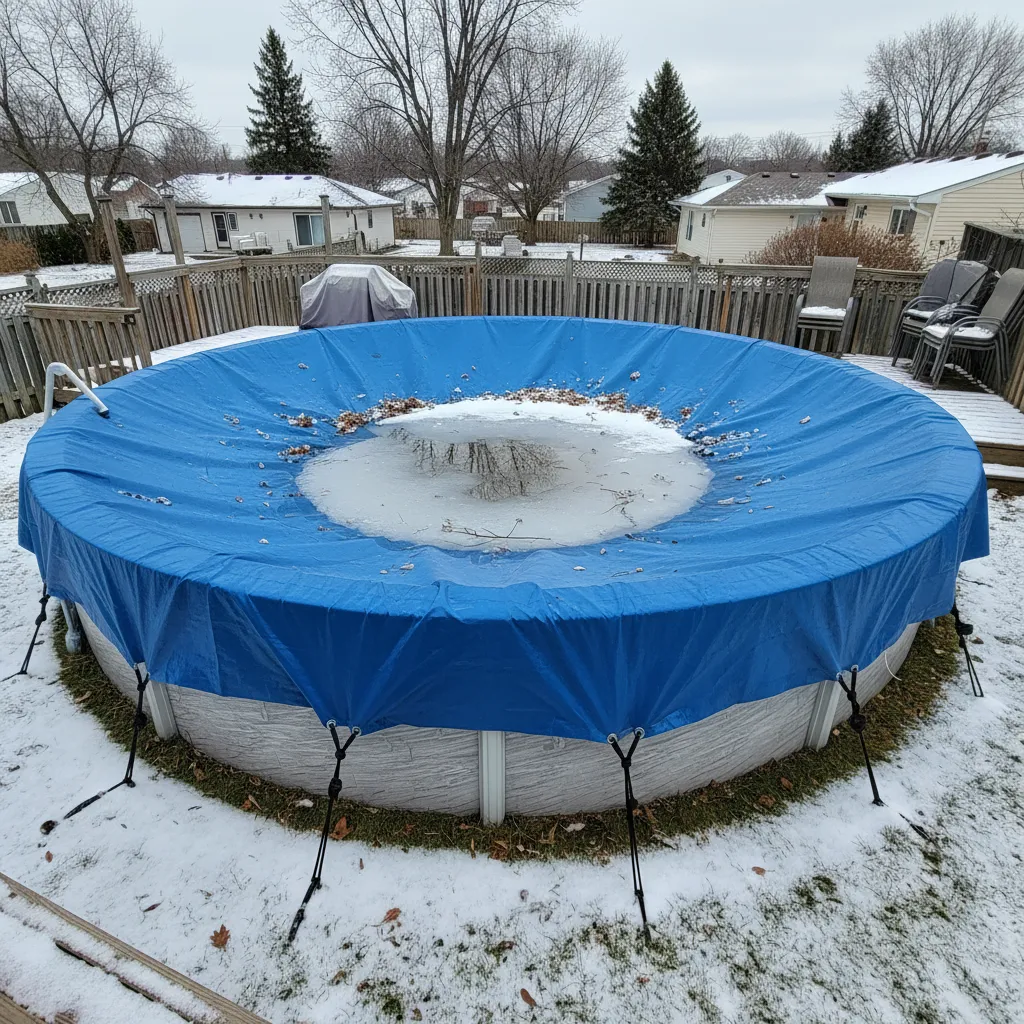
"Invest once to protect your liner and prevent a swamp in the spring."
Heavy-Duty Winter Pool Cover
Winter demand is high - check stock
The Science Behind Chlorine Evaporation
Free chlorine primarily consists of hypochlorous acid (HOCl) and hypochlorite ions (OCl⁻). These compounds degrade when exposed to ultraviolet light from the sun. UV photons break the chemical bonds in chlorine molecules, releasing chlorine gas into the air. At 90°F, chlorine degrades twice as fast as at 70°F because heat energizes molecules, accelerating breakdown. Stabilized chlorine, which contains cyanuric acid, slows this process by shielding chlorine from UV rays—reducing daily loss from 90% to 30% in direct sunlight.
Chlorine Loss Vs. Water Evaporation: Key Differences
Water evaporation removes H₂O molecules but leaves chlorine behind, potentially increasing chlorine concentration if not refilled. Chlorine loss, however, involves chemical changes: UV degradation, reaction with contaminants like sweat or urine, and off-gassing from agitation. For example, a pool losing 0.5 inches of water daily might retain 2-3 ppm chlorine, but without stabilizer, the same pool could lose 4 ppm chlorine in 6 hours under full sun. Testing helps distinguish between the two—low chlorine with stable water levels signals evaporation, while combined chlorine above 0.5 ppm indicates chemical consumption.
Monitoring these patterns informs maintenance strategies. Up next: factors that determine how quickly chlorine disappears from your pool.
Factors That Influence Chlorine Evaporation Rates
Chlorine evaporation rates depend on several environmental and chemical variables. By recognizing these factors, pool owners can better manage sanitizer levels and prevent unexpected drops in protection. One important factor is UV exposure, which can significantly affect chlorine levels. Using a pool screen with UV block can help preserve chlorine and keep the pool water clean and safe.
Sunlight and UV Exposure
Ultraviolet (UV) rays from sunlight break down free chlorine molecules rapidly. Unstabilized chlorine (like liquid chlorine or sodium hypochlorite) degrades up to 90% faster in direct sunlight compared to stabilized versions. Stabilized chlorine contains cyanuric acid (CYA), which acts as a UV shield, slowing chlorine loss to 1-2 ppm per day in sunny conditions.
Pool Water Temperature
Warmer water accelerates chlorine evaporation. For every 10°F increase in temperature, chlorine dissipation rates double. A pool at 90°F loses chlorine 30% faster than one at 70°F. This explains why pools in Arizona or Texas require more frequent chlorine top-offs than those in cooler regions. Maintaining proper chlorine levels is key for pool health. A float pool setup can help manage these challenges effectively, ensuring consistent sanitation.
Humidity and Environmental Conditions
Low humidity increases evaporation for both water and chlorine. In arid climates like Nevada, pools lose up to 0.25 ppm more chlorine daily compared to humid areas like Louisiana. Wind also plays a role—breezes above 5 mph strip chlorine gas from the water’s surface.
Water Circulation and Aeration
Features like waterfalls, spillways, or even heavy swimming activity aerate the water, releasing chlorine gas into the air. A study by the Journal of Pool & Spa Research found that pools with constant aeration lose 40% more chlorine weekly than still pools. This loss can affect the overall chemical balance in the water. Keeping the bromine level stable is essential for effective sanitation in an outdoor pool setting.
Chlorine Type (Stabilized Vs. Unstabilized)
| Type | Evaporation Rate | UV Protection |
|---|---|---|
| Stabilized (e.g., trichlor tablets) | 1-2 ppm/day | CYA shields chlorine |
| Unstabilized (e.g., liquid chlorine) | 3-4 ppm/day | No UV protection |

How Long Does Chlorine Take to Evaporate From Pool Water?
Evaporation timelines vary widely based on pool conditions, but measurable patterns emerge when analyzing real-world scenarios.
Average Timeframes Under Normal Conditions
In a shaded, 20,000-gallon pool with stabilized chlorine at 3 ppm, levels typically drop to 1 ppm in 48-72 hours. Unstabilized chlorine in full sun can dissipate from 3 ppm to zero in under 24 hours. Choosing the right pool supplies is essential for maintaining water quality. One important consideration is investing in the thickest pool liner to enhance durability and minimize wear over time.
Impact Of Extreme Heat (E.g., Florida Climate)
Florida’s combination of high temperatures (85°F+), intense UV index (8-10), and frequent thunderstorms accelerates chlorine loss. Testing data shows Floridian pools lose 4-5 ppm daily without stabilizers—twice the national average.
Evaporation in Covered Vs. Uncovered Pools
A solar or thermal pool cover reduces chlorine evaporation by 50-60%. For example, an uncovered pool losing 3 ppm daily would retain 1.2-1.5 ppm under a cover. Solid safety covers perform best, blocking 99% of UV rays. Keeping your pool clean is important, and Installing a pool skimmer will make it easier to remove debris and maintain water quality.
Effect Of Chlorine Concentration and Pool Size
Higher chlorine concentrations (above 5 ppm) evaporate faster due to increased surface volatility. A 10,000-gallon pool loses chlorine 25% faster than a 25,000-gallon pool with identical conditions, as smaller volumes have less dilution capacity.
Tracking these variables helps predict chlorine needs, but precise management requires regular testing—a process we’ll explore next.
Also See: Can You Pour Bleach in a Swimming Pool? The Truth
Monitoring Chlorine Levels in Your Pool
Keeping track of chlorine amounts is vital for pool safety and clarity. Without proper tracking, your pool might turn into a breeding ground for unwanted organisms or lose its sparkle. The presence of cyanuric acid plays a key role in maintaining chlorine levels. This relationship helps stabilize chlorine in the water, making it more effective in keeping your pool clean.
Testing Methods for Accurate Chlorine Readings
Test strips offer quick results, dipping into water for 3-5 seconds. Liquid titration kits, like those from Taylor Technologies, provide granular data down to 0.2 ppm. Digital testers such as the LaMotte ColorQ Pro 5 give lab-grade accuracy but cost $200-$300. Aim to test at least twice weekly, or daily during heavy use.
Signs Of Excessive Chlorine Loss
Cloudy water often signals free chlorine below 1 ppm. A slick surface feel points to bacterial growth, while visible algae spots mean levels likely dropped under 0.5 ppm. If your pool loses more than 2 ppm daily without heavy rainfall or swimmer load, investigate stabilizer amounts or leaks. Keeping the water clear is essential for a fun and safe swimming experience. Bubbles pools are great for enhancing relaxation and enjoyment during your time in the water.
Risks Of Low Chlorine (Algae, Bacteria, Etc.)
At 0 ppm, harmful pathogens like E. coli or Pseudomonas can multiply in under 24 hours. Green algae blooms appear within 48 hours in warm climates. Low chlorine also lets recreational water illnesses spread, including swimmer’s itch or Legionnaires’ disease.

Preventing Unnecessary Chlorine Evaporation
While some chlorine loss is natural, smart tactics can cut waste by up to 60%.
Using Pool Covers to Block UV Rays
Solar covers slash UV-related chlorine loss by 95% when installed. Solid safety covers perform similarly but don’t trap heat. For pools in sunny areas like Arizona, covers pay for themselves in 2-3 seasons through lower chemical costs. Maintaining an above ground pool involves other important tasks as well. Learning how to drain an above ground pool properly can help with cleaning and maintenance.
Optimizing Cyanuric Acid (Stabilizer) Levels
Cyanuric acid (CYA) acts as a sunscreen for chlorine. Keep CYA at 30-50 ppm—too low (under 20 ppm) lets UV rays break down chlorine rapidly. Too high (over 100 ppm) reduces sanitizing power. Use stabilizer products like BioGuard Stabilizer 100, adding 1.5 lbs per 10,000 gallons to boost CYA by 30 ppm.
Reducing Water Agitation and Aeration
Fountains, waterfalls, and high-speed pumps speed chlorine loss. Running a waterfall for 8 hours can lower free chlorine by 1-2 ppm. Switch to laminar deck jets for gentler aeration, or limit feature use to 2 hours daily.
Maintaining Balanced Ph and Chemistry
Chlorine works best at pH 7.4-7.6. At 8.0 pH, sanitizing strength drops by 50%. Use muriatic acid (1 quart per 10,000 gallons lowers pH by 0.1) or sodium bisulfate for adjustments. Total alkalinity should stay between 80-120 ppm to prevent pH swings.
Restoring Chlorine Levels Safely
Rebalancing requires precision—adding too much chlorine risks swimmer discomfort, while too little invites contamination.
Step-by-step Guide to Adding Chlorine
For a 20,000-gallon pool needing a 2 ppm boost: dissolve 1.5 lbs of calcium hypochlorite (68%) in a bucket, then distribute across the deep end. Liquid chlorine (12.5% sodium hypochlorite) requires 1.3 gallons for the same result. Wait 4 hours before retesting. Keeping your pool water clean is essential for a refreshing swim. Using calcium hypochlorite is an effective way to prevent algae growth and maintain water clarity.
Adjusting for Seasonal or Weather Changes
In Florida summers, increase weekly chlorine doses by 25% to offset faster UV breakdown. During monsoons, test after heavy rain—a 2-inch downpour can dilute chlorine by 30% in a 15,000-gallon pool. Winterize with 3-inch trichlor tablets for slow-dissolving protection. It’s also important to pay attention after adding soda ash to your pool. Waiting a few hours before swimming helps ensure the water is balanced and safe for use.
Avoiding Over-chlorination Risks
Levels above 5 ppm irritate skin and fade swimsuits. If chlorine spikes to 10 ppm, stop adding products and let sunlight reduce it naturally. Partial drainage (10-20%) dilutes high concentrations faster. Always wear gloves when handling granular chlorine to prevent burns.
While maintaining proper chlorine levels is key, many pool owners still have questions about specific scenarios—like preparing water for fish ponds or handling accidental over-treatment. One important aspect often overlooked is checking the salt level in pools. Regularly checking the salt level is essential for optimal pool chemistry.

FAQs About Chlorine Evaporation in Pools
How Long for Chlorine to Dissipate for Fish Safety?
Chlorine must drop to 0.01 ppm or lower for fish safety. Unstabilized chlorine in a bucket of pool water typically takes 24-48 hours to evaporate naturally. Speed up the process by aerating water with an air stone or adding dechlorination agents like sodium thiosulfate, which neutralizes chlorine instantly.
Can You Speed Up Chlorine Evaporation Intentionally?
Yes. Exposing chlorinated water to direct UV light, using fountain attachments for aeration, or adding hydrogen peroxide (3% solution at 1 cup per 100 gallons) accelerates chlorine breakdown. Avoid these methods in active pools, as they leave water vulnerable to contamination.
Does Rainwater Increase Chlorine Evaporation or Only Dilute Levels?
Rain primarily dilutes chlorine concentration—1 inch of rain in a 15,000-gallon pool reduces chlorine by 25%. However, heavy rainfall also aerates the surface, causing marginal evaporation. Always test and rebalance chlorine after storms. This can be especially important when considering outdoor pool maintenance. Keeping ducks away from the pool helps maintain water quality and hygiene.
Do Saltwater Pools Experience Different Chlorine Evaporation Rates?
Saltwater systems generate chlorine through electrolysis, maintaining steadier levels (1-3 ppm). Evaporation rates match traditional pools, but saltwater’s lower cyanuric acid requirements (30 ppm vs. 50 ppm) may lead to slightly faster UV degradation if stabilizers aren’t monitored.
Closing Thoughts
Chlorine does evaporate from pool water, but understanding the factors—UV exposure, temperature, and stabilizer levels—helps manage loss. Proper testing and maintenance keep your pool safe without wasting chemicals.
For precise chlorine adjustments, try My Pool Calculator. Our tools simplify balancing chemicals, saving time and money while keeping your water crystal clear.
Stay proactive with covers and stabilizers, and your pool will stay sanitized all season.