Does Borax Lower Alkalinity or Raise Ph in Your Pool?
Published on: March 5, 2026 | Last Updated: November 17, 2025
Written By: Rachael Weatherbottom
Borax raises pH in pools but does not lower total alkalinity. Sodium borate (Na₂B₄O₇·10H₂O), commonly sold as 20 Mule Team Borax, increases pH levels due to its alkaline nature with a pH of 9.13. While pH measures water’s acidity, total alkalinity acts as a buffer against pH swings. Borax adjusts pH without directly reducing alkalinity, making it ideal for pools needing pH correction without disrupting carbonate balance.
This article explains how borax interacts with pool chemistry. You’ll learn why borax raises pH but leaves alkalinity unchanged, how to calculate precise dosages for your pool size, and how it compares to soda ash or muriatic acid. We break down the science into simple steps, including how borax affects chlorine efficiency and water clarity.
Discover practical tips for using borax safely in vinyl, fiberglass, or concrete pools. We’ll cover how long to wait before swimming after treatment (typically 4-6 hours), cost savings versus commercial pH increasers, and how to track changes using tools like My Pool Calculator. Whether balancing a residential pool or maintaining a commercial setup, these insights help you optimize water quality with household products.
What is Borax?
Borax, commonly sold as 20 Mule Team Borax in laundry aisles, is a naturally occurring mineral compound used in pools for pH adjustment. Its powdered form dissolves quickly in water, making it a popular choice for pool owners seeking precise control over water chemistry. While primarily known as a cleaning agent, its alkaline properties make it useful for managing pool pH without drastically altering other chemical levels. Proper use of Borax is essential for effective pool maintenance. Many pool owners overlook the importance of accurately measuring chemicals, which can lead to imbalanced water and other maintenance issues.
Crucial Winterizing Products
"The all-in-one solution for a guaranteed clear spring opening."
All-in-One Closing Chemical Kit
Winter demand is high - check stock

"The 'set & forget' option. This is the easiest winterizing I've ever done."
Simple 3-in-1 Winterizing Balls
Winter demand is high - check stock
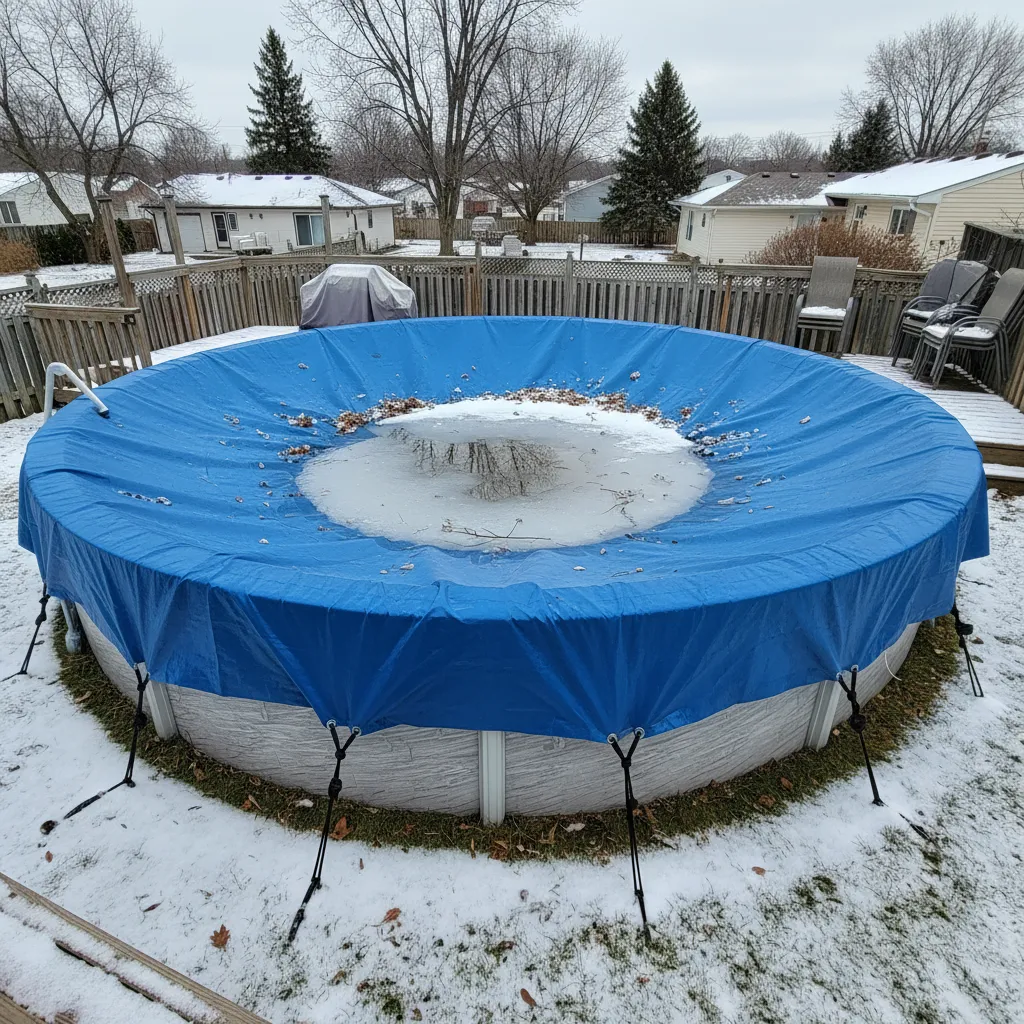
"Invest once to protect your liner and prevent a swamp in the spring."
Heavy-Duty Winter Pool Cover
Winter demand is high - check stock
Chemical Composition Of Borax
Borax’s chemical name is sodium tetraborate decahydrate (Na₂B₄O₇·10H₂O). This formula breaks down into sodium, boron, oxygen, and water molecules. The “decahydrate” indicates 10 water molecules bound to each sodium tetraborate unit. When dissolved in pool water, borax releases sodium ions and tetraborate ions, which act as a weak base. This base reacts with hydrogen ions in the water, directly influencing pH levels.
| Component | Role in Pool Chemistry |
|---|---|
| Sodium (Na⁺) | Does not affect pH or alkalinity |
| Tetraborate (B₄O₇²⁻) | Acts as a buffer, stabilizing pH |
| Water (H₂O) | Hydrates the compound for easier dissolution |
Borax Vs. Boric Acid
Though both contain boron, borax and boric acid serve different roles. Borax (pH ~9.3) raises pool pH when added, while boric acid (pH ~5.1) slightly lowers it. Borax converts partially to boric acid in water, creating a buffering system that resists rapid pH swings. This reaction explains why borax increases pH without reducing total alkalinity—it introduces borates, which interact with hydrogen ions but don’t neutralize carbonate alkalinity components like bicarbonate (HCO₃⁻).
For example, adding 1.5 lbs of borax per 10,000 gallons raises pH by 0.5 but leaves alkalinity unchanged. This makes borax ideal for pools needing pH adjustment without disrupting alkalinity balance.
Now that we’ve clarified borax’s properties, let’s explore its direct effects on pool pH levels.
How Borax Affects Pool Ph Levels
Borax changes pool water chemistry in clear ways. To use it right, know how it moves pH up or down.
Does Borax Raise Ph in Pools?
Yes. Borax (sodium tetraborate) has a pH of 9.3 when mixed in water. Adding 1 pound per 10,000 gallons can lift pH by 0.1 units. It works by adding borate ions that fight acids in the water. This makes borax a solid pick when pH sits below 7.2. For big pH jumps, pair it with aeration. Maintaining proper pH is crucial for pool health. For a 15,000-gallon pool, liquid shock can be an effective way to quickly address water balance issues.
Does Borax Lower Ph in Pools?
No. Borax can’t drop pH. Its high pH means it only shifts water toward basic. If your pool needs lower pH, use muriatic acid or sodium bisulfate. Test pH first—if it’s over 7.8, skip borax. Keeping the pH balanced is important for pool maintenance. In a swim shocked pool, proper pH levels help ensure a safe and comfortable swimming environment.
What is the Ph Of Borax?
Dry borax powder has a pH near 9.5. When mixed in pool water, it settles around 8.5-9.1. This makes it 10x less acidic than plain water. Pool pros aim for 7.4-7.6 pH, so borax doses stay small to avoid overshoot. Keeping the right pH level is essential for pool health. Proper alkalinity ensures the water is safe and comfortable for swimmers.
Borax’s Impact on Total Alkalinity
Total alkalinity (TA) acts as pH’s buffer. Borax plays a unique role here.
Does Borax Lower Alkalinity in a Pool?
No. Borax doesn’t cut TA. TA measures carbonates and bicarbs in water. Borax adds borates, which don’t change TA. If your TA runs high (over 120 ppm), use acid or aeration to fix it.
Why Borax Doesn’t Reduce Alkalinity
TA tests miss borate ions. Only carbonates, bicarbs, and hydroxides count. Borax adds borates that help pH stay put but leave TA untouched. This split effect lets you adjust pH without messing up TA balance.
Ready to tweak your pool’s pH with borax? Next, learn exact doses and timing for safe use.
Also See: Does Rain Cause Algae in Pool? Learn More Here
Step-by-step: Using Borax to Adjust Pool Ph
Borax can fix pH with care. Test water first with strips or a digital kit. Aim for 7.4-7.6 pH. If below 7.2, borax lifts it up.
How Much Borax to Add to Raise Ph
Use 1.5 lbs per 10,000 gal for 0.1 pH boost. For pools at 7.0 needing 0.5 rise, add 7.5 lbs. Spread near jets for mix. Wait 4 hours, test again.
| Pool Size (gal) | pH Increase Needed | Borax Needed (lbs) |
|---|---|---|
| 10,000 | 0.1 | 1.5 |
| 20,000 | 0.2 | 6.0 |
Borax Dosage Guidelines for Pools
Never dump borax in one spot. Pre-dissolve in warm water. Split doses if pH needs more than 0.4 shift. Too much at once can cloud water. Check TA (total alkalinity) stays 80-120 ppm. Maintaining water balance is key for a healthy pool. Testing the stabilizer level can help ensure the chlorine works effectively.
How Long After Adding Borax Can You Swim?
Wait 1 hour if pump runs non-stop. Borax fully mixes in 4-6 hours. Test before swim. Skin or eye burn risk drops once pH hits 7.4+.
Borax Vs. Other Pool Ph Adjusters
Pick the right tool for pH fix. Borax lifts pH with less TA change. Soda ash spikes both pH and TA. Acid cuts pH and TA.
Borax Vs. Soda Ash for Raising Ph
1 lb soda ash per 10,000 gal adds 0.1 pH and 10 ppm TA. Borax adds 0.1 pH with 5 ppm TA. Use soda ash if TA is low. Borax works if TA is already high.
When to Use Muriatic Acid or Baking Soda Instead
If pH and TA are high, muriatic acid drops both. For low TA (under 60 ppm), baking soda adds 10 ppm TA per 1.5 lbs per 10k gal. Borax won’t fix low TA.
Additional Benefits Of Borax in Pool Care
Borax does more than pH control. It softens water, cuts eye burn, and fights algae when mixed with chlorine.
Does Borax Clean Pool Water?
Borax breaks down oils and grime. Add 5 lbs per 10k gal to clear mild haze. Not a shock substitute but aids clarity. Pair with filter run for 12 hours.
Borax As a Pool Water Clarifier
Cloudy water? Borax binds tiny bits for easier filter catch. Use 4 oz per 10k gal weekly. Avoid with high calcium (>400 ppm) to stop scaling.
Ready to track borax use? The next step keeps your logs sharp for clear swim days ahead.

Tracking Borax Use With My Pool Calculator
Managing borax applications requires precise record-keeping to avoid overshooting pH targets. My Pool Calculator’s digital tools simplify tracking, ensuring adjustments align with your pool’s unique chemistry profile. When considering a pool remodel, it’s also essential to factor in costs. A pool remodel cost calculator can help you estimate expenses and plan your budget effectively.
Logging Borax Additions in Your Pool Log
Accurate logs prevent guesswork. Start by entering your pool’s current pH and total alkalinity (TA) into the app. When adding borax, record:
- Dosage (e.g., 1.5 lbs per 10,000 gallons)
- Time and date of application
- Pre-treatment pH/TA readings
The calculator auto-saves entries, creating a searchable history. This helps identify patterns—like pH spikes after heavy rain—and adjusts future borax needs. For vinyl pools, note any pH swings exceeding 8.0 to prevent liner degradation. Keeping track of your pool’s chemical balance is crucial for its health. A pool acid demand calculator can assist you in determining the exact amount of acid needed to maintain the ideal pH level.
Monitoring Ph and Alkalinity Over Time
Borax raises pH without significantly altering TA, but imbalances still occur. Test pH 4-6 hours post-application using digital testers or strips. If pH climbs above 7.8, TA acts as a buffer—check it weekly. TA below 80 ppm? Stabilize it with baking soda before adding more borax. Considering the cost of maintaining balanced water chemistry is important for pool ownership. Keeping track of pool chemical expenses can help in budgeting for ongoing maintenance.
- Ideal pH range: 7.4–7.6
- Target TA: 80–120 ppm
Use the app’s graphing feature to visualize trends. A steep pH rise with stable TA confirms borax’s isolated effect. For saltwater pools, monitor chlorine generators—pH above 7.8 reduces sanitizer efficiency. It’s also essential to track pool heater shuts off unexpectedly during these adjustments. If the pool heater shuts off unexpectedly, it could be related to pH issues or other imbalances in the system.
As you refine your tracking strategy, practical questions about borax’s role in daily maintenance often surface. Let’s address common concerns pool owners face when balancing borax with other chemicals. One key aspect of maintaining a clean pool involves effective filtration. A backwash pool cartridge filter helps remove debris and keeps the water clear.
FAQs About Borax in Pool Maintenance
How Does Borax Interact With Other Pool Chemicals?
Borax works alongside most pool chemicals but avoid mixing it directly with acids like muriatic acid—this creates a violent reaction. When using algaecides or chlorine, add borax first, wait 2 hours, then introduce other treatments. Borax’s buffering effect can stabilize chlorine’s pH fluctuations, extending sanitizer efficiency.
Does Borax Contribute to Calcium Buildup?
No. Borax doesn’t contain calcium and won’t cause scaling. However, in pools with high calcium hardness (>400 ppm), excess borax can slightly increase borate levels, which may require dilution. Regular testing prevents this—ideal borate levels are 30-50 ppm. Keeping your pool chemistry balanced is essential for maintaining pool equipment. It’s also important to regularly test your pool pump motor to ensure it’s running efficiently.
What Are the Environmental Impacts Of Using Borax in Pools?
Borax is biodegradable but can harm plants if pool water is discharged nearby. Always drain treated water to municipal systems if local regulations permit. Avoid overuse—boron concentrations above 5 ppm in soil may affect vegetation. Transitioning to borate for pool care offers a gentler approach. Borate treatments help maintain pH balance while reducing algae growth.
How Should Borax Be Stored for Pool Use?
Keep borax in a cool, dry place away from acids and moisture. Use airtight containers to prevent clumping. Label clearly and store out of reach of children or pets—while low-risk, ingestion of large quantities can be toxic.
Closing Thoughts
Borax is a versatile tool for pool maintenance, effectively raising pH without significantly altering total alkalinity. With a pH of 9.3, it acts as a gentle buffer against acidity while keeping water balanced. Unlike soda ash, it won’t spike alkalinity levels, making it ideal for pools needing pH adjustment alone.
For precise dosing, always test water before adding borax—typically 1.5 lbs per 10,000 gallons raises pH by 0.1. Wait 4–6 hours before swimming to ensure proper circulation. Pair borax with muriatic acid or baking soda when broader adjustments are needed.
Track your pool’s chemistry effortlessly with My Pool Calculator. Log borax additions, monitor trends, and maintain crystal-clear water with confidence.
Useful References for You:
- PoolPro Magazine (Industry News & Technical Articles)
- Beyond Basic Pool Chemistry: The Importance of Borates and pH Monitoring – Sensorex Liquid Analysis Technology
- Understanding Borate – Water Shapes
- Guide to Borate for Pools • Pool Chemistry Training Institute
- Using Borax to Increase pH in a Pool | Test Your Own Pool
A pool care geek who’s been testing water chemistry since she was tall enough to reach the skimmer.
Alkalinity, Pool Chemistry, Water Balance