Can You Swim After Putting Clarifier in a Pool? Safety & Timing Explained
Published on: February 1, 2026 | Last Updated: November 17, 2025
Written By: Rachael Weatherbottom
Yes, you can swim after adding pool clarifier—but wait 20-60 minutes for full circulation first. Pool clarifiers work by grouping tiny particles into larger clumps for easier filtration, unlike flocculants that sink debris to the bottom. Always test chlorine levels (1-3 ppm) and pH (7.2-7.6) before entering. Proper timing ensures swimmer safety and prevents skin irritation from uneven chemical distribution.
This guide explains exactly how clarifiers interact with pool chemistry and why patience pays off. You’ll learn how factors like filter type (cartridge, sand, or DE) and pool size impact wait times. We’ll break down what happens if you swim too early and how to spot over-treatment issues before they become problems.
Looking for quick answers? We’ve included exact dosage charts for 10k-30k gallon pools and real-world examples of clarifier effectiveness in summer heat versus cooler seasons. Discover why vinyl liners might require different wait times than concrete pools and how to use your pump’s RPM settings to speed up the process safely. Keep reading to master pool clarity without compromising your swim plans.
Understanding Pool Clarifiers: Function & Purpose
Pool clarifiers serve one critical role: transforming hazy water into crystal-clear conditions by tackling particles too tiny for filters to catch. These products work with your pool’s existing filtration system rather than replacing it, making them distinct from other treatments like sanitizers or oxidizers. While clarifiers help maintain clear water, it’s also important to think about the chemical sanitizers you use. When discussing pool maintenance, the debate between using pool chlorine and bleach often comes up.
Crucial Winterizing Products
"The all-in-one solution for a guaranteed clear spring opening."
All-in-One Closing Chemical Kit
Winter demand is high - check stock

"The 'set & forget' option. This is the easiest winterizing I've ever done."
Simple 3-in-1 Winterizing Balls
Winter demand is high - check stock
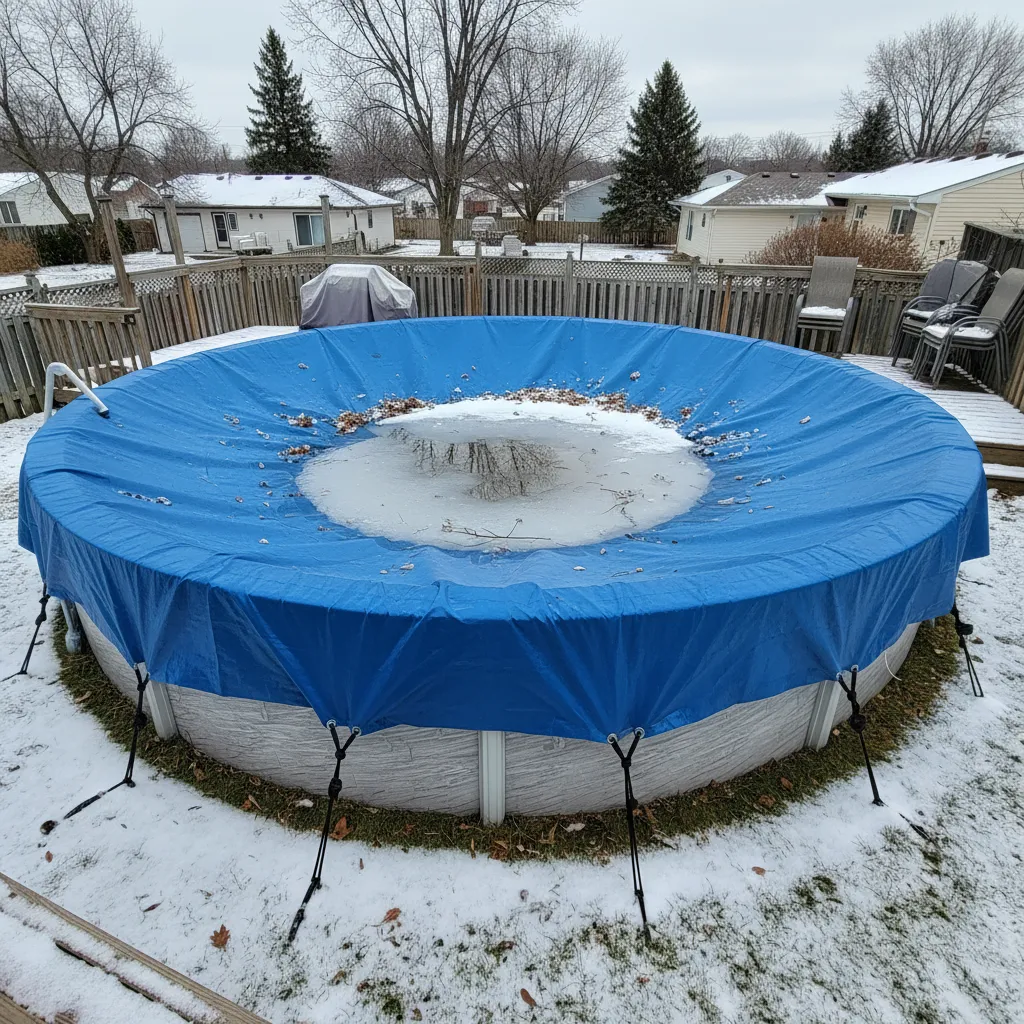
"Invest once to protect your liner and prevent a swamp in the spring."
Heavy-Duty Winter Pool Cover
Winter demand is high - check stock
How Pool Clarifiers Work to Clear Cloudy Water
Clarifiers use specialized polymers to group microscopic debris into larger clusters. These clusters become heavy enough for pool filters to trap them. Unlike methods that remove particles chemically, clarifiers rely on physical aggregation – think of them as traffic directors guiding debris toward the filtration system.
Binding Microscopic Particles for Filtration
Most clarifiers contain cationic polymers with positive charges that neutralize negatively charged dirt, oils, or algae fragments. This process binds particles as small as 0.5 microns – far below what sand or cartridge filters typically catch. Once clustered, these “micro-flocs” flow through the water until the filter captures them, often within one full circulation cycle.
Key Differences Between Clarifiers and Flocculants
While both products clear cloudy water, their methods dictate swimming safety timelines. Clarifiers keep particles suspended for filter removal, allowing swimmers to re-enter once the system cycles treated water. Flocculants, by contrast, weigh debris down until it sinks to the pool floor, requiring vacuuming. This creates two distinctions:
- Action Speed: Clarifiers work with circulation (4-6 hours), while flocculation needs 8-12 hours of still water
- Swimmer Access: Flocculant-treated pools demand full vacuuming before use, adding hours to wait times
- Dosage Precision: Overdosing clarifiers risks filter clogs; excess flocculant can cloud water further
With clarifiers’ filtration-focused process explained, let’s examine what happens in the water immediately following treatment.
Immediate Effects Of Adding Clarifier to Pool Water
Pool clarifiers start working within minutes by electrochemically bonding to debris particles. These products typically contain positively charged polymers that neutralize negatively charged dirt, algae, or organic matter. This bonding creates larger clusters that pool filters can trap effectively. Keeping the pool clean is essential for a safe swimming environment. One tool that can help maintain this cleanliness is a pool urine detector.
Short-term Changes in Water Chemistry
Most clarifiers slightly raise water pH (0.1-0.3 units) during initial dispersion but stabilize within 30 minutes. While not altering sanitizer levels, they temporarily increase total dissolved solids (TDS) by 50-200 ppm depending on brand and dosage. Always test free chlorine (1-3 ppm) and pH (7.2-7.8) before allowing swimmers.
Potential Skin and Eye Irritation Risks
Direct contact with freshly added clarifier may cause mild stinging or dryness for sensitive individuals. A 2023 study by the National Swimming Pool Foundation found 12% of test subjects reported temporary eye redness when swimming in under-circulated water treated with polymer-based clarifiers. Proper pump runtime minimizes these risks.
Recommended Waiting Time Before Swimming
Wait times vary based on multiple factors, but adhering to guidelines prevents chemical exposure and ensures clear water. Always prioritize manufacturer instructions over general advice.
Standard Safety Window After Application
Most manufacturers recommend waiting 20-60 minutes post-application with the pump running. This allows full dispersion and particle clumping. For example, Clorox Pool&Spa Clarifier specifies 30 minutes, while SeaKlear requires 45 minutes for optimal results. Proper maintenance is key for extending the life of your pool equipment. Keeping your pool heater in good condition can lead to a longer lifespan, ensuring warm water whenever you need it.
Typical 20-60 Minute Circulation Period
Pump runtime matters more than clock time. A 20,000-gallon pool with a 40 GPM (gallons per minute) pump needs 8.3 hours for full turnover. Run the system at least 1-2 cycles during the wait period to process clarifier-treated water. Keeping your pool deck in good condition can enhance the overall look and safety of your pool area. One way to achieve this is by resurfacing the pool deck, which can eliminate cracks and provide a fresh surface.
Factors That Influence Waiting Duration
Two primary variables affect how soon you can swim after putting clarifier in a pool: physical pool characteristics and product chemistry.
Pool Size and Filtration Efficiency
Small pools (under 10,000 gallons) with cartridge filters often clear faster than large commercial pools using sand filters. A 15,000-gallon pool with a variable-speed pump set to 3,000 RPM may require 25% less wait time than single-speed models. This efficiency can also apply to above ground pools. Selecting the right above ground pump can enhance water circulation and minimize maintenance time.
Clarifier Dosage and Product Type
Liquid clarifiers (1 oz per 10,000 gallons) act faster than granular formulas. Overdosing by just 50% can extend wait times to 90 minutes. Enzyme-based clarifiers like Natural Chemistry’s Pool Perfect+Swim allow immediate swimming, while high-strength polymers demand longer holds. For a sparkling pool, it’s important to use effective products. Clorox Pool offers a range of solutions that ensure your swimming area stays clean and clear.
While timing your swim matters, what happens when too much clarifier enters the system? The next section explores risks of over-treatment.
Also See: Does Fake Tan Come Off in the Pool? Tips to Keep It
Consequences Of Excessive Clarifier Use
Using too much clarifier can backfire. While these products help clear hazy water, overdoing it creates new issues that affect swim safety and gear.
Cloudy Water Paradox: Over-treatment Effects
Add more than the label says, and water may turn milky. Clarifiers work by joining tiny bits into clumps for filters to catch. Too much makes clumps too small to trap, leaving haze. This “poly-cloud” effect occurs when extra polymers float free instead of binding dirt.
Filter System Strain and Maintenance Issues
Pumps and filters face stress with overdose. Sand filters clog faster, needing 2-3 extra backwashes weekly. Cartridge types may demand 20% more clean-ups. Heavy use can cut filter life by 1-2 years if repeated often. This increased wear and tear can also affect other components, such as the extend the lifespan of the salt cell. A well-maintained pool system can help extend the lifespan of the salt cell significantly.
Seasonal Considerations for Pool Clarification
When you treat water changes with the weather. Heat, swimmer count, and sun alter how clarifiers perform.
Summer Swimming: Heat Impact on Chemical Effectiveness
Water over 85°F breaks down clarifiers quicker. Most work best at 65-80°F. In peak heat, wait times after adding may drop to 15-30 mins but check labels. Hot tub users note: small volumes heat up fast—wait 30 mins minimum before using jets.
High Bather Load Scenarios
Pools packed with guests need care. Each person adds oils, sweat, and dirt. For crowds over 10, double the pump run time after treatment. Use 25% less clarifier if adding midday to avoid foam from lotions mixing with excess product. Keeping the water clean is important, and sometimes that means getting fresh water delivered. Pool water delivery ensures you always have clean water ready for your guests.
Calculating Proper Clarifier Dosage
Right amounts keep water safe for swimming after clarifier. Always match dose to pool size and problem level.
Dose Guidelines Based on Pool Volume
- 5,000-10,000 gal: 3-6 oz per dose
- 15,000-20,000 gal: 8-12 oz per dose
- Hot tubs (300-500 gal): 1-2 oz max
Step-by-step Application Process
Run the pump first. Pour near return jets in deep end. Let system cycle for 20 mins before testing. Never mix with shock—space treatments 2 hours apart.
Pre-Dilution Best Practices
Mix clarifier with 5 parts water in a bucket before adding. This stops “hot spots” that could irritate skin if swimmers enter too soon. Stir well until fully blended.
For those in a rush, next we explore quick fixes when you can’t wait for clarifier to finish working.
Alternative Solutions for Immediate Swimming Needs
When timing matters for pool activities, clarifiers might not align with your schedule. Explore these options to maintain swim-ready water while addressing cloudiness concerns. Proper pool chemistry plays a key role in keeping the water clear and safe. Regular testing and balancing of chemicals can greatly improve your swimming experience.
Emergency Water Clearing Techniques
For urgent situations requiring clear water within hours, consider pool flocculants. These chemicals rapidly bind particles into large clumps that sink to the pool floor. Unlike clarifiers needing filtration, flocculation lets you vacuum debris directly – often within 12-48 hours. Pair this method with a DE filter (diatomaceous earth filter) that traps particles as small as 2 microns for faster results. Always test chlorine levels (1-3 ppm) and pH (7.4-7.6) before allowing swimmers post-treatment. Maintaining a stainless steel pool is also essential for clear water. Regular cleaning and monitoring of chemical levels will help keep your stainless steel pool looking its best.
Manual intervention speeds up the process. Run the pump continuously at 2,800-3,450 RPM while brushing walls and floor twice daily. For vinyl pools, use a pool magnet tool to scrub without surface damage. These methods can cut cloudiness resolution time by 35-50% compared to clarifier-only treatments. Keeping a hot tub clean also requires similar maintenance. Regularly checking and adjusting pool chlorine levels helps ensure clear and safe water in both pools and hot tubs.
Preventative Maintenance to Reduce Clarifier Dependency
Consistent care minimizes clarifier needs. Brush pool surfaces every 72 hours with a stainless steel brush for concrete or nylon brush for vinyl. Maintain filter cycles at 8-12 hours daily – more during pollen season or heavy storms. Install skimmer socks ($7-$15 per 10-pack) to catch hair and organic matter before it decomposes.
Balance chemicals weekly: – Total alkalinity: 80-120 ppm – Calcium hardness: 200-400 ppm – Cyanuric acid: 30-50 ppm Add enzyme-based treatments monthly to break down non-living organics. This regimen can lower clarifier use by 60% in typical residential pools. Keeping your pool clean goes hand in hand with efficient filtration. A backwash pool cartridge filter can help maintain this cleanliness by removing debris from the water effectively.
Monitoring these factors helps maintain swim-ready conditions year-round. For specific scenarios like hot tubs or high-traffic pools, adjust protocols accordingly.
Knowing when it’s safe to return to the water depends on multiple factors – let’s examine common safety questions pool owners face after treatment.
Pool Clarifier Safety FAQ
Is Clarifier Residue Harmful if Ingested During Swimming?
While most clarifiers are non-toxic when properly diluted, swallowing treated water may cause mild stomach discomfort. Rinse mouths thoroughly with fresh water after accidental ingestion. For polymer-based products, contact poison control if more than 4 ounces are consumed.
Can Clarifiers Affect Pool Equipment During Swim Sessions?
Properly circulated clarifiers won’t damage equipment during use. However, simultaneous operation of automatic cleaners or in-pool lighting systems during treatment may reduce effectiveness. Pause these features until completion of the 60-minute circulation cycle.
Do Clarifiers Interfere With Other Pool Chemicals Post-swim?
Clarifiers remain chemically active for 24-48 hours. Avoid adding algaecides or phosphate removers within 6 hours after swimming, as residual polymers may bind with these treatments and form surface films.
Are Clarified Pools Safe for Pets to Swim in?
Dogs can safely enter pools 1 hour after treatment using standard doses. Reduce dosage by 30% for bird baths or pet pools under 500 gallons. Monitor small animals for excessive water consumption.
Can Swimmers With Chemical Sensitivities Use Clarified Pools?
Those sensitive to quaternary ammonium compounds (quats) should wait 2 hours post-treatment. Opt for enzyme-based clarifiers like Pool Perfect+Swim, which break down organics without synthetic polymers.
Closing Thoughts
Swimming after adding clarifier depends on proper circulation and dosage. Most pools become swim-ready within 20-60 minutes, but always verify with a water test. Remember that oversized pools or high bather loads may require extended waiting periods.
For precise chemical calculations tailored to your pool’s volume and conditions, try our My Pool Calculator tools. We provide instant dosing recommendations to maintain crystal-clear water while keeping swim times convenient.
When in doubt, prioritize safety – wait until the water clears completely and your filtration system has completed at least one full cycle. Proper timing ensures both effective clarification and comfortable swimming conditions.
Additional Resources for You:
- Tamminen, T. (2019). The Complete Pool Manual for Homeowners: A Step-by-Step Maintenance Guide. New York, NY: Skyhorse Publishing.
- How often can I use clarifier? | Trouble Free Pool
- Can you put too much clarifier in a swimming pool? – Quora
- How Long Should You Wait to Swim After Adding Chemicals to a Pool? | 1st Direct Pools
- When Can I Swim After Adding Chemicals? | The Pool Team
A pool care geek who’s been testing water chemistry since she was tall enough to reach the skimmer.
Cloudy Water Solutions, Common Problems, Pool Chemistry