Are There Test Strips That Combine Ph, Alkalinity, and Sanitizer in One?
Published on: December 23, 2025 | Last Updated: November 17, 2025
Written By: Rachael Weatherbottom
Yes, multi-parameter test strips like 3-in-1, 5-in-1, and 7-in-1 options measure pH, total alkalinity, and sanitizer levels (chlorine or bromine) simultaneously. These strips use color-changing pads treated with chemical reagents that react within seconds to pool water chemistry. Popular brands like AquaChek, Poolmaster, and Taylor Technologies offer variations with extra parameters like calcium hardness or cyanuric acid. They’re sold at pool supply stores, online retailers, and big-box stores for $15-$40 per 50-count bottle.
This article explains how combination test strips work and why they’re gaining popularity among pool owners. We’ll break down the differences between 3-in-1 and 7-in-1 strips, including which parameters matter most for weekly maintenance. You’ll learn how using these strips can trim 10-15 minutes off your testing routine compared to liquid kits.
We’ll also explore their limitations: why humidity can skew readings or why heavy rainfall might require separate pH tests. By the end, you’ll know when to trust multi-strips versus digital testers—and how to spot fading reagent pads that need replacement. Real-world cost comparisons show whether buying combo strips saves money over single-use versions long-term.
What Are Combination Ph, Alkalinity, and Sanitizer Test Strips?
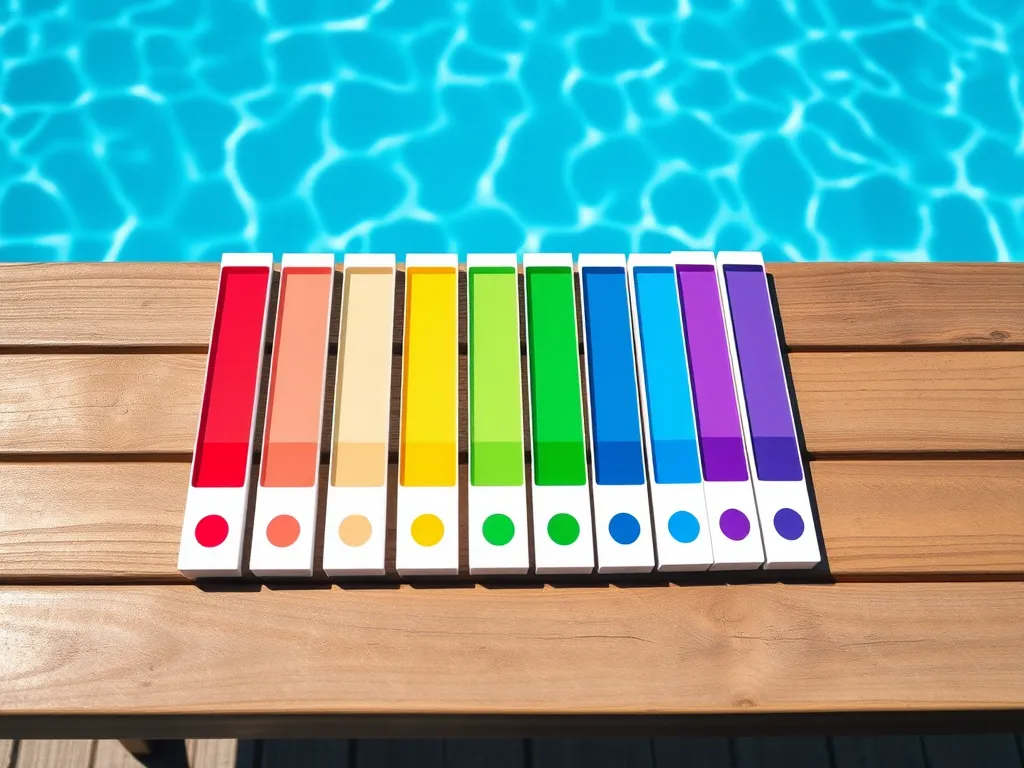
Combination test strips for pH, alkalinity, and sanitizer are multi-functional tools designed to check multiple pool water parameters at once. These strips feature color-reactive pads that change hue when exposed to pool water, allowing owners to assess three critical factors in a single dip. They eliminate the need for separate tests, streamlining routine maintenance for residential and commercial pools. To keep a pool in optimal condition, it’s also important to ensure measuring the pool liner accurately is a key step in maintaining the pool’s appearance and function.
Crucial Winterizing Products

"The all-in-one solution for a guaranteed clear spring opening."
All-in-One Closing Chemical Kit
Winter demand is high - check stock

"The 'set & forget' option. This is the easiest winterizing I've ever done."
Simple 3-in-1 Winterizing Balls
Winter demand is high - check stock
"Invest once to protect your liner and prevent a swamp in the spring."
Heavy-Duty Winter Pool Cover
Winter demand is high - check stock
Definition and Purpose in Pool Care
These strips merge three distinct tests into one: pH levels (acidity/alkalinity balance), total alkalinity (carbonate/bicarbonate content), and sanitizer concentration (chlorine or bromine). The primary goal is to provide a snapshot of water chemistry health within seconds. For example, pH impacts swimmer comfort and equipment longevity, while sanitizer levels dictate germ-killing power. By combining these metrics, pool owners can identify imbalances faster and take corrective actions before issues escalate.
Common Parameters Measured (Ph, Alkalinity, Sanitizer)
Each pad on a combined test strip targets a specific parameter. The pH pad measures acidity on a scale of 6.0–8.0, critical for preventing skin irritation and surface corrosion. The total alkalinity pad evaluates carbonate levels (typically 80–120 ppm), which stabilize pH swings. The sanitizer pad detects free chlorine (1–5 ppm) or bromine (3–6 ppm), ensuring effective disinfection. Some advanced strips also include cyanuric acid or hardness tests, but the core trio remains pH, alkalinity, and sanitizer due to their direct impact on water safety.
Grasping how these parameters interact helps explain why multi-test strips have become a staple for pool care. Next, let’s examine how integrating these tests into one strip translates into tangible benefits for maintenance routines.
Key Benefits Of Using Multi-parameter Test Strips
Pool owners need reliable tools to keep water balanced. Multi-parameter test strips merge pH, alkalinity, and sanitizer testing into a single dip-and-read process. These strips eliminate juggling multiple tools while delivering results within 30 seconds. One important aspect of pool maintenance is ensuring Testing CYA in the pool helps protect chlorine from the sun and keeps the water safe for swimming.
Simplified Testing Process
Combined test strips reduce guesswork by testing three critical parameters at once. Instead of using separate strips for pH (0-14 scale), total alkalinity (80-120 ppm ideal), and sanitizer levels (1-3 ppm chlorine recommended), a single strip handles all. The color pads react simultaneously, letting you read results side-by-side without mismatching samples. This streamlined approach minimizes errors caused by inconsistent water sampling times.
Time Efficiency for Routine Pool Maintenance
Testing with individual strips can take 5-10 minutes per parameter. Multi-test strips deliver readings in under a minute, cutting weekly maintenance time by 70%. For pools requiring 2-3 tests weekly during peak season, this adds up to 3 hours saved monthly. Faster results mean quicker adjustments to chemicals like sodium bicarbonate for alkalinity or muriatic acid for pH correction.
Cost Savings Compared to Separate Strips
A 50-count bottle of 3-in-1 strips averages $15-$20, while buying separate pH, alkalinity, and sanitizer strips costs $25-$35 for the same quantity. Over a six-month pool season, users save $40-$60. Budget-friendly brands like AquaChek or Poolmaster offer bulk packs with 100+ strips under $30, lowering per-test costs to $0.15-$0.30. Overall, maintaining a pool involves several costs that pool owners should consider. One important expense is the cost of a pool chiller, which can help keep the water at a comfortable temperature.
Types Of Pool Test Strips Available
Manufacturers design multi-test strips for varying needs, from basic checks to full water profiles. The number of parameters tested determines their use cases and pricing.
7-in-1 Test Strips: Comprehensive Analysis
These strips measure pH, total alkalinity, free chlorine/bromine, total hardness, cyanuric acid (stabilizer), and metals like copper/iron. Ideal for saltwater pools or areas with hard water, they detect imbalances that cause scaling or corrosion. Taylor Technologies’ 7-Way Test Strips provide lab-grade precision, though they cost $25-$35 for 50 strips. Keeping your pool clean is important, especially when considering equipment like pool pumps get wet during operation, which can affect their performance and longevity.
5-in-1 Test Strips: Core Parameter Testing
Focused on essentials, 5-in-1 strips check pH (7.2-7.8 ideal), total alkalinity, sanitizer levels, total hardness, and stabilizer. Brands like HTH streamline testing for vinyl or fiberglass pools where metal content matters less. Strips typically run $12-$18 per 50-count, striking a balance between depth and affordability.
3-in-1 Test Strips: Basic Sanitizer and Ph/alkalinity Checks
Entry-level strips target pH, alkalinity, and chlorine/bromine. They’re suited for weekly maintenance in stable pools without metal or stabilizer issues. JNW Direct’s 3-in-1 strips cost $10-$15 for 100 strips but lack precision for troubleshooting complex water issues. Best for quick checks between professional water analyses. To keep pool water clear, managing phosphates is important. Adding a phosphate remover can help prevent algae growth and maintain better water quality.
While multi-test strips simplify balancing, proper technique ensures accuracy. Let’s explore how to use them correctly to avoid common pitfalls.
Also See: Can You Use Pool Chlorine in a Hot Tub or Inflatable Pool?
How to Use Combination Test Strips Effectively
Combined pH, alkalinity, and sanitizer test strips streamline pool maintenance but require precise technique for reliable results. Following manufacturer guidelines ensures accurate readings and proper water balance adjustments. Keeping pool water balanced not only enhances the swimming experience but also helps to protect your hair from damage. Utilizing protective hair care products before swimming can further shield your locks from chlorine and other pool chemicals.
Step 1: Dip Strip in Pool Water
Submerge the test strip 18 inches below the water’s surface for 3 seconds to capture a representative sample. Avoid skimmer areas or spots with direct return jets, as uneven chemical distribution can skew results. Hold the strip horizontally to prevent overlapping reagent pads from contaminating adjacent sensors. Proper testing helps ensure safe water conditions for all users. Regular wave pool water testing is essential for maintaining enjoyable and healthy swimming experiences.
Step 2: Wait for Color Development
Shake off excess water and lay the strip flat. Wait exactly 15 seconds for sanitizer (chlorine/bromine) colors to stabilize, then 45 seconds for pH and total alkalinity. Deviating from timing specifications—even by 10 seconds—can shift readings by 0.5 pH units or 20 ppm alkalinity. Avoid direct sunlight during development, as UV rays bleach reagent dyes.
Step 3: Compare Colors to Reference Chart
Match pad colors to the bottle’s chart under natural light. For sanitizer, focus on free chlorine (0-10 ppm) or bromine (0-20 ppm) scales. pH typically ranges from 6.2-8.4, while total alkalinity spans 0-240 ppm. Some strips use dual-color pads for alkalinity—cross-reference both hues for precise interpretation.
Step 4: Adjust Pool Chemistry Accordingly
If pH exceeds 7.8, add 16 oz muriatic acid per 10,000 gallons to lower by 0.2 units. For alkalinity below 80 ppm, dissolve 1.5 lbs sodium bicarbonate in the deep end. Raise free chlorine to 3 ppm using stabilized tablets if readings fall under 1 ppm. Retest after 4-6 hours before swimming. Keeping free chlorine levels balanced is essential for pool safety. Regularly monitoring and adjusting these levels helps to maintain a clean and healthy swimming environment.
Limitations Of Combined Test Strips in Pool Care
While multi-parameter strips offer convenience, they present challenges for pools with unstable chemistry or specialty sanitizers. High cyanuric acid levels (>100 ppm) or bromine systems often require supplemental testing methods. Maintaining balanced water chemistry is crucial for the effectiveness of pool cleaners. These tools help keep pools clean and safe by ensuring the right chemical levels.
Potential Accuracy Trade-offs
Combined strips measure total alkalinity as carbonate hardness, not bicarbonate—a critical distinction for saltwater pools. pH accuracy diminishes in water colder than 60°F, with ±0.3 unit variances. Sanitizer pads detect free chlorine only up to 10 ppm, missing superchlorination ranges. Maintaining proper alkalinity levels is essential for stable pH balance. This balance helps protect pool equipment and ensures a comfortable swimming environment.
Single-use Restrictions
Each strip’s reactive dyes activate once, making retests impossible. Evaporation from open bottles degrades unused strips by 15% monthly. Purchase 100-count bottles for weekly testing to ensure freshness throughout the swimming season.
Environmental Sensitivity Impacting Results
High humidity (>70% RH) during storage causes false alkalinity spikes. Strips exposed to temperatures above 90°F for 30+ days show 20% faster color fading. Rogue substances like algaecides or phosphate removers can stain reagent pads, blocking color development.
Alternatives to Combination Test Strips
Advanced testing methods bridge gaps where multi-strips fall short, particularly for commercial pools or troubleshooting persistent imbalances.
Liquid Reagent Test Kits
Taylor Technologies’ K-2006 uses FAS-DPD titration for chlorine precision down to 0.2 ppm and acid demand tests for pH adjustment guidance. While costing $75-$120 initially, 500-test reagent refills ($45) offer lower long-term costs than strips for daily users.
Digital Water Testing Devices
ColorQ Pro 7 ($199) photometrically analyzes pH (0.1 resolution), alkalinity (10 ppm increments), and chlorine with lab-grade accuracy. Bluetooth models sync data to pool apps, tracking trends over time. Requires annual sensor calibration ($50 service) but eliminates color-matching guesswork.
Separate Single-parameter Strips
AquaChek Select bundles individual strips for chlorine (0-10 ppm), pH (6.8-8.4), and alkalinity (0-240 ppm). Though less convenient, dedicated strips allow staggered testing intervals—pH weekly, sanitizer daily, alkalinity monthly—saving $0.25 per test compared to 7-in-1 options.
With various testing tools available, pool owners often wonder how to interpret conflicting results between methods—a topic we’ll explore next.
Frequently Asked Questions
How Long Do Combination Test Strips Last Before Expiring?
Unopened test strips typically retain accuracy for 2-3 years if stored in a cool, dry place. Once opened, use them within 6 months, as humidity and temperature fluctuations degrade the reagent pads. Discard strips if colors appear faded or the reference chart shows significant discoloration.
Can Humidity or Sunlight Affect Combination Strip Accuracy?
Yes. High humidity (>70%) during storage can cause premature reagent activation, leading to false alkalinity readings. Direct sunlight during testing bleaches color pads, making pH comparisons unreliable. Always store strips in airtight containers and read results in shaded areas for optimal precision.
Do Multi-parameter Strips Work With Saltwater Pools?
Most combination strips measure free chlorine, which saltwater systems generate via electrolysis. However, salt concentrations (3000-4000 ppm) won’t appear on standard strips—use a dedicated salt test or digital meter for that parameter. Some 7-in-1 strips include a salt test pad for this purpose. Keeping track of free total chlorine levels is essential for maintaining proper water quality. Test strips designed for free total chlorine can help you ensure safe swimming conditions.
How Should You Store Unused Test Strips to Maintain Reliability?
Keep strips in their original container with desiccant packs, away from pool chemicals and temperature extremes. Ideal storage conditions are 59-77°F (15-25°C) with <50% humidity. Avoid bathroom storage due to steam, and never freeze strips, as ice crystals damage reactive coatings. Proper care ensures accurate results when testing your pool water. To get the best performance, consider using [flexible_link url="https://mypoolcalc.com/best-pool-test-strips" type="permanent"]high-quality test strips designed for pool use[/flexible_link].
Closing Thoughts
Combination test strips for pH, alkalinity, and sanitizer offer a streamlined way to monitor pool chemistry. These multi-parameter strips save time and reduce testing complexity while providing a solid baseline for water balance. Though they may lack the pinpoint accuracy of liquid test kits or digital meters, their convenience makes them ideal for routine checks.
For precise adjustments or troubleshooting persistent water issues, consider pairing strips with occasional liquid testing. Always store strips in airtight containers away from humidity and sunlight to maintain reliability.
Need help interpreting results or calculating chemical dosages? Check out My Pool Calculator for instant water balance solutions tailored to your pool’s specific needs.
Additional Resources for You:
- Lowry, R. (2018). Pool Chemistry for Service Pros: The Ultimate Guide to Water Balance. Laguna Hills, CA: Pool Chemistry Training Institute.
- Chlorine & Sanitizer Test Strips – WebstaurantStore
- Sanitizer Test Strips | Chester County, PA – Official Website
- Knowledge Base: Sanitizer Test Strips – Precision Laboratories Test Strips
- Test Strips and Sanitizers: A Complete Buying Guide | Back Burner
A pool care geek who’s been testing water chemistry since she was tall enough to reach the skimmer.
Pool Chemistry, Test Strips, Water Testing