Can You Use Bleach in a Swimming Pool? (bleach Vs. Chlorine Guide)
Published on: January 27, 2026 | Last Updated: November 17, 2025
Written By: Rachael Weatherbottom
Yes, you can use household bleach to sanitize your pool, but it works differently than pool-grade chlorine. Both contain sodium hypochlorite to kill bacteria, but standard bleach has 5-8% strength versus liquid chlorine’s 10-12%. Bleach lacks stabilizers (cyanuric acid) that protect chlorine from sunlight degradation, requiring more frequent dosing. For algae treatment, bleach can temporarily shock the pool, but you’ll need 2-3x the normal chlorine dose and manual scrubbing to remove stubborn growths.
This guide breaks down the chemistry, safety, and practical steps for using bleach in pools. You’ll learn how bleach compares to traditional chlorine in cost, concentration, and algae-fighting power. We’ll show exact dosage calculations for different pool sizes and explain why unstabilized bleach loses effectiveness faster under UV light.
Discover when bleach makes sense for emergency treatments versus long-term maintenance. We cover pH impacts, swim-safe wait times after adding bleach, and tools like the My Pool Calculator to simplify measurements. Get pro tips for balancing convenience against the risks of overuse or imbalanced water chemistry.
Introduction to Using Bleach in Pool Care
Household bleach often sparks curiosity among pool owners looking for affordable sanitizer options. While chlorine tablets or liquid pool-grade chlorine remain standard, bleach contains sodium hypochlorite—the same active ingredient found in many pool chlorines. This overlap raises questions: Can you pour bleach directly into your swimming pool? Will it handle algae outbreaks? The answers depend on concentration levels, stabilizer content, and proper dosing.
Crucial Winterizing Products
"The all-in-one solution for a guaranteed clear spring opening."
All-in-One Closing Chemical Kit
Winter demand is high - check stock

"The 'set & forget' option. This is the easiest winterizing I've ever done."
Simple 3-in-1 Winterizing Balls
Winter demand is high - check stock
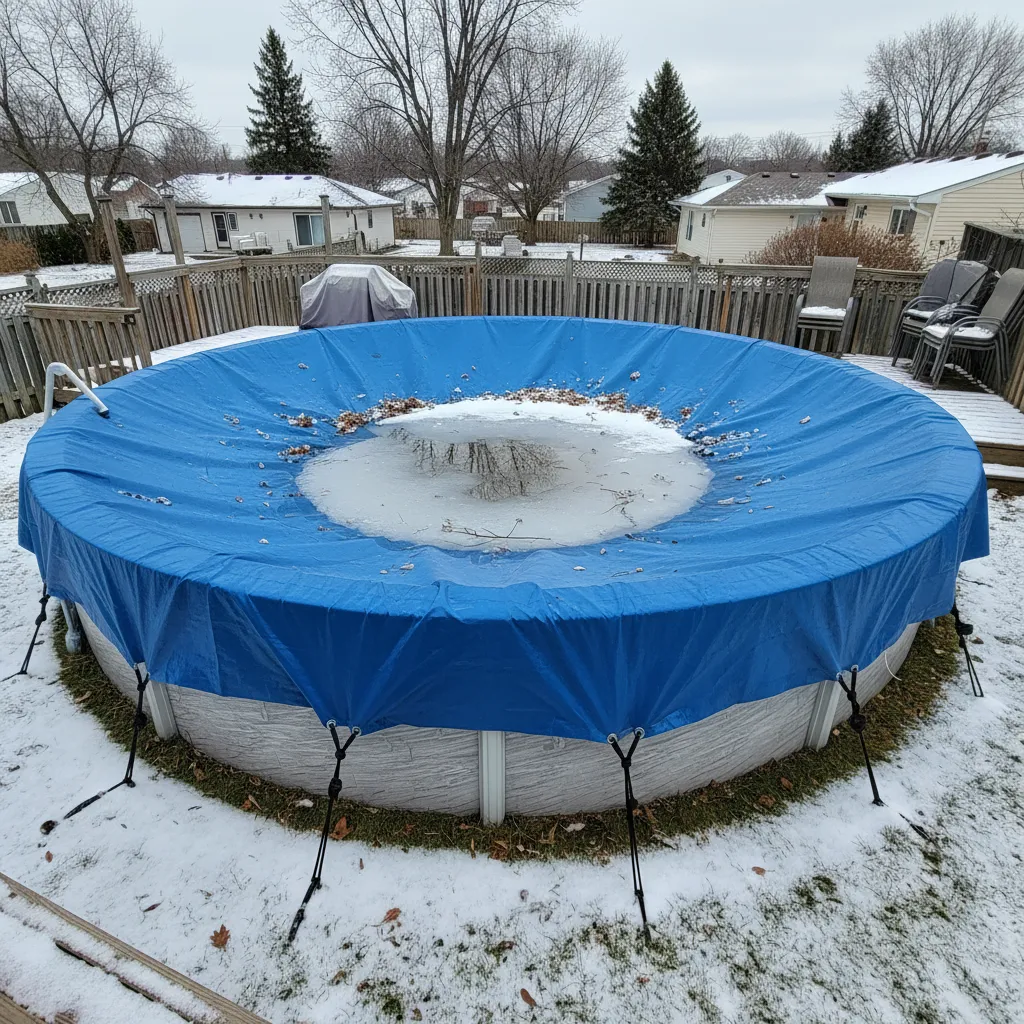
"Invest once to protect your liner and prevent a swamp in the spring."
Heavy-Duty Winter Pool Cover
Winter demand is high - check stock
Understanding the Basics Of Pool Sanitization
Pool sanitization relies on maintaining 1–3 ppm (parts per million) of free chlorine to neutralize bacteria, viruses, and organic contaminants. Chlorine breaks down into hypochlorous acid, which oxidizes harmful substances. Stabilizers like cyanuric acid protect chlorine from UV degradation, extending its lifespan. Bleach lacks these stabilizers, leading to faster chlorine loss—especially in sunny conditions. For algae treatment, chlorine levels must spike to 10–30 ppm temporarily, a process called “shocking.” Standard bleach (6–8.25% sodium hypochlorite) can achieve this but requires precise calculations to avoid pH swings or over-dilution.
Ready to explore how bleach stacks up against pool-grade chlorine? Let’s break down the chemistry and practical applications.
Can You Use Bleach Instead Of Chlorine in a Pool?
Many pool owners ask if standard household products can simplify maintenance. Let’s break down what works—and what doesn’t—when swapping chlorine for bleach.
Chemical Composition: Bleach Vs. Pool-grade Chlorine
Both products contain sodium hypochlorite, a compound that kills germs and oxidizes contaminants. Household bleach typically has 6-8.25% sodium hypochlorite, while pool-grade liquid chlorine ranges from 10-12%. A critical distinction lies in additives: pool chlorine often includes stabilizers like cyanuric acid (CYA), which shield chlorine from UV rays. Bleach lacks stabilizers, making it prone to rapid sunlight degradation. In pools, controlling the tadpole population can be crucial for maintaining water quality. Using appropriate chlorine levels can effectively kill tadpoles and prevent them from disrupting the pool environment.
Is Bleach a Safe Substitute for Chlorine?
Short-term, plain unscented bleach can sanitize pool water. Avoid products with thickeners, fragrances, or splashless formulas—these additives cause cloudiness or foam. For in-ground pools with vinyl liners or plaster surfaces, verify sodium hypochlorite concentration to avoid surface damage. Daily testing is vital, as unstabilized chlorine dissipates faster. To keep your pool in top condition, it’s also important to check the salt level regularly. Maintaining the right salt concentration helps ensure proper chlorine generation and overall water quality.
Key Differences in Effectiveness
Pool chlorine maintains residual sanitization longer due to stabilizers. Without CYA, bleach loses up to 90% of its potency within two hours under direct sunlight. This means frequent dosing—sometimes twice daily—to keep free chlorine at 1-3 ppm. For pools exposed to heavy use or high temperatures, relying solely on bleach risks inconsistent sanitation. After adding soda ash to balance pH, it’s important to wait before using the pool. This allows the chemicals to properly mix and stabilize for safe swimming.
Using Bleach to Treat Algae in Pools
Algae outbreaks demand swift action. While bleach isn’t a first-line algaecide, it can work in a pinch with proper technique.
Can You Put Bleach in a Pool for Algae Control?
Bleach oxidizes algae but lacks specialized additives to prevent regrowth. For mild green algae, adding 3 gallons of 6% bleach per 10,000 gallons can shock the pool. Brush walls first to dislodge colonies, ensuring bleach contacts all surfaces. Stubborn black or mustard algae may need copper-based algaecides paired with chlorine. Keeping the pool area clean is essential for a pleasant swimming environment. A well-maintained pool deck enhances safety and enjoyment for everyone.
Steps to Clear a Green Pool Quickly With Bleach
Speed matters when tackling algae. Follow this protocol for optimal results:
Pre-Treatment Preparation
- Test pH: Aim for 7.2-7.6 to maximize bleach activity.
- Brush walls and floor to break up algae layers.
- Clean skimmer baskets and filters to improve circulation.
Post-Treatment Maintenance
- Run the pump for 24 hours to distribute bleach.
- Retest chlorine after 4-6 hours; add more bleach if below 5 ppm.
- Vacuum dead algae once water clarity improves.
To maintain results, balance cyanuric acid to 30-50 ppm and monitor chlorine daily. Algae spores return quickly without consistent sanitization.
Nailing the right bleach quantity is half the battle—next, let’s dive into precise dosing strategies for pools of all sizes.
Also See: Do Test Strips Work for Saltwater Pools, or Are They Different?
How Much Bleach Should You Add to a Pool?
Determining the right amount of bleach for your pool depends on two factors: current chlorine levels and water volume. A standard 10,000-gallon pool requires 1 gallon of 6% household bleach to raise free chlorine by 5 ppm. Always test water before adding any chemicals to avoid overcorrection.
Calculating Dosage Based on Pool Size
Start by measuring your pool’s volume. For rectangular pools, multiply length × width × average depth × 7.5. A 16×32-foot pool with 4-foot depth holds 15,360 gallons. If targeting a 3 ppm chlorine increase, use 3 quarts of 8.25% bleach per 10,000 gallons. Adjust proportionally for larger or smaller volumes. Keeping your pool properly balanced is key for a pleasant swim. This is where pool floaters come in handy, helping maintain that balance while adding fun to the water.
Using a Bleach Dosage Chart
Bleach dosage charts simplify the math. For example: – 5,000 gallons: ½ gallon of 6% bleach = +5 ppm – 20,000 gallons: 2 gallons of 8.25% bleach = +4.1 ppm These charts account for varying sodium hypochlorite concentrations (5-8.25% in household bleach vs. 10-12% in pool-grade liquid chlorine).
Tools to Simplify Calculations (E.g., My Pool Calculator)
Digital tools like My Pool Calculator automate dosage math. Input your pool’s volume, current chlorine level, and desired ppm. The tool adjusts for bleach strength and provides exact measurements in ounces or gallons. This prevents guesswork and reduces the risk of chemical imbalances. Proper maintenance also includes checking for damaged or worn keeping your pool caulking in good condition around your pool. Keeping your pool caulking in good condition helps prevent leaks and maintains water quality.
Advantages Of Using Bleach in Pools
Bleach offers immediate benefits for specific scenarios, particularly small-scale algae treatments or temporary sanitization. Its chemical makeup (sodium hypochlorite + water) mirrors liquid pool chlorine but at lower concentrations.
Cost-effectiveness and Accessibility
A 121-ounce jug of 6% bleach costs $4-$6 at grocery stores, compared to $10-$15 for pool-grade chlorine. Bleach is widely available year-round, making it a practical backup option during chlorine shortages or for spot treatments.
Short-term Sanitization Benefits
Bleach rapidly oxidizes contaminants and kills algae when applied correctly. A double-shock dose (10-12 ppm) can clear mild algae blooms within 24 hours. Unlike stabilized chlorine tablets, bleach doesn’t add cyanuric acid (CYA), which can accumulate and reduce sanitizer efficiency over time.
Disadvantages Of Using Bleach in Pools
While bleach works for quick fixes, it’s less reliable for ongoing pool maintenance. Frequent use demands meticulous water testing and balancing to prevent side effects.
Limited Long-term Stabilization
Bleach degrades 50% faster than stabilized chlorine in sunlight. Without cyanuric acid, UV rays break down free chlorine within 2-4 hours on sunny days. This requires daily reapplication—up to 3x more often than using stabilized products.
Potential for Overuse or Imbalance
Household bleach contains 11-13 pH additives that can spike pool pH levels. Adding 1 gallon to a 10,000-gallon pool may raise pH by 0.8, risking scale formation or cloudy water. Regular bleach users must monitor total alkalinity and adjust with muriatic acid as needed. It’s important to keep track of chemical levels, especially when shocking the pool. Shocking the pool helps balance these levels and ensures the water remains clean and safe for swimming.
While bleach serves as a temporary solution, alternative sanitizers offer more balanced chemistry for year-round use. Let’s explore how bleach compares to other pool care options.
Bleach Vs. Chlorine: Addressing Common Alternatives
Pool owners looking for options beyond traditional chlorinating agents often ask: can you put bleach in a swimming pool as a primary solution? While sodium hypochlorite (common household bleach) shares sanitizing properties with pool-grade chlorine, its application has limits. This part breaks down popular substitutes and situations where bleach may fall short. In some cases, pool owners may consider adjusting the pool’s pH levels to maintain a balanced environment. Muriatic acid is a common choice for lowering pH, helping to prevent issues like cloudy water and scaling.
What Are Substitutes for Chlorine in Pool Care?
Beyond chlorine tablets or liquid, options exist for maintaining clean water. Bromine, popular in hot tubs, works in warm conditions without strong odors. Saltwater systems transform salt into chlorine via a cell, cutting manual dosing. UV light or ozone units pair with minimal chemicals, targeting pathogens without residual sanitation. Non-chlorine oxidizers like potassium monopersulfate tackle organic waste but don’t kill bacteria.
Household bleach fits into this mix as a short-term fix. With 6-8.25% sodium hypochlorite vs. pool chlorine’s 10-12%, it can boost free chlorine levels temporarily. But unlike stabilized chlorine products, most bleach lacks cyanuric acid (CYA), a shield against sun loss. This makes it impractical for ongoing care in sunny spots without adding stabilizers separately.
When to Avoid Bleach As a Substitute
Two scenarios call for skipping bleach. First, pools with existing high CYA (above 50 ppm) need unstabilized chlorine sources to avoid over-stabilization, which lowers sanitizing power. Second, black or mustard algae often withstand standard bleach doses; calcium hypochlorite or algaecides with copper may work better. Another option to consider is using baking soda in your pool. Baking soda can help maintain the right pH levels and improve water clarity.
Bleach also struggles in outdoor pools with constant sun. Without CYA, up to 90% of its chlorine can vanish in two hours. For vinyl liners or older plaster, frequent high doses might cause fading or corrosion due to pH shifts. Always test water before adding bleach—imbalanced pH or alkalinity reduces its germ-killing capacity by 50% or more. After adding baking soda, it’s important to give the pool some time before using it. Waiting allows the alkalinity to balance properly, ensuring a safe swimming experience.
Still unsure about mixing bleach with your pool’s chemistry? Our next part answers top questions on timing, safety, and testing for those considering this approach.
Frequently Asked Questions
Can Bleach Be Used in Saltwater Pools?
Yes, but with caution. Saltwater pools generate chlorine through electrolysis, and adding bleach may temporarily raise chlorine levels beyond ideal ranges. Test water before adding bleach, and ensure your salt cell is turned off during treatment to avoid overproduction.
Is Scented or Splashless Bleach Safe for Pools?
No. Scented bleach contains fragrances and additives that can cause foaming or skin irritation. Splashless formulas often include thickeners that cloud pool water. Always use plain, unscented bleach labeled as 6-8.25% sodium hypochlorite.
Does Regular Bleach Use Require Adding Stabilizers Separately?
For outdoor pools, yes. Since bleach lacks cyanuric acid (CYA), add stabilizer separately to maintain 30-50 ppm CYA. Without it, sunlight degrades chlorine up to 90% faster, requiring daily bleach reapplication. When it comes to pool maintenance, it’s also important to consider the safety of pool antifreeze. Making sure that any antifreeze used is safe for your pool can help prevent damage during colder months.
How Does Bleach Compare to Chlorine Tablets for Maintenance?
Bleach requires daily dosing and lacks the slow-dissolving convenience of tablets. Tablets provide stabilized chlorine (with CYA) but risk over-stabilization if used exclusively. Many pool owners use both—tablets for baseline sanitation and bleach for shock treatments. Maintaining a clean pool also involves using the right materials and accessories. For those incorporating elements like a 14k gold pool, choosing compatible sanitation methods is key to preserving the aesthetics and longevity of the pool finish.
What Should I Do if I Overdose My Pool With Bleach?
First, stop the pump and retest after 4-6 hours. Sunlight naturally breaks down excess chlorine. For urgent fixes, neutralize with sodium thiosulfate (chlorine reducer) at 1 oz per 10,000 gallons to lower chlorine by 3 ppm. Recheck pH and alkalinity afterward.
Is Bleach Safe for Vinyl-lined or Fiberglass Pools?
Yes, if properly diluted. Pour bleach slowly into the deep end with the pump running to prevent concentrated contact with surfaces. Avoid splashing undiluted bleach directly onto vinyl liners, as it may cause fading or stiffness over time.
Closing Thoughts
Using bleach in your pool can work as a short-term solution for sanitation or algae control. While it shares similarities with pool-grade chlorine, it lacks stabilizers and may require more frequent dosing. For quick algae treatment, household bleach can be effective when used at ½ to 1 gallon per 10,000 gallons of water.
For long-term pool care, dedicated chlorine products like trichlor tablets or liquid chlorine offer better stability. Always test your water after adding bleach—aim for 1-3 ppm free chlorine and adjust pH to 7.2-7.6. Overuse can lead to imbalanced water or corrosion.
Need help with exact measurements? Try My Pool Calculator for precise bleach dosing based on your pool’s size and current chemistry. Keep your pool clean, clear, and safe without guesswork.
Additional Resources for You:
- National Swimming Pool Foundation (NSPF) – Certification & Resources
- r/pools on Reddit: Bleach as a substitute for Chlorine?
- Can I Use Bleach in My Pool? Chlorine Bleach to Shock Pool
- Can I Use Bleach Instead of Chlorine to Clean My Swimming Pool?
- Balance With Bleach: Tips For Keeping Your Swimming Pool Clear
A pool care geek who’s been testing water chemistry since she was tall enough to reach the skimmer.
Chlorine, Pool Chemistry, Sanitizers