Can You Install an Above Ground Pool Inground? Key Considerations & Answers
Published on: January 19, 2026 | Last Updated: November 17, 2025
Written By: Rachael Weatherbottom
Yes, you can install an above ground pool partially inground or place fiberglass models above ground, but structural risks, local codes, and costs vary widely. Installing above ground pools on concrete slabs requires specific prep work to prevent shifting, while placing one over a septic drainfield risks system damage and violates most health codes. Backyard installations depend on slope leveling, soil stability, and zoning laws—though costs (typically $1,500-$5,000) remain lower than inground pools ($35,000+), long-term maintenance and collapse risks increase with non-standard setups.
This article breaks down each scenario—burying above ground pools, using fiberglass units above ground, concrete base installations, drainfield placement, and backyard setups. Learn why most above ground pools lack reinforced walls for burial, how fiberglass shells handle above-ground stress differently than vinyl or steel, and why concrete slabs need sand layers or foam padding to avoid liner abrasion.
Whether you’re considering partial burial for a sleeker look or weighing the risks of installing near a septic system, we’ll cover technical details like soil composition requirements, reinforcement methods for sloped yards, and cost comparisons. Get actionable tips for navigating permit processes, avoiding common installation errors, and balancing budget with durability.
Can You Install or Put an Above Ground Pool Inground?
While the idea of sinking an above-ground pool into the earth might seem tempting for its sleek look, this method introduces risks most manufacturers strictly warn against. Let’s break down why burying these pools demands extreme caution. When considering pool enhancements, it’s also fun to think creatively. Painting pool noodles can add a splash of color and fun to your swimming experience.
Crucial Winterizing Products

"The all-in-one solution for a guaranteed clear spring opening."
All-in-One Closing Chemical Kit
Winter demand is high - check stock

"The 'set & forget' option. This is the easiest winterizing I've ever done."
Simple 3-in-1 Winterizing Balls
Winter demand is high - check stock
"Invest once to protect your liner and prevent a swamp in the spring."
Heavy-Duty Winter Pool Cover
Winter demand is high - check stock
Structural Integrity and Safety Risks
Above-ground pools rely on vertical walls supported by the ground’s outward pressure. Burying them removes this critical balance, leaving walls vulnerable to buckling under soil weight. This raises questions about their overall appearance and value. Some people see above-ground pools as a less desirable option compared to in-ground pools.
Why Above-Ground Pools Aren’t Designed for Burial
These pools use thinner galvanized steel walls (typically 0.5-0.7mm thick) compared to inground models built with corrosion-resistant polymer-coated steel (1.0-1.5mm). The liner also lacks UV stabilization for prolonged sun exposure when partially buried. Without proper engineering, hydrostatic pressure from groundwater can collapse walls within 3-5 years. The lifespan of the sand pool filter can also be impacted by these factors. Regular maintenance and timely replacements can help maximize the filter’s efficiency and longevity.
Can You Partially Bury an Above Ground Pool?
Some installers claim partial burial (up to 18-24 inches) works with modifications like retaining walls or concrete collars. But even this requires professional soil testing for stability. For instance, sandy soils shift under moisture, while clay expands, risking uneven stress on seams. Most warranties void coverage if pools are buried, leaving owners liable for repair costs starting at $1,500+.
Long-term Maintenance and Collapse Risks
Buried above-ground pools face unique upkeep challenges. Rust forms faster on submerged metal components, while debris buildup strains filtration systems. Collapse risks rise yearly due to:
- Soil erosion behind walls
- Corrosion at bolt connections
- Uneven settling causing liner tears
Homeowners report spending $300-$600 annually on extra maintenance for partially buried pools versus $100-$200 for standard setups.
Next, we’ll explore whether fiberglass pools—built for underground use—can defy expectations when placed above soil level.
Can You Put a Fiberglass Pool Above Ground?
Fiberglass pools typically sit in a dug-out spot, but hybrid options now allow partial or full above-ground installation. Brands like Radiant and Viking build fiberglass-shell pools with dual-use walls (2-3 inches thick) that can withstand soil push on all four sides if buried or hold up without digging. This hybrid approach works for yards with high rocks or strict zoning laws against digging. In addition to these innovative pool designs, homeowners can enhance their experience with DIY projects. One great option is creating a DIY automatic pool cover to keep your pool clean and reduce maintenance.
Fiberglass Pool Design for Above-ground Use
Hybrid fiberglass-shell pools mix traits from both in-ground and above-ground types. Walls contain built-in ribs or foam insulation to add rigidity. A common setup pairs a fiberglass tub with a galvanized steel frame, giving structural backing. Such pools might sit 12-24 inches above soil, needing a wrap-around deck or artificial slopes for access. Pools designed for diving require careful consideration of water depth and clarity. An ideal chlorine diving pool ensures a safe and enjoyable experience with well-balanced chemical levels.
Installation Challenges and Reinforcement Needs
Without proper bracing, fiberglass can flex or split under water weight. Adding steel supports (cost: $1,500-$3,500) or a concrete collar (6-12 inches thick) around the base stops shifting. Anchoring posts sunk 3-4 feet into soil with gravel backfill boost stability on sloped lots. Total costs jump 25-40% vs. standard in-ground setups, hitting $3,000-$8,000 for modifications.
Can You Install an Above Ground Pool on Concrete?
Concrete slabs, driveways, or patios can host an above-ground pool if prepped right. But not all slabs work—a 4-inch thick, crack-free pad with a slope under 1% is vital. Avoid surfaces with oil stains (common on driveways) that might stain liners. Speaking of pools, kiddie pools provide a fun and refreshing way for chickens to play and stay hydrated during hot days.
Pros and Cons Of Concrete Bases
Pros: No sinking from rain, stops weed growth, lasts 15-20 years. Cons: Hard surfaces wear down pool liners fast. A 1-2 inch foam pad ($0.50-$1.50/sq.ft) between slab and pool wall cuts friction. Frost heave can tilt slabs in cold zones, risking pool collapse if gaps form. To maintain a clean pool environment, it’s important to control chemical levels effectively. Hydrogen peroxide can help lower chlorine levels while still keeping the water sanitized.
Installing on Slabs, Driveways, or Uneven Surfaces
For existing slabs, check level with a laser tool—differences over 1 inch need grinding or shimming. On sloped driveways, build a retaining wall (railroad ties or cinder blocks) on the low side. Use polymeric sand ($4-$6/bag) to fill gaps under pool walls for load sharing.
Preparing Concrete for Pool Stability
Start by power washing the slab to remove dirt. Apply a liquid bonding agent ($30-$50/gallon) to help fresh concrete patches stick. Fill cracks wider than 1/8 inch with hydraulic cement ($15-$20/bag). For new pours, a 3500 PSI mix with fiber mesh (3-4% by volume) stops cracks. Let curing last 28 days before pool setup.
| Base Type | Cost per Sq.Ft | Lifespan | Maintenance |
|---|---|---|---|
| Concrete | $4-$8 | 15+ years | Low |
| Sand | $0.50-$1 | 3-5 years | High |
| Gravel | $1.50-$3 | 7-10 years | Moderate |
Thinking about a pool near a drainfield? Upcoming info will show how zoning laws and soil types impact this setup.
Also See: Best Competition Pools: Design, Maintenance, & More!
Can You Put an Above Ground Pool Over a Drainfield?
Placing an above-ground pool over a septic drainfield poses risks to both your pool and wastewater system. The weight of a filled pool (up to 50,000 lbs for a 24’ round model) can crush buried drainfield pipes or compact soil, disrupting effluent filtration. Even partial installation over drain lines may lead to sewage backups or groundwater contamination. Keeping a safe distance from the house and the drainfield is crucial for the health of both systems. It’s important to check local guidelines on how far an above-ground pool should be positioned from the house and septic components.
Impact on Septic Systems and Drainfields
Drainfields require oxygen exchange to break down waste, which pool water saturation can prevent. Most health departments mandate a minimum 10-25 ft setback from septic tanks and drainfields. In areas with high water tables, pools may flood drain trenches, causing system failure. Always consult a septic professional for soil percolation tests before planning. Pools and septic systems need to be carefully managed together. A pool septic tank helps treat pool water, so it doesn’t harm the septic system.
Local Health Codes and Restrictions
38 states explicitly prohibit installing pools over drainfields under the International Private Sewage Disposal Code. Violations can incur fines up to $5,000 plus mandated removal costs. Some counties require engineered solutions like raised decks or helical piers to redistribute weight, adding $3,000-$8,000 to installation budgets. When planning a pool, it’s important to consider these regulations. This can significantly affect the cost of building a pool in Arizona.
Can You Put an Above Ground Pool in Your Backyard?
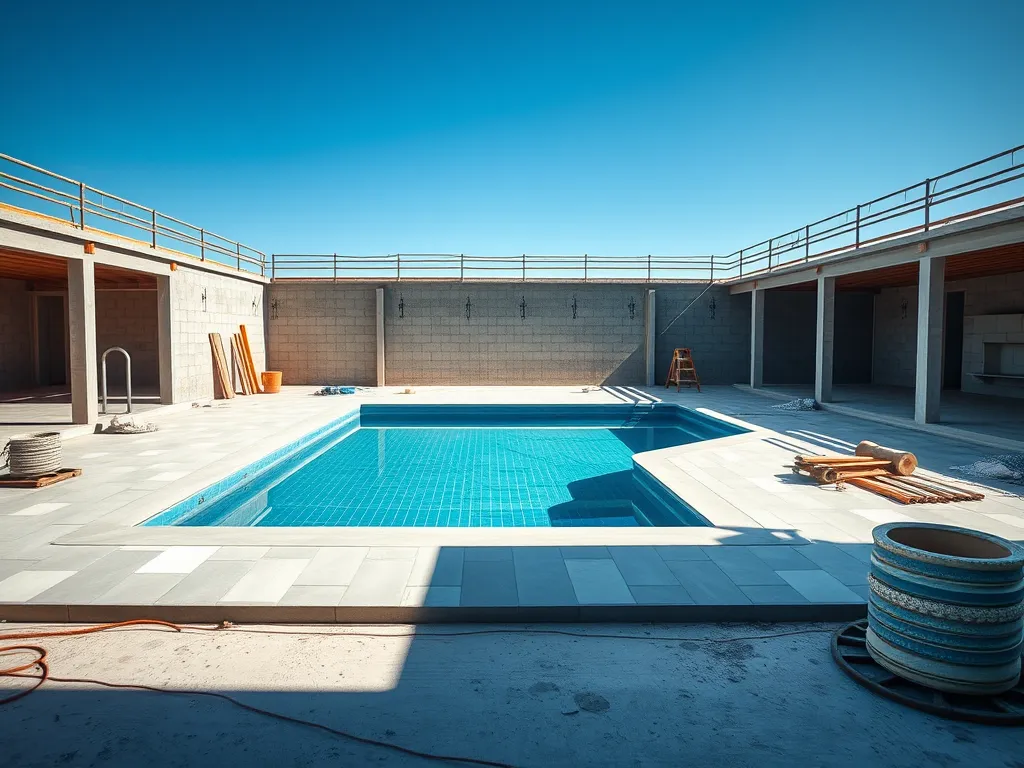
Backyard installations depend on terrain, space, and local regulations. Measure the pool’s footprint plus 4-5 ft clearance for maintenance. Check for underground utilities (call 811), tree roots, and overhead power lines. For sloped yards, gradients exceeding 2” per foot typically require professional grading. When planning your pool area, consider the overall layout of your backyard. A well-designed space can enhance both the beauty and functionality of your outdoor environment.
Assessing Backyard Suitability
Use a laser level to map elevation changes. Steeper slopes increase risks of liner wrinkles (over 1” per 10 ft) or wall collapse. Avoid flood zones or areas with >40% clay content soil, which expands when wet. For fiberglass pools installed above ground, ensure the shell has vertical bracing to handle lateral pressure.
Installing on Sloped or Uneven Terrain
Build retaining walls (6” thick concrete or pressure-treated timber) for slopes over 15 degrees. Cut-and-fill methods work for mild grades but require compacting soil layers in 6” lifts at 90% Proctor density. Rent plate compactors ($125/day) for proper ground stabilization.
Leveling Techniques for Sloped Yards
Use a transit level to mark excavation depths. For 12” elevation differences, dig a stepped trench and backfill with crushed limestone (3/4” aggregate). Install a 2” sand layer over geotextile fabric to prevent settling. Cost: $1.50-$4.50 per sq ft depending on materials.
Zoning Laws, HOA Rules, and Setback Requirements
68% of U.S. municipalities require 5-10 ft setbacks from property lines. HOAs often ban above-ground pools entirely or mandate decorative enclosures. Check maximum height limits (usually 54” for unfenced models). Permits average $150-$500, with inspections for electrical bonding (NEC Article 680).
Essential Installation Considerations
Overlooking prep work causes 23% of pool failures within three years. Budget $1,000-$3,000 for site work beyond the pool kit price.
Permit Requirements and Building Codes
73% of counties require permits for pools holding 24+ inches of water. Submit plans showing fencing details (4 ft min height), pump locations, and drainage routes. In Florida/Texas, wind load calculations may be needed for taller pools.
Soil Composition and Ground Preparation
Clay soils need 6-12” of gravel base to improve drainage. Sandy soils require stabilization grids. Test bearing capacity – above-ground pools need 1,500-3,000 psf. Rent a nuclear density gauge ($200/day) to verify compaction.
Drainage Solutions to Prevent Water Damage
Install French drains 2 ft deep around the perimeter, sloping 1/8” per foot away from the pool. Use 4” perforated PVC pipe wrapped in landscape fabric. For concrete bases, add expansion joints every 8-10 ft and slope the pad 1/4” per foot.
With the site prepped, the next phase focuses on structural support systems for different installation types.
Frequently Asked Questions (FAQs)
Does Installing an Above-ground Pool on Concrete Void the Manufacturer’s Warranty?
Most manufacturers approve concrete installations if prep guidelines are followed, but warranties often exclude damage from improper bases. Check for requirements like foam padding or sand layers—failure to include these may void coverage for liner tears or wall corrosion.
How Can I Locate My Septic Drainfield Before Installing a Pool?
Contact local health departments for septic records, or hire a professional to perform a soil probe or camera inspection. Drainfields typically sit 10-30 ft downstream from the septic tank, marked by greener grass or depressions in dry weather.
What Landscaping Alternatives Integrate Above-ground Pools Without Burial?
Wrap-around decks (12-24” high), terraced gardens, or lattice enclosures camouflage walls effectively. For slopes, build retaining walls with integrated seating, using materials like composite wood or stone veneer to blend with your yard.
Are There Insurance Implications for Pools Installed on Unstable Soil or Over Drainfields?
Insurers may deny claims for pool collapses or septic damage if installations violate local codes. Some require soil stability reports or engineer certifications for non-standard setups. Premiums often rise 5-10% for pools near drainfields due to liability risks. This highlights the importance of proper maintenance and care for pools. Starting a pool cleaning business can help ensure that these installations remain safe and well-maintained, reducing the likelihood of insurance issues.
Final Thoughts
Installing an above-ground pool inground or modifying its intended setup requires careful planning. While partial burial or concrete bases may work with reinforcement, structural risks remain. Fiberglass pools aren’t designed for above-ground use without costly modifications. Drainfield placements risk septic damage and violate health codes in most areas.
Backyard installations demand level ground, proper drainage, and compliance with local zoning laws. Always check permit requirements and soil stability before proceeding. For precise calculations on pool placement, leveling, or base prep, explore My Pool Calculator for tailored guidance.
Every installation scenario has unique challenges—weigh safety, cost, and longevity before breaking ground.
Additional Resources for You:
A pool care geek who’s been testing water chemistry since she was tall enough to reach the skimmer.
Above ground pool, Pool Care By Type