25 Meter Pool Care Guide: Dimensions, Maintenance & More
Published on: December 15, 2025 | Last Updated: November 17, 2025
Written By: Rachael Weatherbottom
A 25 meter pool is a rectangular swimming pool measuring 82 feet in length, commonly used for fitness training, competitions, and residential setups. These pools typically range from 40-43 feet wide (12-13 meters) with depths of 4-6.5 feet (1.2-2 meters), holding approximately 158,000 gallons (600,000 liters) of water. Construction costs average $50,000-$100,000 for in-ground designs, while maintenance focuses on managing larger water volumes, consistent chemical balancing, and efficient filtration systems.
This guide explains how to care for a 25 meter pool year-round. You’ll learn ideal chlorine levels for 158,000-gallon volumes, optimal pump run times, and cost-effective cleaning schedules. We’ll also cover lap-swimming math—like how 64 laps equal one mile—and equipment choices for pools this size.
Owners and swimmers get actionable tips: converting meter measurements to feet, adjusting care routines for competitive vs. residential use, and comparing 25 meter pools to 50 meter Olympic sizes. Whether you’re maintaining a backyard pool or evaluating public facilities, this guide helps you make informed decisions about water quality, energy use, and swimmer safety.
What is a 25 Meter Swimming Pool?
Commonly seen in fitness centers, schools, or residential properties, a 25 meter swimming pool serves multiple purposes beyond casual recreation. Its standardized length makes it versatile for structured swimming activities while demanding specific care strategies due to its size.
Crucial Winterizing Products
"The all-in-one solution for a guaranteed clear spring opening."
All-in-One Closing Chemical Kit
Winter demand is high - check stock

"The 'set & forget' option. This is the easiest winterizing I've ever done."
Simple 3-in-1 Winterizing Balls
Winter demand is high - check stock
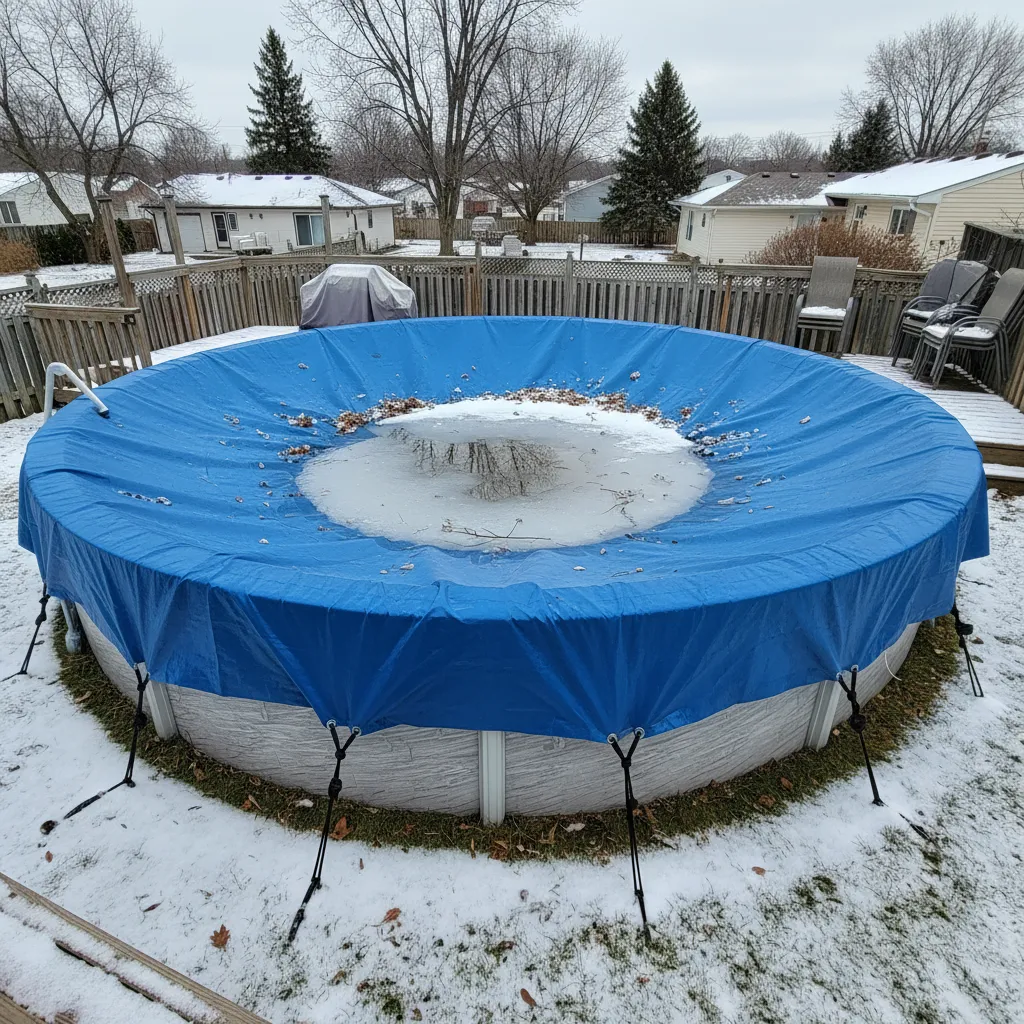
"Invest once to protect your liner and prevent a swamp in the spring."
Heavy-Duty Winter Pool Cover
Winter demand is high - check stock
Definition and Common Uses
A 25 meter lap pool measures exactly 25 meters in length, typically ranging between 12.5 to 20 meters in width with depths varying from 1.2 to 2 meters. Governed by bodies like FINA (Fédération Internationale de Natation) for competitions, these pools host short-course events, swim team practices, or endurance training. Many public facilities opt for this size due to its balance between space efficiency and functionality. Residential versions often feature adjustable current systems or heated water for year-round use.
Beyond competitive swimming, 25 meter pools support aquatic therapy, water aerobics, or family recreation. Their linear design prioritizes lap efficiency, while modular construction options allow customization for properties with limited space. Unlike smaller plunge pools, the 25 meter swimming pool size accommodates multiple users simultaneously without compromising workout quality.
Importance in Pool Care Routines
Maintaining a 25m swimming pool requires tailored strategies due to its larger water volume. For example, a standard 25 meter pool with dimensions of 25m x 12.5m x 1.5m holds approximately 468,750 liters (123,800 gallons). This volume demands precise chemical dosing—chlorine levels should stay within 1-3 ppm (parts per million), requiring up to 2.3 kg of chlorine weekly depending on usage. After adding soda ash to adjust the pH levels, it’s important to wait before using the pool. This waiting period allows the chemicals to properly mix and stabilize, ensuring a safe swimming environment.
Filtration systems must cycle the entire water volume every 4-6 hours. For pools 25 meter in length, this often means installing pumps with 1.5-2 HP (horsepower) paired with sand or cartridge filters rated for 75-100 GPM (gallons per minute). Brushing walls weekly becomes critical to prevent biofilm buildup on the expanded surface area, which can exceed 300 square meters in larger models.
Monitoring pH (7.2-7.8) and total alkalinity (80-120 ppm) prevents corrosion or scaling, especially in saltwater systems. Robotic cleaners designed for pools 25 meter or longer improve debris removal efficiency, covering up to 90% of the floor in a single cycle. Heated pools require extra vigilance, as warmer water accelerates chemical degradation.
Proper care of swimming pool 25 meters in size ensures longevity while keeping operational costs manageable. Next, let’s break down the exact dimensions and specifications that define these pools.
25 Meter Pool Dimensions &Amp; Specifications
Grasping a 25 meter swimming pool’s physical traits forms a basis for smart upkeep and functional use. From lap counts to chemical dosing, all pool care factors link back to its structural layout.
Standard Length, Width, and Depth
A 25 meter pool maintains a fixed span of 25m (82′ 0.5″) for lap swimming accuracy. Most hold widths from 10-20m (32′ 9.7″-65′ 7.4″), with 2m (6′ 6.7″) as a common pick for dual lanes. Depth typically runs 1.35-2m (4′ 5″-6′ 6.7″), mixing shallow zones for starts with mid-depth sections for flip turns. Safety measures are important not just for swimmers, but also for those enjoying the pool area. Awareness of lightning pool safety can protect everyone during stormy weather.
25 Meter Pool Dimensions in Feet
For US-based pool owners, converting 25 meter pool sizing aids in fitting gear and planning layouts:
| Metric | Feet/Inches |
|---|---|
| 25m length | 82′ 0.5″ |
| 2m width | 6′ 6.7″ |
| 1.5m depth | 4′ 11.1″ |
This 82-foot span impacts pump capacity needs – a critical factor in sizing filters for full water cycles within 6-8 hours.
Water Volume and Surface Area
A 25m x 2m x 1.5m pool holds 75,000 liters (19,812 gallons). Surface area sits at 50m² (538ft²), dictating chlorine demand: 150-200g weekly for pH 7.4-7.6 balance. Larger spans may require 1.5-2HP pumps moving 2650-3000 gallons hourly. Choosing the right pool liner is also essential for maintenance. The thickest pool liners can help provide durability and longevity, making them a great choice for any pool owner.
Lap Swimming in a 25 Meter Pool
Training in a 25 meter lap pool brings distinct lap counts and turn dynamics versus Olympic 50m layouts.
How Many Laps Equal a Mile?
Swimming 1 mile (1609.34m) in a 25m pool needs 64.4 laps. Most track 66 laps (1650m) for a “pool mile” – a standard drill for fitness plans. This contrasts with 33 laps in 50m pools, showing why 25m spans suit high-turn training.
Training Vs. Competition Lap Requirements
While FINA sanctions 25m pools for World Cup short course races, daily training adapts:
- Speed drills: 12-25 laps (300-625m) sprints
- Endurance: 80-100 laps (2000-2500m)
- Flip turns: 1 per 25m vs 50m pools’ 1 per 100m
Timing systems often split into 0.01-second increments for touchpad accuracy in such compact spans.
While lap swimming metrics focus on training, distinctions in pool sizing impact upkeep – a link to sizing vs yard pool contrasts.
Also See: Are Above Ground Pools Trashy? Discover the Facts
25 Meter Pool Vs. 25 Yard Pool
Swimmers and facility managers frequently encounter pools labeled as 25 meters or 25 yards. While similar in appearance, these two designs demand distinct approaches to measurement and maintenance.
Key Differences in Measurements
A 25 meter pool spans 82 feet compared to a 25 yard pool’s 75 feet. This 7-foot difference alters lap counts: completing 64 laps in a 25 meter pool equals one mile (1,609 meters), while a 25 yard pool requires 70 laps for the same distance. The variation impacts training regimens, race preparation, and record-keeping for competitive swimmers.
Maintenance Implications for Pool Care
The extra length of a 25 meter pool increases water volume by roughly 2,000–3,000 gallons compared to a 25 yard pool of equal depth. This affects chemical dosing—chlorine demand rises by 10–15% to maintain 1–3 ppm levels. Filtration systems must handle higher flow rates, with pumps rated for at least 75 GPM (gallons per minute) to cycle 50,000 gallons within 8 hours. Testing alkalinity (80–120 ppm) and pH (7.2–7.8) weekly becomes critical to prevent imbalances in larger water bodies. Additionally, heat management becomes essential for larger pools as well. Using a solar blanket can significantly help in retaining heat and reducing energy costs for heating the pool.
25 Meter Vs. 50 Meter Pool Comparisons
Olympic-sized 50 meter pools dominate competitive events, but 25 meter pools serve as versatile alternatives for training and community use.
Usage Differences for Swimmers
A 25 meter lap pool allows shorter repeat sets and quicker turns, ideal for sprint training or swim lessons. Fifty meter pools demand sustained pacing, benefiting endurance athletes. Water temperature also varies: 25 meter pools often maintain 78–82°F for multi-use comfort, while 50 meter competition pools adhere to stricter 77–79°F standards.
Maintenance Considerations for Larger Sizes
Doubling the pool length quadruples water volume—a 50 meter pool holds 200,000–250,000 gallons versus 50,000–60,000 gallons for a 25 meter pool. This requires industrial-grade equipment: sand filters exceeding 300 lbs of media, pumps with 200+ GPM capacity, and automated chemical feeders to manage chlorine, stabilizer, and algaecide distribution. Energy costs surge, with heating expenses averaging $300–$500 monthly for 50 meter facilities. Keeping the water cool in such large pools can further increase expenses. It’s important to consider the cost of additional equipment, like pool chillers, to maintain a comfortable temperature year-round.
Maintaining a 25 Meter Pool
Consistent care preserves water clarity and equipment longevity in these mid-sized pools. Tailoring routines to the 25 meter pool size prevents common issues like algae blooms or pump strain.
Chemical Balancing for Larger Volumes
Test free chlorine (1–3 ppm), total alkalinity, and pH twice weekly. For a 50,000-gallon pool, add 1.5 lbs of calcium chloride per 10 ppm increase in hardness. Cyanuric acid levels should stay under 50 ppm to avoid chlorine lock. Shock treatments require 5 lbs of calcium hypochlorite weekly during peak summer use. Keeping your pool balanced is key to preventing algae growth. A good algaecide can make a big difference in maintaining a clean and clear pool.
Optimal Cleaning Routines
Robotic cleaners with 60-foot cables efficiently cover 25 meter pool floors in 2–3 hour cycles. Brush walls twice weekly to prevent biofilm buildup, focusing on tile lines and corners. Vacuuming debris three times weekly maintains skimmer efficiency, reducing filter clogs. As technology advances, automated pool systems are becoming more accessible through mobile apps. These apps provide users with control over their pool maintenance from anywhere, making pool care simpler and more efficient.
Equipment Sizing for Efficiency
Match pumps to the pool’s turnover rate—8 hours for 50,000 gallons requires a 104 GPM pump. Install cartridge filters with 150 sq. ft. surface area or sand filters holding 600 lbs of #20 silica. Heat pumps rated at 140,000 BTU efficiently maintain temperatures in moderate climates.
With proper care, a 25 meter pool remains a community or training asset for decades. Next, let’s explore strategies for identifying well-maintained facilities that meet these standards.
Finding &Amp; Evaluating 25 Meter Pools
Locating swimming pool 25 meters in length requires knowing where to look. Public facilities like community centers, schools, or fitness clubs frequently feature these pools. Start by checking local parks department listings or using tools like the USA Swimming Pool Finder. Apps such as Swim.com provide search filters for exact lengths.
Locating Public 25 Meter Pools Near You
Focus on facilities hosting swim teams or water polo leagues, as they often comply with competition standards. Call ahead to confirm dimensions—some pools list “25m” but might measure slightly shorter. Verify depth profiles if diving boards or underwater features matter for your needs. Below is a quick reference for popular pool locators: Warm-up pools can be an essential part of many swimming events. They provide swimmers a chance to prepare before competing in the main pool.
| Resource | Details |
|---|---|
| YMCA directories | Filter by pool length |
| SwimTopia | Lists competitive pools |
| Local university websites | Check athletics sections |
Assessing Pool Care Standards at Facilities
Examine visible cues: clear water without cloudiness indicates proper filtration. Test strips placed near edges can reveal pH levels—look for 7.2-7.8. Inquire about pump systems; variable-speed models (like Pentair IntelliFlo) reduce energy use by 30-70%. Facilities with robotic cleaners (Dolphin Nautilus CC Plus) or UV sanitizers often prioritize cutting-edge maintenance.
Check for posted inspection certificates or staff certifications. Pools following NSF/ANSI 50 standards meet rigorous equipment benchmarks. Notice buildup on tiles? Poor circulation might signal neglected care routines. Facilities with digital chemical controllers (BioGuard SmartGuard) typically maintain tighter balance tolerances.
Standard Swimming Pool Sizes in Meters
Swimming pool 25 m lengths fit within competitive short-course specs, but other sizes exist. FINA regulations dictate Olympic pools must be 50m, while residential builds vary. Knowing these distinctions helps when planning installations or selecting training venues. When considering pool options, it’s important to think about the size that suits your needs. A 600 sq ft pool size can be a perfect choice for many homes, providing ample space for swimming and relaxation.
Competition Vs. Residential Guidelines
FINA-certified 25m pools require precise specs: lane widths of 2.5m, minimum depths of 1.35m, and touchpad systems. Residential builds might shorten lengths to 20m or incorporate curves. For lap swimming, prioritize straight-line designs—even minor deviations disrupt rhythm.
Maintenance differs too. Competitive pools need stricter chemical control (1-3 ppm chlorine, 80-120 ppm alkalinity) due to higher swimmer loads. Residential pools might use saltwater systems (generating 2-4 ppm chlorine) for gentler upkeep. Larger volumes (500,000+ liters in 25m pools) demand pumps with 100-150 GPM flow rates to cycle water every 6 hours. In addition to these factors, water chemistry plays a key role in pool maintenance. Monitoring the calcium saturation index is essential to prevent scale buildup and corrosion.
Grasping size standards helps tailor care routines—whether managing public facilities or private setups. Next, let’s tackle frequent questions swimmers pose about these pools.

25 Meter Pool FAQs
What Safety Features Are Essential for a 25 Meter Pool?
Anti-slip decking, ADA-compliant ladders, and perimeter fencing (minimum 4 feet high) are critical. Install motion-activated alarms and maintain rescue hooks/rings visible every 25 meters. For competitive pools, touchpad systems with emergency stop buttons add an extra layer of safety during timed events.
How Often Should Pool Equipment Be Serviced in a 25 Meter Pool?
Pumps and filters require professional inspection every 6 months. Sand filters need media replacement every 3-5 years, while cartridge filters should be cleaned monthly and replaced biannually. Automated chemical feeders demand calibration checks every 30 days to ensure precise dosing. Regular maintenance is crucial for all pool components. This also applies to pool salt cells, which have a specific lifespan that can vary based on usage and care.
Can a 25 Meter Pool Be Used for Water Aerobics?
Yes, but depth matters – 1.2-1.5 meter shallow ends work best. Install underwater speakers for instruction clarity and ensure lane ropes can be removed for class setups. Increased bather load requires boosting chlorine to 3-4 ppm during group sessions.
What Pool Covers Are Best Suited for a 25 Meter Pool?
Motorized slatted covers (like CoverStar) handle the length efficiently, deploying in under 5 minutes. For outdoor pools, solar covers with 16-mil thickness reduce heat loss by 70%. Competition facilities often use bubble covers during off-hours to maintain water temperature.
How to Winterize a 25 Meter Pool Effectively?
Lower water to 18″ below skimmers, add winterizing chemicals (300g chlorine shock per 50,000L), and install freeze-proof skimmer guards. Use air pillows under the cover to prevent ice damage. For vinyl liners, maintain water chemistry at pH 7.2-7.4 throughout winter months.
Closing Thoughts
A 25 meter pool offers versatility for lap swimmers, fitness enthusiasts, and competitive training. With standard dimensions of 25m x 12.5m (82ft x 41ft) and water volumes around 375,000 liters (99,000 gallons), proper maintenance is key. Regular chemical balancing, efficient cleaning routines, and correctly sized equipment ensure optimal performance.
Whether comparing it to 25-yard or 50-meter pools, each size serves distinct purposes. For lap swimmers, 64.4 lengths equal a mile in a 25m pool—nearly 8% fewer laps than a 25-yard pool requires.
For precise calculations on chemical dosing, water turnover rates, or equipment sizing for your 25 meter pool, explore the tools at My Pool Calculator. Our resources simplify pool care math so you can focus on enjoying the water.
Additional Resources for You:
- Choosing the correct specification for a 25-meter pool
- 25m Eight Lane Swimming Pool Dimensions & Drawings | Dimensions.com
- Why Does the USA Swim in 25-Yard Pools? – MySwimPro
- Olympic-size swimming pool – Wikipedia
A pool care geek who’s been testing water chemistry since she was tall enough to reach the skimmer.
Pool Care By Type, Pool for Schools