
Does Your Pool Heater Need the Pump Running? Here’s the Deal
Published on: March 9, 2026 | Last Updated: November 17, 2025
Written By: Lila Fairholme
Yes, your pool pump must be on for the heater to work. Pool heaters require constant water flow to operate safely and effectively. The pump pulls water through the heater’s heat exchanger (the component that warms the water) before returning it to the pool. Without the pump running, water doesn’t circulate, so the heater can’t transfer heat. Most modern heaters also have built-in safety sensors that automatically shut off the unit if water flow stops, preventing damage to internal parts like copper coils or gas valves.
This article breaks down why water circulation matters for heating, what happens if you ignore this rule, and how to balance energy use with comfort. You’ll learn why running a heater without the pump risks cracking a heat exchanger, how pool size impacts pump runtime, and why Florida’s humidity changes the game. We’ll also cover common mistakes, like setting pump timers incorrectly or assuming summer heat eliminates the need for circulation.
By the end, you’ll know exactly how long to run your pump during heating cycles, why temperature consistency matters more than speed, and how to avoid a $1,200+ repair bill from fried heater components. Whether you’re using a gas heater, heat pump, or solar system, these rules apply – let’s dive in.
Do Pool Heaters Require the Pump to Be on?
Pool heaters need the pump to run at the same time. Water must flow through the heater for it to work right. Without the pump, the heater can’t warm the water or keep temps even. This is also important for other types of pools. Stock tank pools can benefit from a proper heating system to maintain comfortable temperatures.
Crucial Winterizing Products
"The all-in-one solution for a guaranteed clear spring opening."
All-in-One Closing Chemical Kit
Winter demand is high - check stock

"The 'set & forget' option. This is the easiest winterizing I've ever done."
Simple 3-in-1 Winterizing Balls
Winter demand is high - check stock
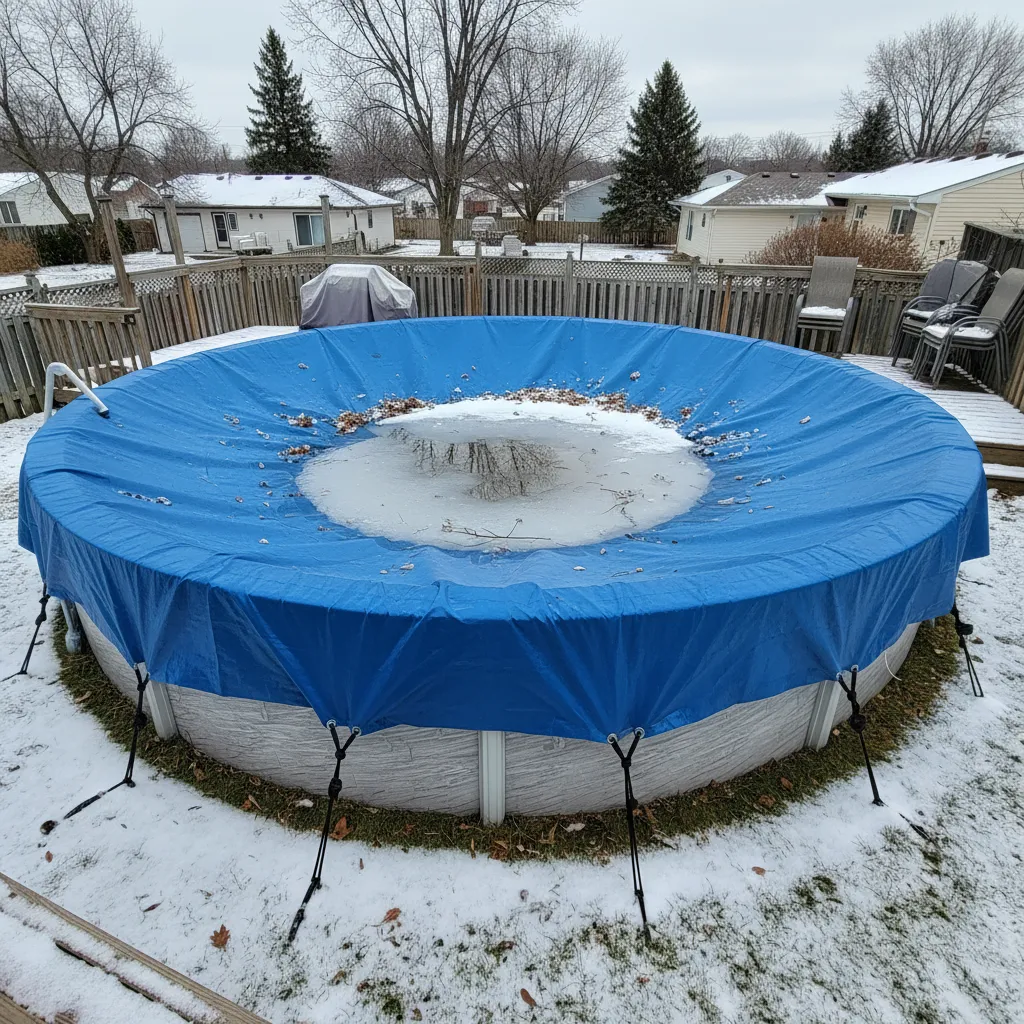
"Invest once to protect your liner and prevent a swamp in the spring."
Heavy-Duty Winter Pool Cover
Winter demand is high - check stock
Role Of Water Circulation in Pool Heating
The pump pulls water from the pool, pushes it through the heater’s heat exchanger (a metal part that warms the water), then sends it back to the pool. If the pump stops, water flow stops. This leaves the heater with no way to move heat into the pool. Most heaters need at least 20-40 gallons per minute (GPM) flow rates to fire up. Choosing the right filtration system is important for maintaining water flow. A sand filter pool pump can help ensure your pool stays clean and that your heater works efficiently.
Heat Distribution and Temperature Consistency
Moving water stops hot spots near the heater and cold zones far from it. Without the pump, warm water sits still. Layers form – warm on top, cool below. This “thermal layering” makes the heater work harder to hit set temps. Tests show pools with pumps off take 3x longer to warm up and lose heat 50% faster.
Safety Mechanisms in Modern Pool Heaters
New heaters have shut-off tech to stop fires or meltdowns if the pump quits. Gas heaters use pressure switches to check flow. Heat pumps use flow sensors. If water stops, these parts cut power in 10-30 seconds. Brands like Hayward and Pentair add extra sensors to guard against dry firing (heating with no water).
While rules vary by heater type, all need the pump on to run safe and strong. Next, let’s see what goes wrong when pumps and heaters don’t work as a team.
What Happens if You Run a Pool Heater Without the Pump?
Running your pool heater without the pump can cause major issues. Let’s break down why this combo needs to work as a team.
Risk Of Equipment Damage
Pool heaters need water flow to work right. No pump means no water moving through the heater’s heat exchanger. This part gets hot fast – gas heaters hit up to 250°F, heat pumps reach 130°F. Stagnant water turns to steam, creating pressure that cracks pipes or warps metal parts. Repair costs? $400-$1,200+ for common fixes like replacing a cracked header. Regular maintenance is important to avoid these issues. One area often needing attention is the pool coping, which can develop cracks over time.
Reduced Heating Efficiency
Heat won’t spread without water flow. A 400,000 BTU gas heater trying to warm a 20,000-gallon pool with the pump off is like blowing hot air into a sealed box. You’ll get hot spots near the heater return jets but cold zones elsewhere. Tests show water temps vary by 15°F+ in pools with pumps off during heating cycles. To enjoy a warm swim, letting the pump run is essential. This is especially true for above ground pools, where maintaining an even temperature enhances overall comfort.
Potential Overheating Issues
Modern heaters have safety stops, but these can fail. If water stops moving, the heat exchanger might overheat in under 5 minutes. At 212°F, water boils – steam bubbles can wreck pump seals and melt PVC pipes (softens at 140°F). Always check your flow switch works – this $50 part cuts power if water stops moving. To keep a safe environment, good air quality is also necessary. An air filter helps remove dust and pollutants, making the air cleaner to breathe.

How Long Should the Pool Pump Run During Heating?
Run times change based on your setup. Here’s how to find the sweet spot between warm water and low power bills.
Factors Affecting Pump Runtime
Three main things decide pump hours: heater type, pool size, and temp goals. Gas heaters need 8-12 hours daily to push 1-2°F temp rises in 15k-gallon pools. Heat pumps work slower – they might need 12-16 hours for the same boost. Big pools (30k+ gallons) need extra time – add 1 hour per 5k gallons over 20k. Maintaining a pool requires careful attention to its components. A well-maintained pool deck not only enhances safety but also complements the overall look of the area when resurfaced.
General Guidelines for Optimal Heating
Split pump runs into 2-3 blocks. Run at high speed (2,800 RPM) when heating, then drop to low (1,200 RPM) to save power. For every 10°F air temp drop below 80°F, add 2 hours to pump time. Use a timer sync’d with your heater – most systems need at least 30 GPM flow rate. Check pressure gauges monthly – a 5 PSI jump means clean your filter.
Next, we’ll explore how Florida’s weather changes these rules and when you can cut pump hours in summer heat.
Also See: Does a Pool Heater Need to Be GFCI Protected? Tips
Seasonal Considerations for Pool Pump and Heater Use
Pool heating requirements shift dramatically with weather patterns and location. While basic pump-heater relationships remain constant, environmental factors can alter operational needs. Additionally, maintaining safety around the pool is important. For example, weigh down pool steps to prevent them from floating or shifting.
Summer Heating: Is the Pump Always Necessary?
During peak summer months, ambient temperatures may reduce reliance on heaters. Gas and heat pump models might cycle less frequently, leading some owners to question whether the pump must stay active. Even when heating demands drop, water circulation prevents localized overheating near heat exchangers and maintains chemical balance. Most systems still require 6-8 hours of daily pump operation at 2750-3450 RPM to support occasional heating cycles.
Florida-specific Factors for Pool Heating
Florida’s high humidity and frequent afternoon storms create unique challenges. Evaporative cooling from 80-90% humidity levels can drop pool temperatures 5-7°F overnight, triggering heater demands even in summer. Pump operation becomes critical during rainy periods to manage diluted chemicals and maintain 20-40 GPM flow rates required by heat pump systems. Variable-speed pumps set to 2200-2600 RPM during daylight hours often strike the best balance between heating support and energy use in this climate. Regular monitoring of pool chemicals is essential as weather changes can affect their effectiveness. It’s important to know when your pool stabilizer is approaching its expiration date to ensure optimal pool conditions.

Does a Pool Heater Work Better With the Pump on?
Water flow directly impacts heater performance through multiple physical mechanisms. The relationship between pump operation and thermal transfer follows fundamental thermodynamics laws.
Impact on Heating Speed
Active pumps boost heating rates by constantly moving water past heat exchangers. Tests show 400,000 BTU gas heaters paired with properly sized pumps (1.5-2 HP) raise temperatures 2-3°F per hour versus 1-1.5°F with suboptimal flow. Heat pumps exhibit even greater dependence – a 140k BTU unit requires steady 30 GPM flow to achieve rated performance. Flow rates below 20 GPM can slash output by 50%.
Energy Efficiency Considerations
While running pumps consumes energy, proper flow optimization reduces total costs. Variable-speed models set to 2200 RPM for heating cycles use 30-40% less power than single-speed pumps. Modern heaters with modulating burners or compressors adjust output to match flow conditions, maintaining 80-85% thermal efficiency when paired with appropriate pump settings.
Common Mistakes to Avoid When Using Pool Heaters
Even experienced pool owners frequently misunderstand pump-heater interactions. These errors often lead to equipment failures or spiraling energy bills.
Turning Off the Pump Prematurely
Shutting down circulation immediately after reaching desired temperatures creates thermal stratification. A 10°F differential between surface and deep water can develop within 2 hours, forcing heaters to work harder during the next cycle. Allow pumps to run 60-90 minutes post-heating to equalize temperatures and protect heat exchangers from thermal shock. This is important for maintaining an efficient long fill pool. Proper circulation helps ensure an even temperature throughout the pool, making it more enjoyable for users.
Incorrect Pump Settings During Heating
Using filter-only speeds (1200-1800 RPM) while heating starves heaters of required flow. Most gas heaters need 35-45 GPM, equivalent to 2500-3000 RPM on 1.5HP pumps. Heat pumps demand higher minimum flows – check manufacturer specs. Flow sensors may automatically shut off heaters below threshold rates, but repeated low-flow operation accelerates scale buildup in heat exchangers.
Proper heater-pump coordination becomes clearer when examining real-world usage patterns. The next section explores practical scenarios through common operational questions.

Frequently Asked Questions (FAQs)
Can a Solar-powered Pump Adequately Support a Pool Heater?
Solar-powered pumps can work with heaters if they maintain the required flow rate (typically 20-40 GPM). Ensure the solar pump’s output matches your heater’s minimum flow specifications, especially during cloudy periods when power generation drops. Battery backups are recommended for consistent operation.
What Maintenance Checks Ensure Proper Pump-heater Coordination?
Monthly inspections should include: verifying flow sensor functionality, checking for air leaks in suction lines, and ensuring filter cleanliness (dirty filters reduce flow by 15-30%). Annually, inspect heat exchangers for scale buildup, which can restrict water flow and trigger safety cutoffs.
How Do Smart Pool Systems Manage Pump and Heater Sync?
Advanced controllers like Pentair IntelliConnect or Hayward OmniLogic automatically adjust pump speeds to meet heater demands. These systems monitor real-time flow rates, optimize RPMs for energy efficiency, and prioritize heating cycles during off-peak energy hours. Efficient water circulation is key to maintaining pool cleanliness and temperature. A prime pool pump plays a crucial role in ensuring your pool operates at its best.
Does the Pool Filter’s Condition Impact Heater Performance?
A clogged filter reduces water flow by up to 40%, forcing pumps to work harder and potentially starving heaters of required flow. Cartridge filters should be cleaned when pressure rises 8-10 PSI above baseline; sand filters need backwashing every 2-3 weeks during heating seasons. Proper maintenance of your pool’s filtration system can also impact the lifespan of your salt cell. Keeping your pool clean and well-circulated helps ensure that the salt cell operates efficiently for as long as possible.
Are Energy-efficient Pump Settings Compatible With Heating?
Variable-speed pumps can maintain heater-compatible flow at lower RPMs. For example, running at 2,200 RPM instead of 3,450 RPM reduces energy use by 50% while still providing 30 GPM flow for most residential heaters. Always confirm your specific heater’s minimum flow requirements first. In addition to energy savings, maintaining proper flow rates is also essential for effective water treatment. Effective systems, such as UV water treatment, can use the right flow to ensure contaminants are eliminated efficiently.
Closing Thoughts
Running your pool heater without the pump is a recipe for trouble—inefficient heating, potential damage, and safety risks. Proper water circulation ensures even heat distribution, protects equipment, and maximizes energy efficiency. Seasonal adjustments matter, especially in warmer climates like Florida, where pump runtime can be optimized.
For precise calculations on pump-heater coordination, check out My Pool Calculator. Our tools help balance performance and cost, whether you’re maintaining a summer-ready pool or extending your swim season into cooler months.
Keep the pump on when heating, follow manufacturer guidelines, and avoid common pitfalls like premature shutoffs. Your pool—and wallet—will thank you.