Competition Pools: Design, Maintenance, and Safety for Peak Performance
Published on: March 11, 2026 | Last Updated: November 17, 2025
Written By: Rachael Weatherbottom
A competition pool is a purpose-built aquatic facility designed for organized swimming events, adhering to strict regulatory standards. Unlike recreational pools, these structures prioritize precise dimensions, water quality, and safety features to meet guidelines from organizations like FINA (Fédération Internationale de Natation) and the NCAA. Key distinctions include standardized lengths (25-yard short course or 50-meter Olympic size), depth minimums of 6-7 feet for racing lanes, and specialized lane markings. Facility managers must balance construction requirements with ongoing maintenance needs like chemical balancing and equipment upkeep.
This article breaks down the engineering behind world-class competition pools. You’ll learn how Olympic-sized designs differ from collegiate or age-group facilities, including specifics on gutter systems, anti-wave lane lines, and bulkhead installations. We’ll explore why certain features—like a 77-82°F water temperature range or 1.0-3.0 ppm chlorine levels—directly impact athlete performance and event compliance.
From starting block placement to pump room configurations, we cover the technical details pool operators need. Discover how FINA-certified touchpads work, why variable-frequency drives optimize filtration, and what makes Myrtha Pools’ stainless steel modular designs a tournament favorite. Whether you’re renovating a high school natatorium or planning an international aquatic center, these insights ensure regulatory adherence and operational efficiency.
What is a Competition Pool?
Built to host organized swimming events, competition pools follow strict design rules set by governing bodies like FINA (Fédération Internationale de Natation) or the NCAA. These pools serve as stages for races, diving meets, or water polo matches, requiring features that prioritize fairness, performance tracking, and swimmer safety. Unlike recreational pools, they must meet exact specifications for dimensions, depth, lane spacing, and water quality to ensure standardized conditions during events. Just as competition pools require precise water quality, maintaining this quality is crucial for all types of pools. A sand filter pool pump offers an effective solution to keep the water clean and clear for swimmers.
Crucial Winterizing Products
"The all-in-one solution for a guaranteed clear spring opening."
All-in-One Closing Chemical Kit
Winter demand is high - check stock

"The 'set & forget' option. This is the easiest winterizing I've ever done."
Simple 3-in-1 Winterizing Balls
Winter demand is high - check stock
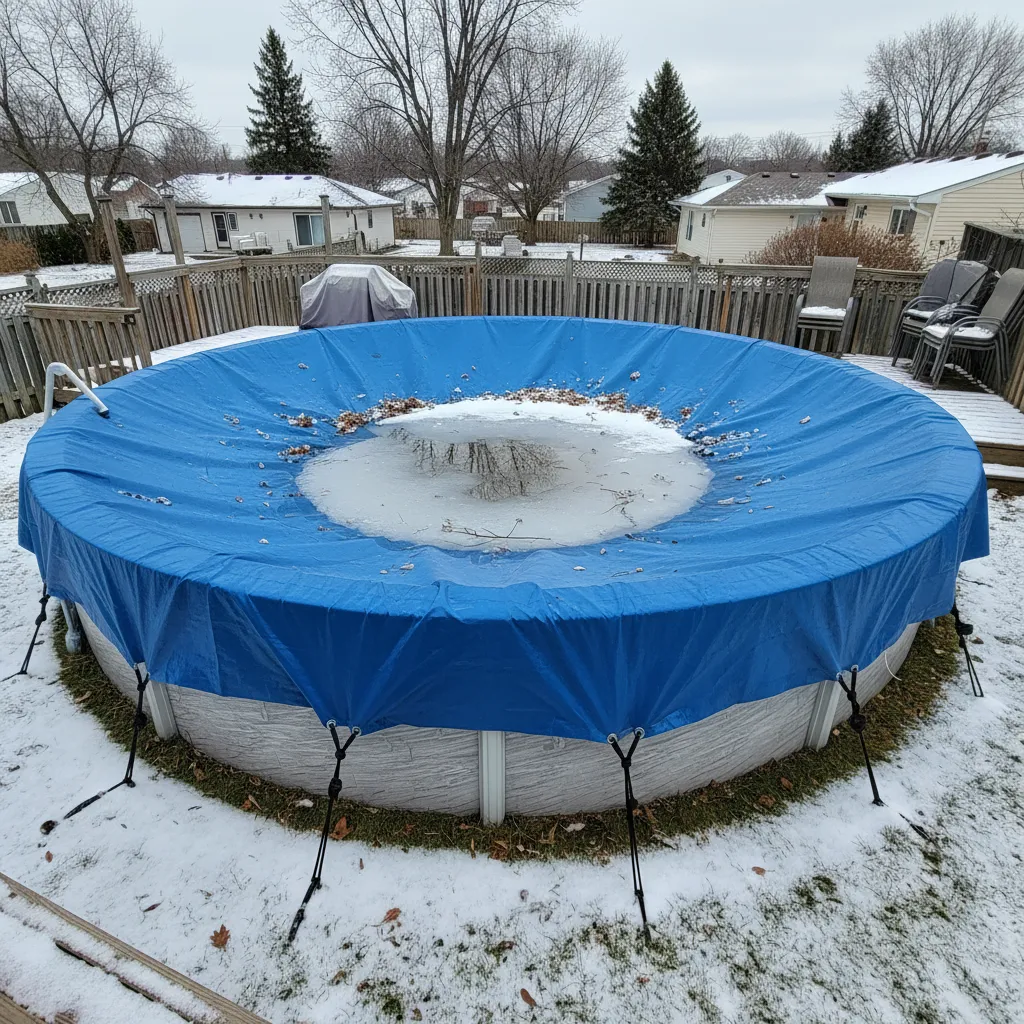
"Invest once to protect your liner and prevent a swamp in the spring."
Heavy-Duty Winter Pool Cover
Winter demand is high - check stock
Competitive swimming pools often use materials like reinforced concrete or stainless steel for long-term structural integrity. Key elements include anti-wave lane lines to minimize turbulence, touchpad timing systems with ±0.01-second precision, and bulkheads for adjustable configurations. Many integrate overflow gutters to manage water displacement from intense races, while advanced filtration systems maintain clarity without disrupting currents.
Design choices directly impact athletic performance. For example, deeper pools reduce turbulence from walls, while specific tile patterns improve visibility for judges. Water temperature is tightly controlled between 77°F–82°F (25°C–28°C) to balance muscle function with minimal energy loss. Modern facilities may include UV sanitation or ozone generators alongside traditional chlorine systems to meet health codes without irritating swimmers’ eyes.
These pools are engineered to host everything from local youth meets to Olympic trials. Whether constructing new or retrofitting existing structures, every detail matters—from the slope of starting blocks to the placement of backstroke flags. Up next: the exact measurements that separate elite-level pools from standard designs.
Standard Competition Pool Dimensions and Specifications
Competition swimming pools demand strict adherence to standardized measurements to ensure fairness in races. From local swim meets to global events, every detail impacts athlete performance and record validation.
Olympic Vs. Age Group Vs. Collegiate Pool Sizes
Olympic pools, governed by FINA (Fédération Internationale de Natation), measure 50 meters in length, 25 meters in width, and feature 10 lanes at 2.5 meters wide each. Depth starts at 2 meters to minimize turbulence. Age group pools, designed for younger athletes, often employ 25-yard or 25-meter lengths with 6–8 lanes and shallower depths (1.2–2.1 meters). Collegiate pools vary but typically follow NCAA guidelines, favoring 25-yard configurations with 8–10 lanes for short-course events. A 0.3-centimeter deviation in lane width can disqualify race results, highlighting the need for precision. When considering different types of pools, it’s useful to think about sizes suitable for various needs. A 600 sq ft pool size can offer a balance between functionality and space for recreational and competitive swimming.
Importance Of Precise Measurements in Competitive Swimming
Exact dimensions ensure consistency across swimming pools for competitions. Touch panels at each end, calibrated to 1/1000th of a second, rely on perfectly aligned walls. Even a 1-degree slope in the pool floor can alter water dynamics, affecting swimmer speed. FINA-certified pools undergo laser-guided inspections to verify compliance, with construction costs ranging from $2–$4 million depending on materials and technology. Non-compliant pools risk invalidating records or facing penalties during sanctioned events. Maintaining the right water quality is crucial for these pools. A pool pump run time calculator can help determine how long the pump needs to run to keep the water clean and balanced.
Water Temperature Guidelines for Competition Pools
Maintaining optimal water temperature balances athlete comfort and performance. FINA mandates 25–28°C (77–82°F) for Olympic and world championship events. Colder water strains muscles, while warmer temperatures reduce oxygen efficiency and increase fatigue.
Advanced heating systems in swimming competition pools apply heat exchangers or solar panels to sustain consistency. Water density shifts by 0.03% per 1°C change, influencing drag resistance. Automated monitoring tools adjust temperatures within ±0.5°C, with energy costs averaging $15,000–$30,000 annually for large facilities. During the 2016 Rio Olympics, a 27.5°C setting reduced thermal stress during endurance races while maintaining sprint speeds. The maintenance of these pools includes considerations like the cost of fill pool dirt for renovations. It’s important to factor in this expense when planning for overall operating budgets.
While temperature and dimensions set the stage for performance, the pool’s depth plays a critical role in safety and speed.
Also See: Do You Need HOA Approval for a Pool? Key Insights
Depth Requirements for Competitive Swimming Pools
Proper depth directly impacts swimmer safety and performance in competition swimming pools. FINA regulations require a minimum depth of 2 meters (6.56 feet) for Olympic-standard pools, while NCAA collegiate pools allow 4 feet at starting ends. Deeper sections between 3-5 meters reduce wave interference during high-speed races, critical for maintaining streamlined movement in lanes. The right lap pool depth can enhance training and racing experiences. Choosing the appropriate depth is essential for both recreational swimmers and competitive athletes.
Shallow areas under 1.5 meters risk injury during flip turns or dives. Many pools use sloped floors transitioning from 2 meters at starting blocks to 3 meters at turn walls. This design balances structural stability with hydrodynamic efficiency. Pools hosting diving events require separate deep zones up to 5 meters, but pure swimming competition pools rarely exceed 3 meters.
Lane Configuration and Markings in Competition Pools
Lane setups in swimming competition pools follow strict international standards to ensure fair racing conditions. FINA-certified facilities use 10 lanes, though only 8 are active during races to buffer waves. Non-slip contrasting tiles mark walls and floors, aiding swimmers in maintaining spatial awareness during turns. Keeping competition pools clean and clear is also important. A suction pool cleaner can help maintain a pristine racing environment by efficiently removing debris and dirt from the water.
Lane Width Standards and Spacing
Each lane in competition swim pools measures 2.5 meters (8.2 feet) wide. Bulkheads or movable walls allow customization for short-course (25 meters/yards) or long-course (50 meters) events. Floating lane lines with wave-dampening discs separate lanes, reducing turbulence between swimmers. Centerspace between lines spans 2.2-2.4 meters to accommodate backstroke flags and timing pads. When preparing for a race, swimmers must also consider their clarifier work time. This time is crucial for ensuring they have optimal conditions in each lane before the competition begins.
Installation and Maintenance Of Lane Lines
High-density polyethylene lane lines with stainless steel cables require tension checks every 48 hours during meets. Proper anchoring prevents drifting, maintaining exact 2.5-meter widths. Weekly inspections for frayed cables or cracked discs are standard. Pools for competitions use color-coded lines: blue for outer lanes, yellow for center lanes, helping officials track races.
Maintaining Optimal Water Quality in Competition Pools
Water clarity and chemical balance in competitive swimming pools affect both athlete health and timing accuracy. FINA mandates turbidity levels below 0.1 NTU to ensure judges see touchpads clearly. Systems must filter the entire pool volume every 4 hours, requiring pumps with 150-200 GPM capacity for Olympic-sized pools. The efficiency of water filtration is greatly impacted by the pool return valve used. Choosing the best pool return valve can enhance circulation and improve overall water quality.
Chemical Balance and Adjustment Schedules
Daily testing maintains pH between 7.2-7.6 and chlorine at 1-3 ppm. Automated dosing systems linked to redox controllers adjust chemicals in real-time during heavy use. Total alkalinity stays at 80-120 ppm to prevent pH swings from splash-out. Calcium hardness levels of 200-400 ppm protect plaster surfaces from erosion caused by constant starts and turns. Proper filter settings are essential for optimal water clarity and sanitation. Adjusting the filter settings can greatly improve the efficiency of the vacuum system.
Safe Use Of Commercial Pool Cleaning Equipment
Robotic cleaners with programmable routes remove debris without disturbing lane lines. Suction-side vacuums require dual-drain systems to meet VGB safety laws. Pressure washers clean deck areas at 1,200-1,500 PSI, removing biofilm without damaging non-slip coatings. Staff training emphasizes lockout/tagout procedures when servicing 3-horsepower circulation pumps. When considering pool maintenance, it’s essential to recognize how the size of the pool can impact equipment choices. Standard pool sizes often dictate the type and number of cleaners and pumps needed for effective maintenance.
With water quality and lane setups dialed in, the next layer of safety comes from structural features. Up next: how starting block engineering and drain covers meet strict competition codes.
Safety Features and Compliance in Competition Pool Design
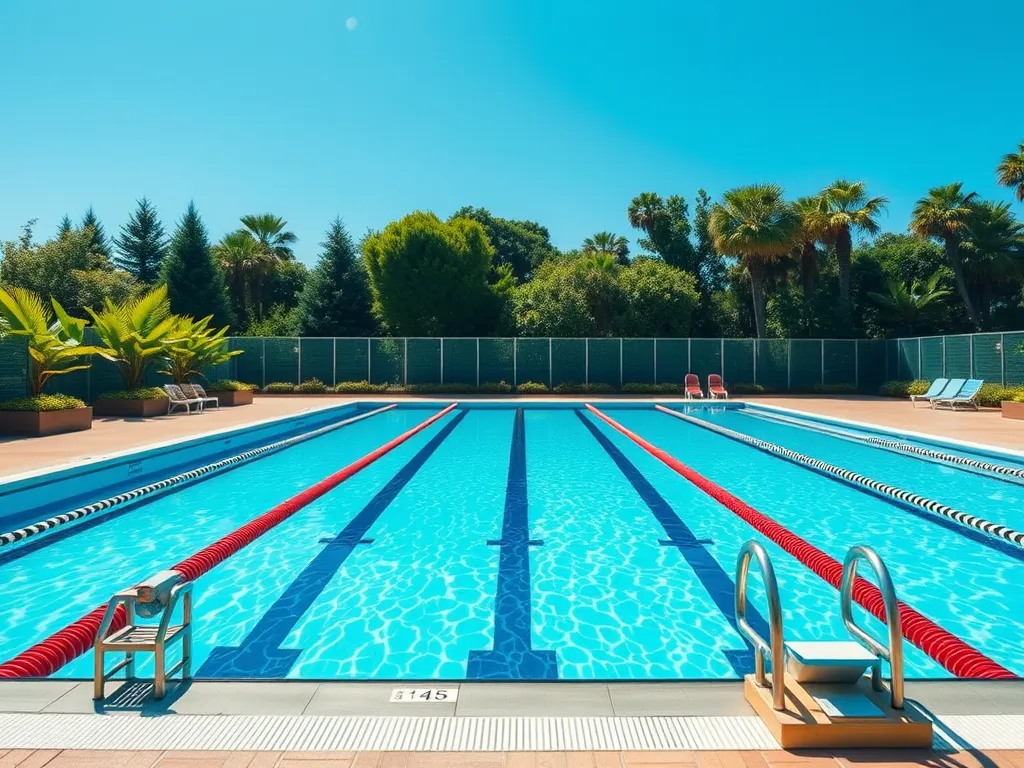
Safety in swim pools for competition starts with smart design. Every curve, edge, and surface must meet strict rules to shield athletes from harm while they race. Let’s break down the key parts. To ensure a safe and enjoyable experience, different elements play a role in supporting swimmers. One such element is the pool pillow, which helps to protect the pool’s structure and maintain a safe environment.
Starting Blocks and Anti-slip Surfaces
Starting blocks in a competition swim pool must have a non-slip top and slope no more than 10 degrees. FINA rules say blocks must be 30 inches high with a firm grip for explosive push-offs. The pool deck needs grit-coated tiles or textured paint with a 0.6+ friction score to stop slips, even when wet.
Compliance With IBC and FINA Regulations
All pools for competition must pass both IBC 2018 codes and FINA standards. IBC sets rules for hand rails, depth marks, and emergency stops. FINA focuses on race specs: lane lines 7-9 feet apart, clear water to see the bottom, and touch pads timed to 0.01 seconds. Fail these checks, and events get scrapped.
Heating and Circulation Systems for Competition Pools
Race-ready water needs steady heat and flow. Too cold, muscles cramp. Too warm, swim times lag. Here’s how pros dial it in.
Heaters for swim competition pools keep temps at 77-82°F. Gas units hit 400,000 BTUs for quick warm-ups. Heat pumps save cash long-term but need 8+ hours to adjust. Solar panels can cut bills by 50% in sun-rich zones. Maintaining the right temperature is essential for all swimmers, especially when using a float pools offer a versatile space for training, relaxation, and recovery for athletes.
Pumps move 100+ gallons per minute through sand or DE filters. FINA wants full water turnover every 4 hours. Variable-speed pumps trim power use by 30% vs old single-speed models. UV or ozone systems zap germs without harsh chems, keeping water safe for 8-hour meets.
Solid water flow sets up the next piece of the puzzle: keeping that water clean and clear for peak race days.

Common FAQs About Competition Pools
How Often Should Competition Pool Surfaces Be Resurfaced?
Competition pool surfaces typically require resurfacing every 10–15 years, depending on usage and material. FINA-certified plaster finishes may need recoating sooner in high-traffic facilities, while stainless steel or polymer composite surfaces can last 20+ years with proper maintenance. Resurfacing timelines are influenced by chemical exposure, athlete turnover frequency, and climate conditions.
What Lighting Standards Apply to Competition Pools Hosting Evening Events?
FINA mandates minimum illumination of 1500 lux for international competitions, with glare-controlled LED systems positioned to eliminate water surface reflections. Lighting must achieve uniform 1:1.5 vertical-to-horizontal ratios, ensuring judges can clearly see touchpad activations and lane violations. Color rendering index (CRI) above 90 is required for accurate video replay analysis.
Can Existing Recreational Pools Be Converted Into Competition-grade Facilities?
Retrofitting requires expanding to FINA minimum dimensions (25m/50m length), installing overflow gutters, and deepening lanes to 2m. Structural reinforcement costs often exceed 60% of new construction budgets due to foundation modifications. Success depends on existing shell orientation, plumbing capacity for 4-hour turnover rates, and ability to integrate electronic timing systems.
What Accessibility Features Are Mandated for Paralympic Competition Pools?
Paralympic standards require zero-depth entries, tactile deck markers, and adjustable starting platforms (0.5m–0.75m height). Water wheelchair lifts must support 300+ lbs with non-metallic components to prevent corrosion. Visual contrast tiles aid visually impaired swimmers, while audio starting systems replace traditional gun signals with 85dB underwater transducers.
How Does High-altitude Location Affect Competition Pool Design and Performance?
At elevations above 1,500m, reduced air pressure increases evaporation rates by 25%, requiring humidity-controlled HVAC systems. Water viscosity decreases at altitude, potentially improving sprint times by 0.5–0.8%. Pools must compensate with adjusted lane line tension and enhanced air quality monitoring to offset lower oxygen levels affecting athletes.
Are There Energy Efficiency Certifications for Competition Pool Systems?
ENERGY STAR-certified variable frequency drives (VFDs) for pumps and NSF/ANSI 50-rated heat recovery systems are industry benchmarks. LEED certification demands 40% reduced energy use through solar thermal panels and regenerative media filters. The ISPO Global Standard also evaluates competition pools on annual kWh per 1,000 gallons circulated.
What Emergency Response Systems Are Required in Competition Pools?
FINA-compliant facilities must have 360-degree rescue access, including recessed lifehook stations every 25m and automated external defibrillators (AEDs) within 90-second retrieval. Underwater surveillance cameras with AI drowning detection algorithms are now mandatory for World Aquatics events, synchronized with immediate drainage capabilities (30,000+ GPM).
What Maintenance Routines Ensure Starting Block Safety and Durability?
Blocks undergo weekly torque checks (35–40 Nm for anchor bolts) and monthly slip resistance testing using tribometers. High-density polyethylene platforms are rotated quarterly to distribute wear from track starts. FINA requires annual load testing at 150% of maximum athlete impact force (≈500kgf) with digital strain gauges verifying structural integrity.
Closing Thoughts
Competition pools require precise design, strict maintenance, and adherence to safety standards. From dimensions to water quality, every detail impacts performance and safety. Proper lane markings, temperature control, and circulation systems ensure optimal conditions for swimmers.
Following FINA and IBC regulations guarantees compliance and reduces risks. Regular chemical testing and equipment maintenance keep the water clean and balanced. Starting blocks, anti-slip surfaces, and proper depth enhance both safety and functionality.
For more details on pool care, check out My Pool Calculator. Our tools and guides help maintain competition-ready pools with ease.
Useful References for You:
- Pool & Hot Tub Alliance (PHTA). (2021). ANSI/APSP/ICC-11 Standard for Water Quality in Public Pools and Spas. Alexandria, VA: PHTA.
- Competition Swimming Pools
- About Us – Competition Pools NJ
- Competition Pools NJ – Servicing Pools & Hot Tubs in New Jersey Since 2005
- Competition Pools – Fluidra
A pool care geek who’s been testing water chemistry since she was tall enough to reach the skimmer.
Pool Care By Type, Pool for Schools